

Table of Contents
- Why Does My Coffee Taste Bitter? The Core Reasons Explained
- Signs of Over-Extracted Coffee You Should Know
- Bitter vs. Sour Coffee: How to Tell the Difference
- Grind Size, Roast Level, and Bean Quality: The Flavor Profile Trio
- Coffee Brewing Water Temperature: Why It Matters More Than You Think
- How to Fix Bitter Coffee: Device-Specific Adjustments
- How to Clean Your Coffee Maker to Eliminate Bitter Taste
- Conclusion: Stop Asking Why Your Coffee Tastes Bitter and Start Brewing Better
Last Updated: May 19, 2026
Bitter coffee is one of the most common complaints among home brewers, and the frustrating part is that the fix is usually simple once you know what to look for. If you've been asking yourself why does my coffee taste bitter every morning, you're not alone. At Cuppari Coffee, we hear this question constantly from customers who switch to freshly roasted beans and still end up with a harsh, unpleasant cup. The good news: bitterness almost always traces back to a handful of fixable causes. Below, we'll walk you through exactly what's going wrong and how to correct it, step by step.
Most guides jump straight to "grind finer" or "lower your water temperature" without explaining the underlying mechanics. That's the part most guides get wrong. Understanding why bitterness happens gives you the tools to troubleshoot any brewing method, not just the one a guide was written for.
Why Does My Coffee Taste Bitter? The Core Reasons Explained
Coffee tastes bitter when your brewing process pulls too many compounds from the grounds. This is called over-extraction, and it's the root cause behind most bitter cups. The solution starts with understanding what happens inside your brewer during those first few seconds of contact.
The Three Extraction Stages and Where Bitterness Comes From
Over-extraction is the process of drawing too many soluble compounds from coffee grounds, including bitter tannins and harsh phenolic acids that overwhelm the cup's natural sweetness and aroma.
Coffee extracts in three distinct stages:
- Acids extract first, in the earliest seconds of contact. These give coffee its brightness and fruity notes.
- Sugars and sweetness extract next, producing the balanced, pleasant middle flavors most people enjoy.
- Bitter compounds extract last, including tannins and harsh oils that create a dry mouthfeel and lingering bitter aftertaste.
The goal of every brew is to stop extraction after stage two and before stage three dominates. Push contact time too long, grind too fine, or use water that's too hot, and you tip the balance toward bitterness.
According to the Specialty Coffee Association's brewing standards, the ideal extraction yield for a balanced cup falls between 18% and 22% of the coffee's total soluble content. Go above that range and bitterness spikes. Go below it and you get sourness instead.
This extraction window is your target. Every variable in your brewing process either helps you hit it or pushes you past it.
Signs of Over-Extracted Coffee You Should Know
Recognizing over-extraction by taste alone takes practice. There are faster ways to tell.
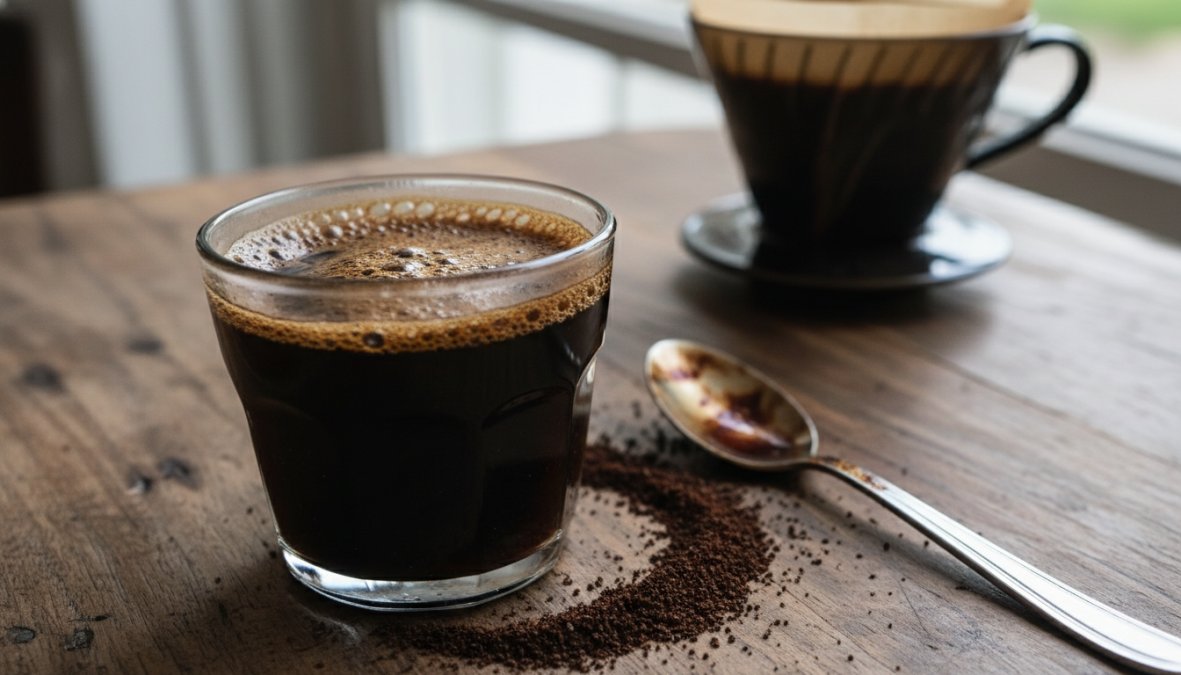
 grounds scattered nearby, under warm overhead lighting](https://cdn.grandranker.com/articles/why-does-my-coffee-taste-bitter-causes-fixes-content-1-1779154341.jpg)
The most obvious sign is a dry, coating sensation at the back of your throat that lingers long after swallowing. This is tannin buildup. Tannins are the same compounds that make over-steeped black tea feel astringent, and they behave identically in coffee.
Other signs of over-extracted coffee include:
- A bitter aftertaste that doesn't fade within 30 seconds
- No detectable sweetness, even in lighter roasts
- A flat, one-dimensional flavor with no fruity or floral notes
- Dark, almost black color in the cup (especially visible in espresso)
- Coffee that smells better than it tastes
Visual Identification: What Over-Extracted Coffee Looks Like
For espresso specifically, visual cues are the fastest diagnostic tool. A well-extracted shot shows a rich golden-brown crema with tiger-striping patterns. An over-extracted shot produces thin, dark, almost black crema that dissipates quickly. The espresso itself will look darker and more opaque than a balanced shot.
For pour-over and drip coffee, the spent grounds tell a story too. Over-extracted grounds look completely flat and dry in the filter, with no dome or retained moisture. Balanced extraction leaves grounds that are still slightly moist and show a slight rise in the center.
Bitter vs. Sour Coffee: How to Tell the Difference
Bitter and sour coffee are opposite problems caused by opposite mistakes. Treating one like the other makes your cup worse, not better. This is the most commonly misdiagnosed issue in home brewing, and most guides either skip it or reduce it to a single sentence. Getting this distinction right is the single most useful diagnostic skill you can develop.
The Physical Mechanism Behind Each Sensation
Bitter coffee is the result of over-extraction. When water pulls too many compounds from the grounds, specifically chlorogenic acid lactones, phenylindanes, and oxidized tannins, those compounds bind to bitter taste receptors concentrated at the back of your tongue and throat. The sensation is coating, lingering, and dry. It doesn't fade quickly. If you swallow a sip and the unpleasant sensation is still present 45 seconds later, that's a reliable marker of over-extraction bitterness.
Sour coffee is the result of under-extraction. When water doesn't pull enough soluble material from the grounds, the brew is dominated by the organic acids that extract earliest in the process, acetic acid and malic acid primarily. These acids activate receptors on the front and sides of your tongue. The sensation is sharp, immediate, and almost electric. It hits fast and fades fast. Under-extracted coffee often smells better than it tastes because the aromatic compounds are present but the sweetness that should balance them never made it into the cup.
Where Each Sensation Registers
| Sensation | Primary Location | Onset | Duration | Cause | First Fix |
|---|---|---|---|---|---|
| Bitter | Back of throat, rear tongue | Delayed (after swallowing) | Lingers 30-60+ seconds | Over-extraction | Coarsen grind one step |
| Sour | Front and sides of tongue | Immediate | Fades within 10-15 seconds | Under-extraction | Fine grind one step |
| Balanced | Whole mouth, even distribution | Present on contact | Fades naturally | Correct extraction | Maintain current variables |
| Astringent (dry) | Gums and inner cheeks | During sip | Coating, persistent | Severe over-extraction or robusta | Coarsen grind significantly, check bean quality |
Note the fourth row: astringency is a distinct sensation that often gets called bitterness but is technically different. Astringency is the dry, puckering feeling in your gums and cheeks, the same sensation as over-steeped black tea. It's caused by tannins binding to proteins in your saliva. If your coffee feels drying rather than simply tasting harsh, astringency is the more accurate diagnosis, and it points specifically to severe over-extraction or robusta-heavy blends.
The Hardest Case: Bitter and Sour in the Same Cup
This is the scenario that confuses most home brewers, and it's more common than you'd expect. A cup can taste both bitter and sour simultaneously when extraction is uneven, some grounds are over-extracted while others are under-extracted in the same brew.
This happens most often because of:
- Channeling in espresso: Water finds a path of least resistance through the puck, over-extracting along that channel while under-extracting the surrounding grounds.
- Uneven grind distribution: If your grinder produces a mix of fine particles (fines) and coarser chunks, the fines over-extract while the coarser pieces under-extract in the same brew.
- Inconsistent water saturation in pour-over: Pouring too fast or skipping a proper bloom causes dry pockets in the grounds bed, leading to uneven contact time across the filter.
If your cup tastes both sharp and harsh at the same time, don't try to fix extraction yield, fix evenness first. For espresso, check your distribution and tamping technique. For pour-over, slow your pour rate and ensure a thorough 30-second bloom. For French press, stir the grounds gently after adding water to ensure full saturation before steeping.
A Quick Self-Diagnosis Protocol
Before adjusting any brewing variable, run through this 30-second check:
- Take a small sip and hold it for three seconds before swallowing.
- Note where the unpleasant sensation is strongest. Front and sides = sour. Back and throat = bitter. Gums and cheeks = astringent.
- Note when it peaks. During the sip = sour. After swallowing = bitter or astringent.
- Note how long it lingers. Fades in under 15 seconds = likely sour. Persists past 30 seconds = bitter or astringent.
- Adjust one variable only. Grind size is almost always the right first lever. Coarser for bitter, finer for sour.
Grind Size, Roast Level, and Bean Quality: The Flavor Profile Trio
Three variables shape your coffee's flavor profile before water ever touches the grounds: how fine you grind, how dark the beans are roasted, and the quality of the beans themselves.
Grind size controls how quickly water extracts compounds from the coffee. A finer grind creates more surface area, speeding up extraction. This is why espresso uses very fine grounds and a short brew time, while French press uses coarse grounds and a long steep. Grinding too fine for your brewing method is the most common cause of bitter coffee.
Roast level changes which compounds are present in the bean. Dark roasts develop more bitter compounds during the roasting process itself, particularly chlorogenic acid lactones and phenylindanes. These are genuinely bitter at a chemical level. This doesn't mean dark roast is bad, but it does mean dark roast is less forgiving. A slight over-extraction that would be unnoticeable in a light roast becomes harsh and unpleasant in a dark one.
Bean quality matters more than most people realize. Specialty-grade beans are sorted to remove defective beans, which often carry off-flavors including bitterness. Lower-quality commercial blends frequently include robusta beans, which have roughly twice the caffeine of arabica but a significantly more bitter, harsher flavor profile.
According to the Coffee Quality Institute's grading standards, specialty-grade coffee must score 80 points or above on a 100-point scale and contain zero category-one defects. Beans below this threshold often produce cups with persistent bitterness regardless of brewing technique.
Fresh beans also matter. Stale coffee, whether from sitting in an open bag or sitting on a roaster's shelf for months before shipping, produces flat, bitter cups because the volatile aromatic compounds that balance bitterness have degraded. Cuppari Coffee roasts beans only after an order is placed and ships the same day, which means you're starting with maximum freshness rather than trying to rescue stale grounds.
Coffee Brewing Water Temperature: Why It Matters More Than You Think
Water temperature is the throttle of your extraction. Too hot and you accelerate extraction into bitter territory. Too cool and you stall before reaching the sweet spot.
The generally accepted target range for most brewing methods is 195°F to 205°F (90°C to 96°C). Boiling water at 212°F sits above this range and aggressively extracts bitter compounds. Water below 185°F extracts too slowly and produces sour, weak coffee.
A practical tip: if you don't have a thermometer, bring water to a full boil and let it sit off heat for 30 to 45 seconds. That drop gets you close to 200°F for most pour-over and drip applications.
Water Chemistry and Mineral Content
This is the angle most brewing guides skip entirely, and it's a real gap. The mineral content of your water affects extraction efficiency and flavor in ways that temperature alone can't explain.
Water that's too soft (low in minerals) extracts unevenly and often produces flat, bitter cups. Water that's too hard (high in calcium and magnesium) can over-extract and leave a chalky, harsh aftertaste. The sweet spot is moderately mineralized water.
As documented in the Specialty Coffee Association's water quality standards, ideal brewing water should have:
- Total dissolved solids (TDS) between 75 and 250 mg/L
- A pH between 6.5 and 7.5
- No chlorine taste or odor
If your tap water tastes strongly of chlorine, it will make your coffee taste bitter regardless of your technique. Filtered water or a simple Brita-style pitcher removes chlorine and often dramatically improves cup quality without changing anything else about your brew.
How to Fix Bitter Coffee: Device-Specific Adjustments
Generic advice, "grind coarser" or "lower your temperature", only gets you so far. The right fix depends entirely on your brewing method, because each device has a different extraction mechanism, a different ideal contact time, and a different set of failure modes. Below is a device-by-device troubleshooting reference built around the specific variables each method gives you control over.
Brewing Method Cheat Sheet
| Brewing Method | Target Grind Size | Target Water Temp | Target Brew Time | Most Common Bitter Cause | First Fix |
|---|---|---|---|---|---|
| Espresso | Extra fine (like powdered sugar) | 195-203°F (90-95°C) | 25-35 sec shot time | Grind too fine or shot too slow | Coarsen grind by one small step |
| French Press | Coarse (like coarse sea salt) | 195-205°F (90-96°C) | 3-4 minutes | Over-steeping or grind too fine | Pour immediately after pressing; coarsen grind |
| Pour-Over (V60, Chemex) | Medium-coarse | 195-205°F (90-96°C) | 3-4 minutes total | Grind too fine or pour too slow | Coarsen grind; increase pour rate |
| Drip Machine | Medium | Machine-dependent (ideally 195-205°F) | 5-8 minutes for full carafe | Machine runs too hot or dirty equipment | Descale machine; check brew temp with thermometer |
| AeroPress | Medium-fine to medium | 175-205°F (80-96°C) | 1-2 minutes | Steep time too long or grind too fine | Reduce steep time by 30 seconds; coarsen grind |
| Moka Pot | Fine-medium (not espresso fine) | Low heat on stove | 4-5 minutes | Heat too high or grind too fine | Use lowest heat setting; coarsen grind slightly |
Fixing Bitterness in Espresso
Espresso is the most sensitive brewing method. Small changes produce large flavor shifts because the brew ratio is concentrated and contact time is measured in seconds.
Step 1, Check shot time first. Pull a shot and time it from the moment water contacts the puck to when you stop the shot. A well-extracted double shot should run 25 to 35 seconds for roughly 36-40 grams of liquid output from an 18-20 gram dose. If your shot runs longer than 35 seconds and tastes bitter, your grind is too fine. Adjust in small increments, on most burr grinders, one click or half a step is enough to produce a measurable change.
Step 2, Check your dose. Using too much coffee in the portafilter increases resistance and slows extraction, pushing it toward over-extraction. Standard doses run 18 to 20 grams for a double shot. Weigh your dose with a scale rather than estimating by volume.
Step 3, Check water temperature. Most home espresso machines run hotter than their displays indicate. If your machine has a temperature adjustment (common on prosumer machines like the Breville Barista Express or Gaggia Classic Pro), try dropping the brew temperature by 2°C and pulling another shot before changing anything else.
Step 4, Check tamping evenness. Uneven tamping creates channels where water rushes through the puck quickly, causing uneven extraction with bitter and sour notes in the same cup. Tamp level and firm, approximately 30 pounds of pressure, and use a distribution tool or the Weiss Distribution Technique (WDT) to break up clumps before tamping.
Fixing Bitterness in French Press
French press bitterness almost always comes from one of two sources: grind size too fine, or coffee sitting on the grounds after pressing.
- Use a coarse grind, the grounds should look like coarse sea salt, not table salt
- Steep for 3 to 4 minutes maximum; beyond 4 minutes, extraction continues and bitterness builds
- Press slowly and pour immediately after pressing. Don't let the brewed coffee sit in the press on top of the grounds, even after pressing, extraction continues through the fine particles that pass through the mesh filter
- If you're not drinking the full batch immediately, pour the remainder into a separate carafe or thermos
Fixing Bitterness in Pour-Over (V60, Chemex, Kalita Wave)
Pour-over bitterness is usually a grind-size or pour-rate problem. The brew time is your most reliable diagnostic number.
- If your brew finishes in under 2 minutes for a standard 300ml cup: your grind is too coarse (this produces sour, weak coffee, not bitter)
- If your brew drags past 5 minutes: your grind is too fine, this is the bitter scenario. Coarsen by one step and retest
- Target total brew time: 3 to 4 minutes for a 300ml cup using a 1:15 to 1:17 coffee-to-water ratio
- Use a gooseneck kettle to control pour rate. Pouring too aggressively disturbs the grounds bed and creates uneven extraction
- Always bloom: pour twice the weight of your coffee dose in water (e.g., 30g water for a 15g dose), wait 30 seconds, then continue pouring. Skipping the bloom traps CO2 in the grounds and causes uneven water penetration, which produces a mix of over- and under-extracted flavors
Fixing Bitterness in Drip Coffee Machines
Drip machines are the hardest to troubleshoot because you have the least control over variables. The two most common bitter causes are a machine that runs too hot and a machine that hasn't been descaled.
- Check brew temperature: Specialty Coffee Association-certified drip machines (look for the SCAA Home Brewer Certification seal) are verified to brew between 197°F and 205°F. Many budget machines run hotter than this range, which drives over-extraction. If your machine doesn't have a temperature display, a simple instant-read thermometer placed in the carafe during brewing gives you a baseline reading.
- Descale regularly: Mineral buildup inside the boiler and water lines causes machines to heat unevenly and can affect flow rate, both of which push extraction toward bitterness. Run a descaling cycle monthly if you use tap water, or every two to three months with filtered water.
- Use a medium grind: Pre-ground coffee sold as "drip grind" is calibrated for standard drip machines. If you're grinding your own, a medium grind, roughly the texture of coarse sand, is the correct starting point.
- Don't use the warming plate: Leaving brewed coffee on a warming plate continues to cook the coffee, degrading flavor compounds and amplifying bitterness. Transfer to a thermal carafe immediately after brewing.
Fixing Bitterness in AeroPress
The AeroPress is the most forgiving brewer on this list because it gives you direct control over steep time, water temperature, and pressure. It's also the easiest to over-extract if you're not paying attention to time.
- Standard inverted or upright method: steep for 1 to 2 minutes with a medium-fine grind
- If your cup is bitter, reduce steep time by 30 seconds before changing grind size
- The AeroPress works well at lower water temperatures (175-185°F / 80-85°C) than most other methods, which is useful for dark roasts that are prone to bitterness, lower temperature slows extraction of bitter compounds without producing sourness at the shorter AeroPress brew times
- Press slowly and steadily over 20 to 30 seconds. Pressing too hard or too fast increases pressure and can force bitter compounds through the filter
Fixing Bitterness in Moka Pot
Moka pot coffee is structurally intense and slightly bitter by design, it's not espresso, but it's not filter coffee either. That said, avoidable bitterness in a moka pot almost always comes from heat that's too high.
- Use the lowest heat setting your stove allows. High heat forces water through the grounds too quickly and at too high a temperature, scorching the coffee
- Use hot or pre-boiled water in the bottom chamber rather than cold water. Starting with cold water means the grounds sit in a warming chamber for longer before extraction begins, which can produce a cooked, bitter flavor
- Remove the moka pot from heat as soon as you hear the gurgling sound that signals the upper chamber is nearly full. Letting it continue to sputter drives steam through the grounds and extracts harsh compounds
- Grind slightly coarser than you would for espresso. Moka pot grind should be fine but not powdery, closer to fine table salt than powdered sugar
How to Clean Your Coffee Maker to Eliminate Bitter Taste
Dirty equipment is an underrated source of bitter coffee. Coffee oils are naturally acidic and go rancid quickly. Old oil residue coats the inside of your brewer, grinder, and portafilter, and every subsequent brew picks up those stale, bitter compounds.
A good cleaning schedule looks like this:
- Daily: Rinse portafilters, carafes, and French press components with hot water immediately after use
- Weekly: Wash all removable parts with mild soap; wipe down the exterior of your grinder
- Monthly: Run a descaling cycle on espresso machines and drip coffee makers using a descaling solution or a 50/50 mix of white vinegar and water
- Quarterly: Deep-clean your grinder by running grinder cleaning tablets or dry rice through the burrs to absorb rancid oils
The vinegar method works well for drip machines: fill the reservoir with a 50/50 vinegar and water mix, run a full brew cycle, then run two full cycles with plain water to rinse. Many people who ask why does my coffee taste bitter despite doing everything right find that a single cleaning cycle transforms their cup.
According to NSF International's household appliance hygiene research, coffee makers rank among the most bacteria-harboring household appliances when not cleaned regularly. Beyond bitterness, rancid oil buildup creates genuine hygiene concerns that cleaning solves simultaneously.
Grinder cleanliness is especially important and often overlooked. Burr grinders accumulate fine coffee dust and oil in the burrs and chute. This buildup goes stale fast and contributes a musty, bitter note to every grind that passes through it.
Conclusion: Stop Asking Why Your Coffee Tastes Bitter and Start Brewing Better
Bitter coffee is a solvable problem. The causes are consistent: over-extraction from grind size, water temperature, contact time, bean quality, or dirty equipment. Fix one variable at a time, start with grind size, and you'll find the issue faster than you expect.
The other half of the equation is starting with better beans. Stale, low-quality coffee makes every brewing variable harder to manage, and even a perfect technique can't rescue beans that were roasted weeks ago and sitting in an oxygen-filled bag.
Frequently Asked Questions
How do I make my coffee less bitter?
To make your coffee less bitter, start by coarsening your grind size to reduce over-extraction, and lower your water temperature to between 195-205°F. Shorten your brew time and check your coffee-to-water ratio. Using fresher, specialty-grade beans instead of stale or dark-roast robusta blends also helps significantly. Cleaning your brewing equipment regularly removes built-up coffee oils that contribute to a harsh, bitter aftertaste.
Does over-extracting coffee make it bitter?
Yes, over-extraction is the most common reason why coffee tastes bitter. When water pulls too many compounds from the coffee grounds, it moves past the desirable sweetness and aroma into harsh tannins and bitter compounds. This happens when grind size is too fine, water temperature is too high, or contact time is too long. Signs of over-extracted coffee include a dry mouthfeel, flat aroma, and a lingering bitter aftertaste with no sweetness.
Does water temperature affect coffee bitterness?
Water temperature has a direct impact on coffee bitterness. Water that is too hot, above 205°F, accelerates extraction and pulls bitter compounds from the grounds too quickly. The ideal coffee brewing water temperature is between 195°F and 205°F. Using water that has just boiled without resting for 30 seconds is a common mistake. Water chemistry also matters: very soft or distilled water can produce a flat, harsh cup, while balanced mineral content enhances sweetness and flavor.
Can cleaning my coffee maker fix bitter coffee?
Absolutely. Old coffee oils and mineral deposits build up inside brewing equipment over time, turning rancid and adding a harsh, burnt flavor to every cup. Cleaning your coffee maker monthly with a vinegar-and-water solution or a dedicated descaler removes this residue. For French press and pour-over gear, washing thoroughly after each use prevents oil buildup. If your coffee suddenly tastes more bitter than usual without changing your beans or method, dirty equipment is often the culprit.
Is bitter coffee a sign of bad beans?
Not always, but bean quality does play a role. Low-quality robusta beans or very dark-roasted beans naturally carry more bitter compounds and less sweetness than lighter-roasted, specialty-grade arabica beans. However, even premium beans will taste bitter if brewed incorrectly. Stale beans, those past their peak freshness window, also produce a flat, harsh cup. Starting with freshly roasted beans and dialing in your brewing method together gives you the best chance at a balanced, non-bitter flavor profile.
How does grind size affect coffee taste?
Grind size controls how quickly water extracts flavor from coffee grounds. A grind that is too fine increases surface area and contact time, leading to over-extraction and bitterness. A grind that is too coarse under-extracts, producing a sour, weak cup. Each brewing method requires a specific grind: espresso needs fine, pour-over needs medium-fine, and French press needs coarse. Adjusting grind size is usually the fastest fix when your coffee tastes bitter or unbalanced.
Bitter coffee often starts with beans that were never fresh to begin with. Cuppari Coffee roasts every order to order and ships the same day, so your beans arrive at peak freshness with their natural sweetness and aroma fully intact. With free shipping on all U.S. orders and a selection that includes single origin, blends, and coffee pods, getting a better cup starts before you even touch your brewer. Add to cart and taste the difference that genuinely fresh beans make.
This article was written using GrandRanker