

Table of Contents
- Why Does My Coffee Taste Stale? A Diagnostic Overview
- Signs of Stale Coffee You Should Know
- Oxidation, Air Exposure, and the Role of Coffee Oils
- Why Does My Coffee Taste Stale Even When Beans Seem Fresh?
- Dirty Brewing Equipment: The Hidden Flavor Killer
- Water Chemistry and Mineral Content: The Overlooked Variable
- How to Store Coffee Beans to Preserve Freshness
- Coffee Shelf Life: How Long Before Beans Go Stale?
Last Updated: June 11, 2026
If you've ever brewed a fresh pot only to be greeted by a flat, cardboard-like cup, you already know the frustration. The question of why does my coffee taste stale has a real answer, and it usually comes down to a handful of diagnosable problems. This guide from Cuppari Coffee covers every major cause, from oxidation and grind inconsistency to water chemistry and dirty equipment, so you can stop guessing and start fixing.
Here's what most guides get wrong: they blame the beans and stop there. Stale-tasting coffee is often the result of compounding failures, any one of which could ruin an otherwise excellent roast.
Why Does My Coffee Taste Stale? A Diagnostic Overview
Stale coffee results from flavor degradation caused by oxidation, moisture, heat, light exposure, or improper brewing, and it can occur at any point between roasting and the cup. The aroma collapses first, followed by the flavor profile, leaving behind a flat, bitter, or cardboard-like taste that no amount of sugar will fix.
Start by asking these questions:
- Are your beans past their roast date?
- Are you storing coffee in an airtight container away from heat and light?
- When did you last clean your brewer?
- Are you grinding fresh before each brew?
- Is your water temperature correct?
If you answered "no" or "I'm not sure" to any of the above, you've likely found your culprit.
Signs of Stale Coffee You Should Know
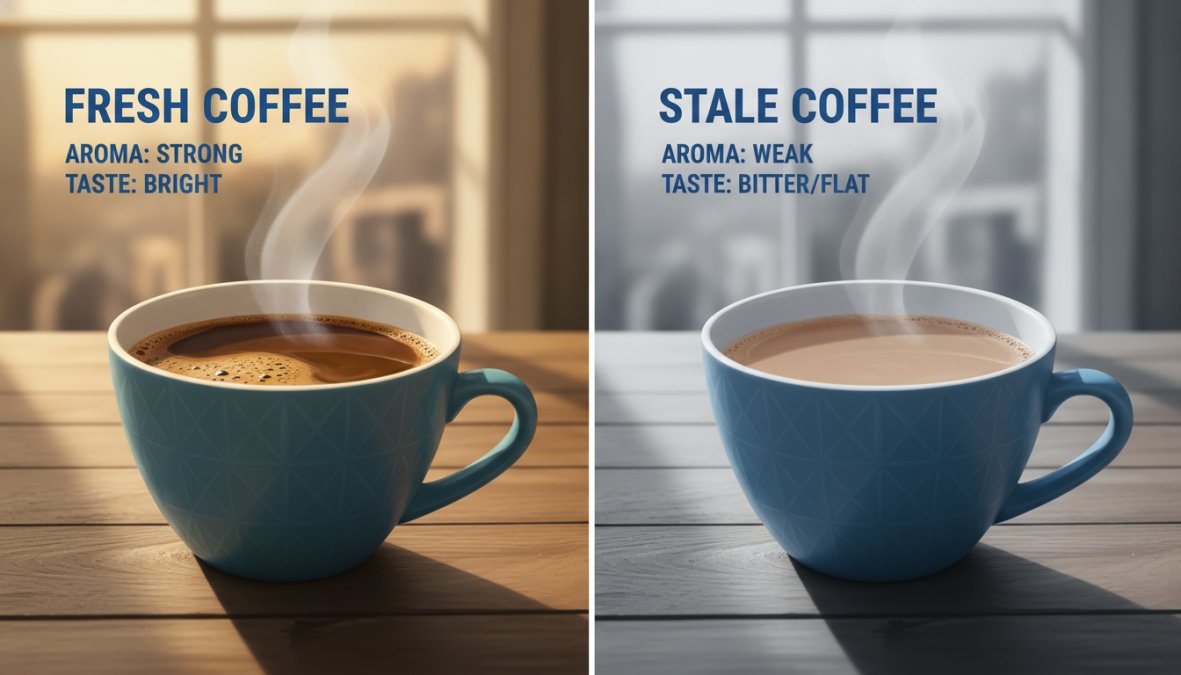
Fresh coffee has a rich, complex aroma the moment you open the bag. Stale coffee smells flat, faintly rancid, or like wet cardboard. That aroma loss is your first warning.
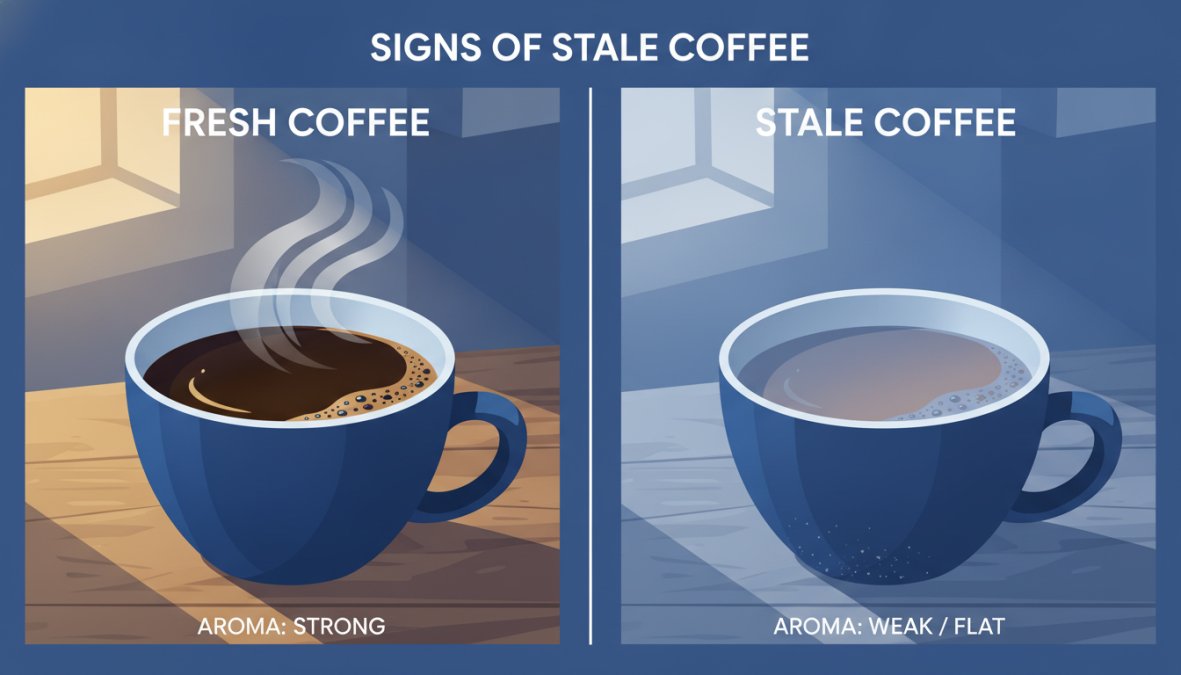
Pay attention to the bloom. When you pour hot water over fresh grounds, carbon dioxide escapes and causes the coffee to bubble and puff up. No bloom, or a weak one, means the CO2 has already dissipated, a reliable indicator your coffee is past its prime.
Sensory Profile Breakdown: Flat, Bitter, Sour, or Cardboard?
The sensory profile of stale coffee varies depending on the type of degradation at play:
- Flat and bland: CO2 has fully escaped; beans are over-aged or improperly stored
- Cardboard or papery: Severe oxidation of coffee oils; beans exposed to air too long
- Rancid or musty: Moisture contamination during storage; possible mold in grinder or equipment
- Bitter and harsh: Over-extraction caused by stale, overly fine grounds absorbing water unevenly
- Sour and thin: Under-extraction; stale grounds failing to release soluble compounds properly
Sourness and bitterness are often brewing problems, while cardboard and rancid notes are almost always storage or freshness problems.
Oxidation, Air Exposure, and the Role of Coffee Oils
The single biggest enemy of fresh coffee is oxygen. Once roasted, coffee beans are packed with volatile aromatic compounds and oils that define their flavor. Exposure to air triggers oxidation, breaking down those compounds rapidly.
According to the Specialty Coffee Association's research on coffee freshness, ground coffee begins losing aromatic complexity within minutes of grinding. The oils on the bean's surface, which carry much of the flavor, turn rancid when exposed to oxygen over time. This is why vacuum-sealed packaging and one-way degassing valves exist, once you break that seal, the clock starts.
The Degassing Phase Explained
Degassing is the process by which freshly roasted coffee releases carbon dioxide absorbed during roasting. Coffee brewed too soon after roasting, within 24-48 hours, produces a sour, inconsistent cup because excess CO2 interferes with extraction. Coffee brewed too late, after degassing has fully completed, tastes flat with no bloom.
The sweet spot for most roasts is 4-14 days post-roast. Espresso benefits from a slightly longer rest (7-14 days), while filter coffee peaks between 4-10 days. This is why the roast date on your bag is more useful than the "best by" date.
Why Does My Coffee Taste Stale Even When Beans Seem Fresh?
Fresh beans can still produce a stale-tasting cup. If your beans are within the optimal window but the coffee still tastes flat or bitter, the problem is almost certainly in your brewing process.
Inconsistent Grind Size and Its Effect on Extraction
Grind size controls the surface area exposed to water, and inconsistency is one of the most common reasons coffee tastes stale even with fresh beans. Blade grinders produce many particle sizes in a single grind, fine particles over-extract and turn bitter; coarse particles under-extract and taste sour. The fix is a burr grinder, which produces a uniform grind appropriate to your brew method.
A common mistake is grinding too far in advance. Even with a quality burr grinder, pre-ground coffee exposed to air for more than 30 minutes starts losing aromatic complexity. Grind fresh, directly before brewing.
Water Temperature and Under-Extraction vs. Over-Extraction
The optimal extraction range is 195-205°F (90-96°C). Brew below this and you get under-extraction: a sour, thin cup. Brew above it and you get over-extraction: harsh, bitter, astringent flavors easily mistaken for staleness.
Most consumer drip coffee makers do not consistently reach this range, according to the National Coffee Association's brewing standards guide. If your machine is more than a few years old, this alone could explain a stale-tasting cup.
Under-extraction vs. over-extraction at a glance:
| Problem | Water Temp | Taste Profile | Fix |
|---|---|---|---|
| Under-extraction | Below 195°F | Sour, thin, weak | Increase temp, finer grind |
| Over-extraction | Above 205°F | Bitter, harsh, dry | Decrease temp, coarser grind |
| Optimal extraction | 195-205°F | Balanced, full flavor | Maintain range |
Dirty Brewing Equipment: The Hidden Flavor Killer
Old coffee residue is rancid coffee. Every brew cycle leaves behind a thin layer of coffee oils and grounds, and those oils oxidize between uses. When you run the next brew through them, stale compounds mix directly into your cup. This is the most overlooked reason why coffee tastes stale, and it's entirely preventable.
Equipment-Specific Maintenance: Drip Coffee Makers, Espresso Machines, and More
Drip coffee makers: Rinse the carafe and filter basket after every use. Run a full descaling cycle monthly. Pay attention to the shower screen, mineral buildup creates uneven extraction.
Espresso machines: Backflush the group head daily. Remove and rinse the portafilter and basket after every shot. The shower screen accumulates coffee oils and needs weekly soaking. Inconsistent tamping creates channels in the puck where water bypasses grounds, causing uneven extraction.
French press and pour-over: Coffee oils cling to mesh filters and glass carafes. A thorough hot-water rinse after every use, plus a weekly wash with dish soap, prevents residue buildup.
Water Chemistry and Mineral Content: The Overlooked Variable
Most coffee guides stop at water temperature and ignore water chemistry entirely. The mineral content of your water directly affects extraction efficiency and flavor clarity. Water too soft in dissolved minerals fails to extract the full range of soluble compounds, producing a flat cup. Water too hard dulls flavor and accelerates scale buildup.
The Specialty Coffee Association's water quality standards for brewing recommend a total dissolved solids (TDS) range of 75-250 ppm, targeting around 150 ppm for optimal extraction. Distilled or heavily filtered water can actually strip out the minerals that help extraction work properly.
A practical fix: use filtered tap water rather than distilled. If your tap water is very hard, a carbon filter pitcher reduces chlorine and excess minerals without stripping the water entirely. For serious specialty brewing, third-wave water products let you mix precise mineral concentrations.
How to Store Coffee Beans to Preserve Freshness
Proper storage is the simplest, highest-impact change most coffee drinkers can make. The enemies are air, moisture, light, and heat.
- Transfer beans to an airtight container immediately after opening the bag
- Store in a cool, dark cabinet, not on the counter near the stove
- Never store beans in the freezer if you brew daily; temperature cycling causes condensation that introduces moisture
- Buy quantities you'll use within two to three weeks of the roast date
- Keep whole beans whole until the moment before brewing
Airtight Containers, Light Exposure, Heat, and Moisture
Not all airtight containers are equal. Clear glass jars allow light exposure that degrades coffee oils within days. Opaque ceramic or stainless steel containers with a one-way valve are the best choice for home storage.
Heat is equally damaging, a cabinet above the stove can reach temperatures that accelerate oxidation even inside a sealed container. Aim for a location that stays below 70°F consistently. Moisture is the fastest route to rancid, moldy-tasting coffee, which is why the freezer is a poor choice for everyday use: repeated cold-to-room-temperature cycling creates condensation on the beans each time the container is opened.
This is one area where Cuppari Coffee's approach makes a real difference. Every order is roasted only after it's placed and shipped the same day, so beans arrive at peak freshness rather than sitting in a warehouse for weeks.
Coffee Shelf Life: How Long Before Beans Go Stale?
Coffee shelf life depends on form: whole beans last significantly longer than pre-ground, and both degrade faster once exposed to air.
| Form | Sealed (from roast date) | After Opening |
|---|---|---|
| Whole beans | 4-6 weeks peak flavor | 2-3 weeks |
| Pre-ground coffee | 2-3 weeks peak flavor | 1 week |
| Coffee pods (sealed) | Up to 12 months | Single use |
These are flavor-peak windows, not safety windows. Coffee won't make you sick after these periods, but the flavor profile degrades noticeably.
Whole Beans vs. Ground Coffee: What the Roast Date Really Tells You
The roast date is the most honest piece of information on a coffee bag, it tells you exactly how much time has passed since roasting, the actual starting point of freshness degradation. A roast date from more than four weeks ago means you're already outside the optimal flavor window. The "best by" date is a regulatory compliance marker, not a flavor quality indicator.
Whole beans retain their flavor far longer than ground coffee because grinding dramatically increases surface area exposed to oxygen. According to research on coffee oxidation rates from the American Chemical Society, ground coffee can lose a significant portion of its aromatic compounds within 15 minutes of grinding when left exposed to air, the single strongest argument for grinding fresh every time.
Fresh beans, stored correctly, ground immediately before brewing, with properly heated and filtered water, through clean equipment: that sequence is what separates a genuinely good cup from one that leaves you wondering why does my coffee taste stale despite your best efforts.
For anyone who wants to remove the freshness variable entirely, Cuppari Coffee roasts every order to order and ships the same day, with free shipping on all U.S. orders. The beans arrive in sealed packaging with no oxygen exposure, and the roast date is always current. Add to cart and taste the difference that guaranteed freshness actually makes.
Frequently Asked Questions
How can you tell if coffee beans are stale?
Stale coffee beans typically lose their aroma first, fresh beans smell rich and complex, while stale ones smell flat, papery, or faintly rancid. Visually, they may appear dull with less surface sheen from coffee oils. When brewed, stale beans produce a bland, cardboard-like, or sourly hollow flavor with little aftertaste. If your coffee consistently tastes off despite correct brewing, the beans themselves are usually the first place to investigate.
How long after roasting does coffee go stale?
Coffee shelf life depends on form and storage. Whole beans stored in an airtight container away from light and heat are generally at peak flavor between 7 and 21 days after the roast date, and remain acceptable for up to 4-6 weeks. Ground coffee degrades much faster, often within days of grinding, because more surface area is exposed to oxidation. Always check the roast date, not just the best-by date, for the most accurate freshness gauge.
How should I store coffee beans to keep them fresh?
To keep coffee beans fresh, store them in an opaque, airtight container at room temperature, away from heat sources, direct light exposure, and moisture. Avoid the refrigerator, condensation introduces moisture that accelerates staling. Only grind what you need right before brewing. If you buy in bulk, divide beans into smaller airtight portions and freeze only what you won't use within two weeks, sealing tightly to prevent freezer odors from affecting the flavor profile.
Can dirty equipment make coffee taste stale?
Yes, old coffee residue and rancid coffee oils left inside grinders, drip coffee makers, shower screens, and carafes are a common and underestimated cause of stale-tasting cups. These residues turn rancid over time and contaminate every fresh brew that passes through. Regular cleaning, rinsing brew baskets after each use and deep-cleaning machines weekly, removes built-up grounds and oils, restoring the clean, bright flavor that freshly roasted specialty coffee is meant to deliver.
Does water quality affect why coffee tastes stale or flat?
Absolutely. Water chemistry plays a significant role in extraction and flavor. Water that is too soft lacks the minerals needed to properly extract coffee's flavor compounds, resulting in a flat or sour cup. Overly hard water can cause over-extraction and bitterness. Ideally, use filtered water with moderate mineral content. Avoiding distilled or heavily softened water is a simple, often-overlooked fix that can dramatically improve your cup without changing your beans or brewing method.
Stale-tasting coffee is a solvable problem, and the solution rarely requires expensive equipment. Start with fresh beans from a source that roasts on demand, store them properly in an opaque airtight container, grind immediately before brewing, and clean your equipment regularly. Cuppari Coffee roasts every order after it's placed and ships the same day, so you're never starting with a compromised product. Add to cart and give your brewing ritual the foundation it deserves.
This article was written using GrandRanker