

Table of Contents
- Why Your Flavored Coffee Tastes Bitter
- Over-Extracted Coffee Symptoms and Solutions
- How to Fix Bitter Coffee: Grind Size Matters
- Best Grind Size for Flavored Coffee
- Water Temperature, Steeping Time, and Bitterness
- Water Quality, Bean Storage, and Hidden Bitterness
- Equipment Cleanliness and Residue Buildup
- Coffee Bean Quality and Roast Profile
- Frequently Asked Questions
Last Updated: August 3, 2026
Why Your Flavored Coffee Tastes Bitter
If your homemade flavored coffee tastes harsh or acrid, the problem is over-extraction. When grounds stay in contact with hot water too long or at too high a temperature, the brewing process pulls out bitter compounds: tannins, excessive caffeine, and unpleasant plant compounds. Flavored coffee amplifies this because flavor additives interact with over-extracted compounds, intensifying bitterness rather than masking it.
Fixing bitter flavored coffee comes down to understanding extraction yield and making targeted adjustments to your brewing method.
Over-extraction vs. under-extraction
Over-extraction happens when hot water pulls too many soluble compounds from the grounds. Under-extraction is the opposite, water doesn't spend enough time pulling out good flavors. Most home brewers assume their bitter coffee is under-extracted and brew longer or hotter, which makes the problem worse.
Over-extracted coffee tastes bitter, harsh, and astringent. Under-extracted coffee tastes sour, thin, and weak. The ideal extraction yield sits between 18-22% of the coffee's dry weight. Below 18%, the coffee tastes sour. Above 22%, it tastes bitter. Flavored coffee targets the same range, but flavor additives make it harder to hit because they can mask sourness while amplifying bitterness.
Flavoring additives and bitterness interaction
Flavored coffee beans are coated with flavor oils, vanilla, hazelnut, caramel, that sit on the surface. When you over-extract, heat and extended contact time break down and concentrate these oils, creating a compounding effect: the bitter base coffee worsens, and the flavoring compounds oxidize or become cloying. Flavored beans demand slightly shorter brew times and lower temperatures than unflavored beans because the surface oils already contribute flavor.
Over-Extracted Coffee Symptoms and Solutions
How to recognize over-extraction
Over-extracted coffee tastes bitter, sharp, or astringent, like biting into grape skin. Your mouth feels dry after swallowing, and the mouthfeel is thick or heavy on your tongue, sometimes oily. Over-extracted coffee also looks noticeably darker than normal, almost black rather than rich brown.
Fixing over-extraction in your brew
The fastest fix is reducing brew time. Cut French press steeping from 4 minutes to 3 minutes. For pour-over, finish pouring within 3-4 minutes total. For drip machines, use the shorter brew cycle if available.
Lower water temperature to 195-205°F instead of boiling (212°F). Let water cool for 30 seconds after boiling, or use a thermometer. Adjust grind size to coarser and use a brew ratio of 1:17 or 1:18 instead of the standard 1:16.
How to Fix Bitter Coffee: Grind Size Matters
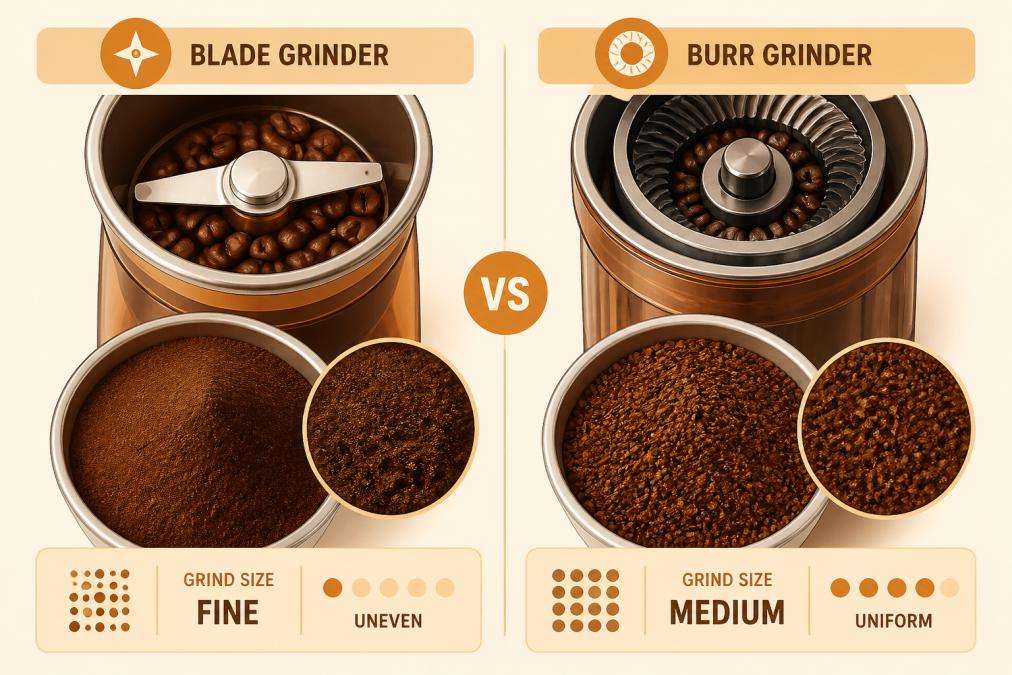
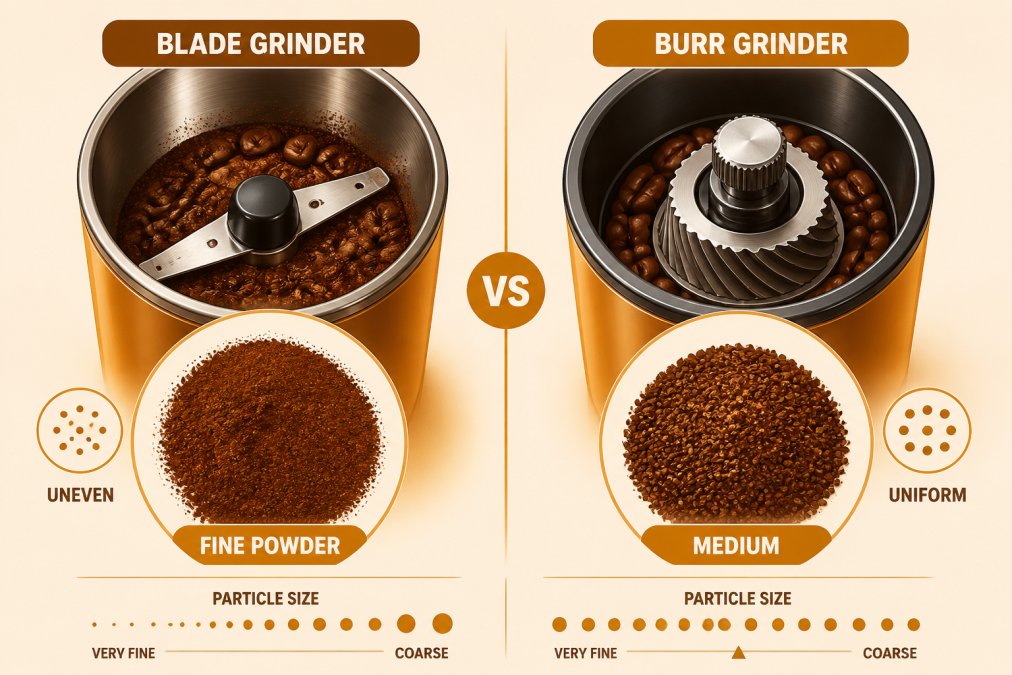
Uneven particles, a mix of fine powder and large chunks, extract at different rates. Fine particles over-extract quickly, releasing bitter compounds. Large chunks under-extract, leaving sour notes. Most home brewers use blade grinders, which chop beans into random sizes. This inconsistency is the primary reason blade-ground coffee tastes bitter.
A burr grinder crushes beans between two rotating surfaces and produces uniform particle size. Every particle extracts at the same rate. Switching to a burr grinder is the single biggest improvement you can make for flavored coffee.
Burr grinder vs. blade grinder for flavored beans
A burr grinder is essential for flavored coffee. You have two types: flat burr and conical burr. Both are vastly better than blade grinders. For flavored coffee, either type works, consistency is what matters.
When grinding flavored beans, use the medium setting as a starting point. This produces particles roughly the size of sea salt. Grind just before brewing; ground coffee loses freshness quickly, and flavored coffee loses its flavor oils even faster once the bean is broken open.
Best Grind Size for Flavored Coffee
Matching grind size to your brew method
Different brewing methods require different grind sizes because water moves through grounds at different speeds.
For flavored coffee, use these starting points:
- French press: coarse grind (similar to breadcrumbs)
- Pour-over (Chemex, Melitta, Kalita): medium-fine grind (similar to sea salt)
- Drip coffee maker: medium grind (similar to sand)
- Espresso machine: fine grind (similar to flour, but not powder)
- Cold brew: coarse grind (similar to breadcrumbs)
After brewing, taste your coffee. If it's bitter, your grind is too fine. If it's sour, your grind is too coarse. Adjust one setting at a time and test again.
Water Temperature, Steeping Time, and Bitterness
Water temperature controls extraction speed. The ideal temperature for flavored coffee is 195-205°F, not 212°F (boiling). Most home brewers don't measure water temperature. Let boiling water cool for 30 seconds before brewing, or use a thermometer.
Higher temperatures increase extraction yield. At 212°F, your extraction yield climbs quickly. At 195°F, it climbs more slowly. For flavored coffee, brewing at 195-205°F instead of 212°F often brings a flavored coffee from bitter into balanced.
Brew time adjustments for flavored coffee
Brew time is how long water stays in contact with grounds. For flavored coffee, shorter brew times work better than for unflavored coffee. If you're using a French press, try 3-3.5 minutes instead of the standard 4 minutes. For pour-over, aim to finish pouring within 3-4 minutes total. Cold brew is an exception, it steeps for 12-24 hours, but because the water is cold, extraction happens very slowly and is rarely bitter.
Water Quality, Bean Storage, and Hidden Bitterness
Water quality affects how bitterness is perceived. Mineral content in tap water, calcium, magnesium, and other dissolved solids, interacts with coffee compounds and can amplify bitter flavors. If you've adjusted grind size, temperature, and brew time and bitterness persists, try brewing a single cup with filtered water. If it tastes noticeably better, your tap water is the culprit.
Total Dissolved Solids (TDS) measures minerals in water. The ideal TDS for coffee brewing sits between 75-150 ppm. A basic pitcher filter costs $20-30 and works well for most home brewers.
How stale beans and poor storage intensify bitterness
Coffee beans stay fresh for about 2-3 weeks after roasting. After that, they oxidize and taste stale and bitter. The problem is worse with flavored coffee because the flavor oils oxidize along with the bean, creating a rancid taste.
Keep beans in an airtight container, away from light, heat, and moisture. A sealed bag with a one-way valve works well. Avoid the freezer; temperature swings and condensation damage flavor compounds.
At Cuppari Coffee, we roast beans only after an order is placed and ship the same day, ensuring your flavored coffee arrives at peak freshness. Most grocery store coffee has been sitting for weeks or months. Buy whole beans from a roaster that roasts to order, grind them at home, and brew within 2-3 weeks of the roast date.
Equipment Cleanliness and Residue Buildup
Coffee oils and mineral deposits build up inside your brewing equipment over time. These residues interact with fresh coffee and amplify bitterness. A French press with old coffee oils coating the mesh will add a stale, bitter taste. A drip machine with mineral buildup will brew hotter and extract more aggressively.
Coffee oils and equipment-specific bitterness
Coffee oils are flavorful when fresh, but they turn rancid when they oxidize. A French press used daily without deep cleaning will have layers of old, oxidized oil coating the mesh. When you brew fresh coffee, that old oil dissolves back into the cup, adding a stale, bitter taste.
The fix is simple: clean your equipment thoroughly and regularly. For a French press, disassemble the mesh, rinse it immediately after brewing, and wash it with hot water and a brush at least weekly. For a drip machine, run a cleaning cycle with white vinegar monthly to dissolve mineral deposits.
Descaling and maintenance checklist
| Equipment | Cleaning Task | Frequency | Time Required |
|---|---|---|---|
| French press | Disassemble mesh, wash with hot water and brush | After each use | 2 minutes |
| French press | Deep clean mesh with vinegar soak | Monthly | 15 minutes |
| Drip coffee maker | Run vinegar cleaning cycle | Monthly | 30 minutes |
| Drip coffee maker | Rinse water reservoir and filter basket | Weekly | 5 minutes |
| Pour-over (Chemex, Melitta) | Rinse with hot water | After each use | 2 minutes |
| Pour-over | Soak in vinegar solution | Monthly | 20 minutes |
| Espresso machine | Backflush group head (if machine allows) | Daily | 1 minute |
| Espresso machine | Run cleaning solution through group head | Weekly | 10 minutes |
| Espresso machine | Soak portafilter and basket in cleaning solution | Weekly | 15 minutes |
For drip machines, run a descaling cycle with white vinegar once a month. Fill the water reservoir with equal parts white vinegar and water, start a brew cycle, then let it sit for 15 minutes halfway through. For espresso machines, backflushing removes grounds and oils from the group head. Soaking the portafilter and basket in cleaning solution dissolves old oils.
Coffee Bean Quality and Roast Profile
Not all flavored coffee is created equal. The quality of the base bean determines the ceiling for how good your cup can taste. A flavored coffee made from low-quality robusta beans will taste bitter and harsh no matter how perfectly you brew it. Roast profile also matters. A dark roast naturally has more bitter compounds than a light roast. When you add flavoring to a dark roast, those bitter compounds combine with the flavoring, sometimes creating a harsh taste.
Dark roast, light roast, and bitterness perception
Dark roast is roasted longer and has more developed bitterness. Light roast is roasted less and retains more origin flavors with less bitterness. For flavored coffee, a medium roast is often the best compromise, it has enough body to balance the flavoring without excessive bitterness.
If your flavored coffee tastes bitter and harsh, check the roast level on the bag. If it's a dark roast, try a medium roast version of the same flavor.
Freshness guarantee and flavor profile stability
Coffee freshness is measured from the roast date. A coffee roasted yesterday is fresher than a coffee roasted three weeks ago. Most grocery store coffee doesn't have a roast date printed on the bag, which is a red flag. When buying flavored coffee, look for a roast date and buy from roasters who rotate stock frequently. Buy whole beans, not pre-ground, because ground coffee stales faster.
At Cuppari Coffee, every bag is roasted after your order is placed, which means your flavored coffee arrives at peak freshness. This eliminates one major source of bitterness, stale beans, before it even starts.
The path from bitter flavored coffee to a balanced, smooth cup comes down to controlling extraction. Over-extraction is the culprit in most cases, and it's fixable through grind size, water temperature, brew time, and equipment cleanliness. If bitterness persists after adjusting those variables, water quality and bean freshness are the next places to look. Start with a burr grinder and filtered water, these two changes solve the problem for most home brewers. When you're ready to upgrade your beans, Cuppari Coffee's same-day roasted flavored coffee ensures you're starting with fresh beans at peak flavor. Fresh beans, consistent grind, proper temperature, and clean equipment transform bitter coffee into something worth waking up for.
Frequently Asked Questions
Why does my flavored coffee taste more bitter than regular coffee?
Flavoring additives can amplify bitterness when extraction goes wrong. Artificial or synthetic flavoring compounds interact with over-extracted tannins and caffeine, creating a harsher taste. If your grind is too fine, water temperature too high, or steeping time too long, the flavoring compounds concentrate the bitter notes instead of balancing them. Freshly roasted beans help reduce this effect because they have more complex flavor compounds that mask bitterness better than stale beans.
What's the best grind size for flavored coffee to avoid bitterness?
Use a medium grind for drip coffee and a medium-fine grind for French press. A burr grinder produces consistent particle size, which is crucial for flavored beans because uneven particles extract at different rates, creating bitter spots. Blade grinders create too much powder, leading to over-extraction. For flavored coffee specifically, slightly coarser than normal helps because the flavor compounds are already intense. Test by starting coarse and adjusting finer if your coffee tastes sour.
How do I know if my coffee is over-extracted?
Over-extracted coffee tastes harsh, dry, and astringent with strong tannins and a lingering bitter aftertaste. The flavor profile becomes flat and one-dimensional. If your coffee sits in contact with hot water too long, or if your grind is too fine, over-extraction happens. Fix it by reducing steeping time by 15-30 seconds, using a coarser grind, or lowering water temperature by 5-10 degrees Fahrenheit. With flavored coffee, over-extraction also mutes the intended flavor, making the bitterness more noticeable.
Does water quality affect bitterness in flavored coffee?
Yes. High mineral content (hard water) can intensify bitterness because minerals affect how extraction happens. Water with low TDS (total dissolved solids) extracts too fast and unevenly, while water with high mineral content extracts too slowly, pulling out more bitter compounds. Filtered water with moderate mineral content works best. For flavored coffee, filtered water also removes chlorine and other contaminants that can interact with flavoring additives and create off-flavors. Consider using filtered water if your tap water tastes heavily chlorinated.
This article was written using GrandRanker