

Table of Contents
- Why Putting Coffee in the Fridge Is Bad: The Core Problem
- Moisture and Condensation: The Silent Flavor Killers
- Oxidation and Lipid Breakdown Inside Your Fridge
- What the Fridge Does to Brewed Coffee vs. Whole Beans
- Stale vs. Fresh Coffee: How to Tell the Difference
- The Best Way to Store Coffee Beans for Maximum Freshness
- How Long Does Coffee Last and What Destroys Its Shelf Life
- Common Bad Advice About Coffee Storage You Should Ignore
Last Updated: June 16, 2026
Storing coffee in the refrigerator feels like common sense: cold slows spoilage, right? Wrong. Understanding why put coffee in fridge bad comes down to basic food science, and the answer will change how you store your beans permanently. At Cuppari Coffee, we roast every order fresh and ship the same day precisely because freshness is fragile, and poor storage undoes all of that work instantly. Below, we'll show you exactly what happens to your beans inside a fridge, why brewed coffee follows different rules, and how to store coffee properly so every cup tastes the way it should.
Most guides conflate storing whole beans versus brewed coffee, leading to bad advice in both directions. This guide separates them clearly, covers the science behind flavor degradation, and gives you a practical framework based on your climate and container.
Why Putting Coffee in the Fridge Is Bad: The Core Problem
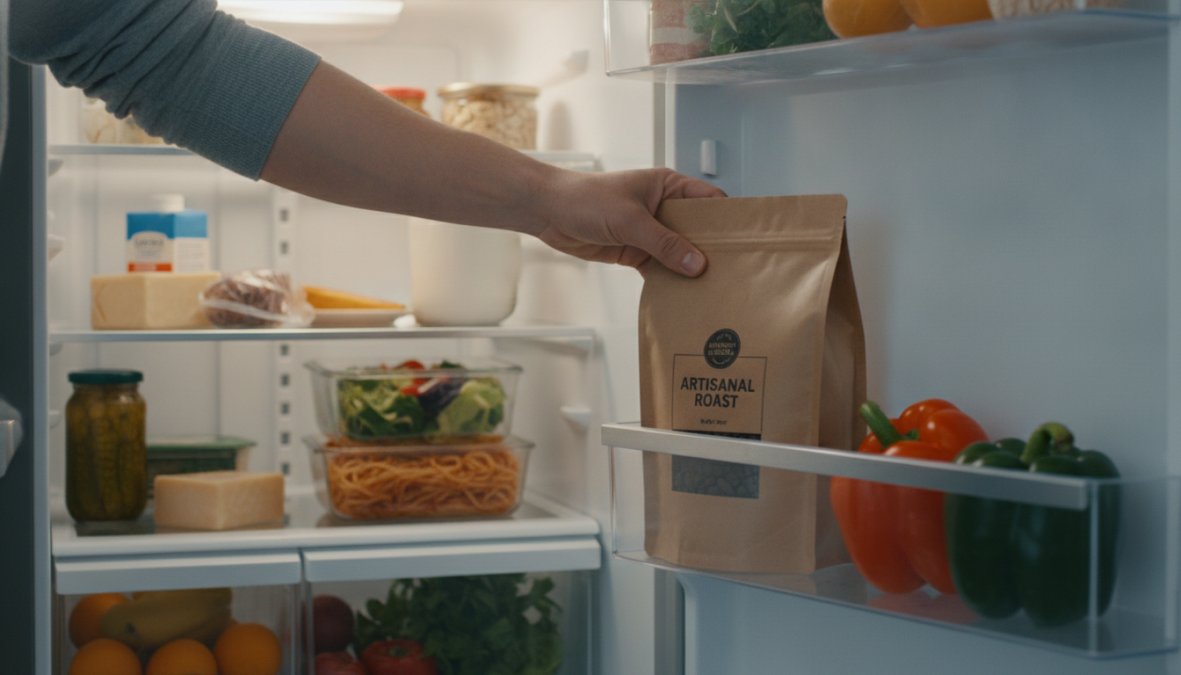
Storing whole coffee beans or ground coffee in a refrigerator is bad because the fridge creates three simultaneous threats: moisture, odor absorption, and temperature fluctuations. Any one of these would degrade coffee quality on its own. Together, they accelerate flavor loss dramatically.
Coffee is one of the most volatile aromatic substances in your kitchen. The compounds responsible for its complex flavor, primarily CO2 released during roasting and hundreds of volatile organic compounds, are fragile. Cold storage does not preserve them; it destabilizes them through condensation every time you open the fridge door. Roasted beans are dry, porous, and chemically active, they behave more like a sponge than a vegetable.
Coffee Is a Porous, Odor-Absorbing Material
Roasted coffee is a highly porous material that actively absorbs gases, moisture, and odors from its surroundings. During roasting, the cellular structure opens up, creating microscopic channels that release CO2, and pull in whatever surrounds them. Put coffee next to last night's fish or a cut onion, and the beans absorb those compounds directly. You will taste them in your cup. The fridge, full of perishables with strong aromas, is one of the worst cold storage environments for coffee.
The Science of Flavor Degradation in Cold Storage
Flavor degradation in refrigerated coffee happens through two primary chemical pathways: oxidation and lipid breakdown. Coffee beans contain natural oils (lipids) that carry much of the flavor and aroma you experience in the cup. According to food chemistry research on lipid oxidation in roasted coffee, lipid oxidation accelerates when coffee is exposed to fluctuating temperatures and humidity, both constant in a domestic refrigerator, producing a flat, stale, sometimes rancid flavor profile. The caramelization compounds developed during roasting are equally vulnerable; cold and damp conditions redirect these reactions toward degradation rather than preservation.
Moisture and Condensation: The Silent Flavor Killers
Moisture is the single fastest way to destroy coffee quality, and the fridge generates it constantly. Every time you remove your coffee from the refrigerator, the beans warm up and condensation forms on their surface, introducing humidity directly into the bean structure and triggering premature staling and eventual mold.
How Temperature Fluctuations Cause Condensation
Beans stored at fridge temperature (roughly 35-40°F) begin warming the moment they hit the counter. As the cold bean surface meets warmer air, moisture condenses on the exterior and penetrates the porous structure, degrading cell walls from the inside. Repeat this cycle daily and you have beans that are effectively pre-staled before they reach your grinder, producing a flat, bitter, one-dimensional cup. As documented in USDA guidelines on food storage and moisture control, temperature cycling is a primary driver of quality loss in shelf-stable food products, and coffee is particularly sensitive because its flavor compounds are volatile even at room temperature.
Oxidation and Lipid Breakdown Inside Your Fridge
Oxidation destroys the aromatic compounds that make a good cup interesting, it's the same process that turns a cut apple brown or makes cooking oil go rancid. The fridge does not reduce oxygen exposure. A loosely sealed bag inside the refrigerator still allows oxygen contact, and the moisture-rich environment accelerates the reaction rate, producing off-flavors described as cardboard, papery, or rancid. The combination of oxygen, moisture, and temperature cycling actually speeds up lipid oxidation compared to proper room-temperature storage in an airtight container. The only method that genuinely slows oxidation is removing oxygen entirely, via vacuum-sealed containers or nitrogen-flushed packaging. A refrigerator does not accomplish this.
What the Fridge Does to Brewed Coffee vs. Whole Beans
The fridge is genuinely bad for whole beans and ground coffee. For brewed coffee, the calculation is different. Brewed coffee is already extracted, volatile aromatics have been released into the liquid. The concern shifts from flavor preservation to food safety and taste degradation over time. Cold storage slows bacterial growth in brewed coffee, making refrigeration appropriate within limits.
This is the distinction most articles miss: the fridge is a quality problem for beans and a safety tool for brewed coffee.
How Long Does Brewed Coffee Last in the Fridge?
Brewed black coffee lasts up to two weeks in the refrigerator when stored in a sealed container, though flavor quality drops noticeably after 3-4 days. For practical purposes, treat brewed coffee as a 3-4 day refrigerator item if you care about taste. Beyond that, use it for iced coffee or cooking where flavor nuance matters less.
Food Safety: Black Coffee vs. Coffee with Dairy
Black coffee and coffee with dairy are not equivalent from a food safety standpoint. Black coffee is shelf-stable for short periods because it is low in protein and sugar, giving bacteria little to grow on. Coffee with milk, cream, oat milk, or other dairy alternatives follows perishables rules: refrigerate immediately and consume within 48 hours. According to FDA food safety guidelines on dairy and perishable storage, dairy products should not remain at room temperature for more than two hours, a coffee drink with milk left on the counter overnight is a food safety risk, not just a quality issue.
Stale vs. Fresh Coffee: How to Tell the Difference
Most people cannot identify stale coffee until it is extremely far gone. Here is a practical reference:
| Characteristic | Fresh Coffee | Stale Coffee |
|---|---|---|
| Aroma | Strong, complex, sweet | Flat, faint, or musty |
| Color (grounds) | Rich brown, consistent | Dull, grayish tones |
| Bloom (when brewing) | Active CO2 release, bubbles | Little to no bloom |
| Flavor | Layered, bright, clean finish | Bitter, flat, one-dimensional |
| Surface oils | Visible on fresh-roasted beans | Dry, powdery appearance |
The bloom test is the most reliable indicator. When you pour hot water over fresh grounds, CO2 escapes and the grounds visibly bubble and expand. Stale coffee produces almost no bloom because the CO2 has already off-gassed.
The Best Way to Store Coffee Beans for Maximum Freshness
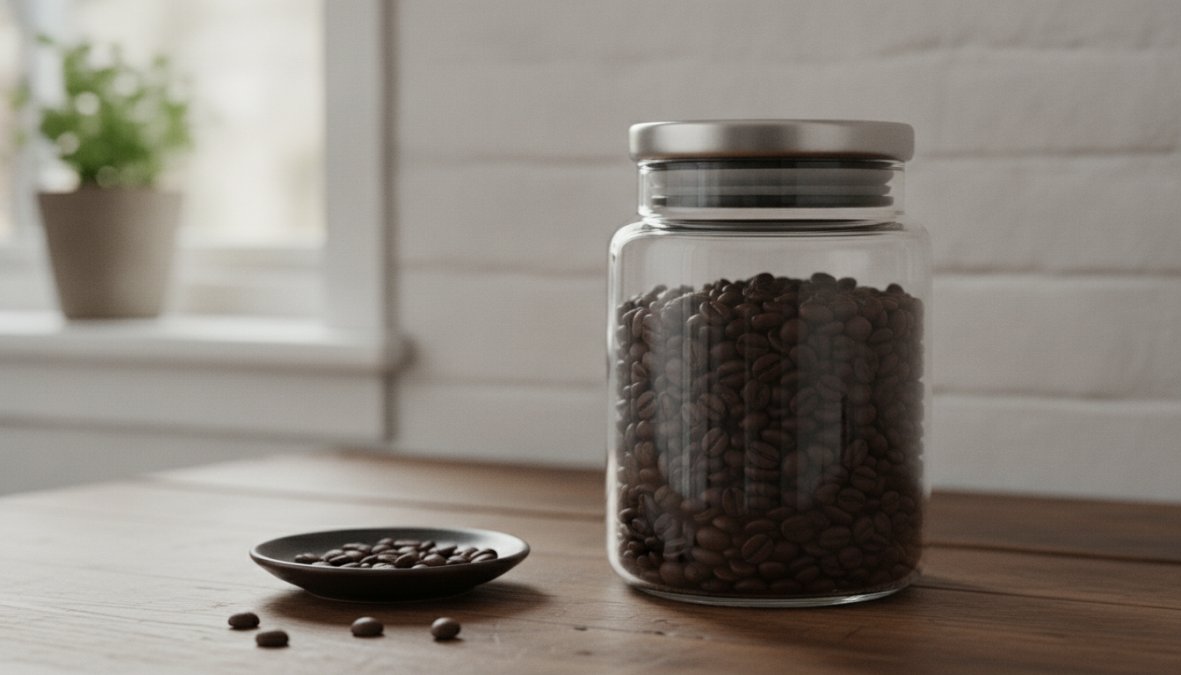
The best way to store coffee beans is in an airtight container, at room temperature, away from light, heat, and moisture. Room-temperature storage outperforms refrigeration for whole beans and ground coffee in every measurable dimension: aroma retention, flavor complexity, and shelf stability.
- Store in a dark, cool cabinet away from the stove, oven, or any heat source
- Use an opaque, airtight container with a one-way CO2 valve if possible
- Buy in quantities you will consume within two to three weeks of the roast date
- Never store near the dishwasher, which generates heat and steam
- Keep ground coffee in an airtight container and use within one week
Cuppari Coffee roasts every order after it is placed and ships the same day, meaning beans arrive at peak freshness, but only proper storage maintains that advantage.
Container-Specific Storage Solutions
Airtight glass canister with clamp seal: Excellent for short-term storage (up to two weeks). Blocks light if opaque, prevents odor contamination, imparts no flavor. Best all-around option for most home brewers.
Ceramic canister with rubber seal: Similar performance to glass. Naturally opaque. Avoid canisters with loose-fitting lids regardless of material.
Original bag with one-way valve: Many specialty roasters, including Cuppari Coffee, package beans in bags with CO2 one-way valves that allow gas to escape without letting oxygen in. Reseal tightly after each use and it performs comparably to a dedicated canister for the first week.
Vacuum-sealed container: The best option for extending shelf life beyond two weeks. Removes oxygen at the source, worth the investment if you buy larger quantities.
What to avoid: Clear glass containers on countertops (light accelerates oxidation), plastic containers (absorb and impart odors over time), and any container that is not truly airtight.
Climate-Specific Storage Advice
Storage advice is not one-size-fits-all. In humid climates (coastal regions, anywhere with summer humidity above 70%), moisture is the primary threat, prioritize vacuum-sealed containers and buy smaller quantities more frequently. In dry climates, oxidation is the bigger concern; use airtight containers with minimal headspace. In cold climates where kitchen temperatures drop significantly, be aware that temperature swings between a cold kitchen and a warm brewing area can mimic the condensation problem of refrigerator storage, keep coffee in a consistently temperate location, away from exterior walls or windows.
How Long Does Coffee Last and What Destroys Its Shelf Life
Whole roasted beans last approximately three to four weeks at peak flavor when stored properly, though they remain safe to consume for months. Ground coffee degrades faster: expect one to two weeks of quality flavor after grinding. Green (unroasted) beans have a shelf life measured in years because roasting is what activates the volatile compounds.
What destroys shelf life fastest, in order of impact:
- Moisture and condensation (immediate, irreversible damage)
- Oxygen exposure (cumulative, accelerates with time)
- Light exposure (particularly UV, which breaks down aromatic compounds)
- Heat (above 75°F accelerates all degradation pathways)
- Odor contamination (absorbed flavors cannot be removed)
The freezer question comes up often. Freezing whole beans in a completely airtight, vacuum-sealed container is acceptable for long-term storage, with one strict rule: freeze once, thaw once, never refreeze. The same condensation problem that makes the fridge damaging applies to the freezer if beans are repeatedly thawed and refrozen.
Common Bad Advice About Coffee Storage You Should Ignore
The most common mistake is treating coffee like produce. The "keep it cold to keep it fresh" logic that applies to vegetables does not transfer to roasted beans. Coffee does not spoil the way dairy or meat does, it stales, which is a different process, and cold storage accelerates staling rather than preventing it. What most guides miss is the distinction between preventing bacterial growth (where cold helps) and preserving volatile aromatic compounds (where cold hurts).
"Store coffee in the fridge to keep it fresh longer." False for whole beans and grounds. The fridge introduces moisture and odor contamination that destroys quality faster than room-temperature storage in a proper container.
"Freeze coffee beans to extend their life indefinitely." Partially false. Freezing works only with a vacuum seal and a single freeze-thaw cycle. Repeated freezing destroys the bean structure and produces a noticeably degraded cup.
"Airtight means any container with a lid." A loose-fitting lid is not airtight. Test your container: if you can hear air rushing in when you open it, oxygen is getting in during storage too.
"Ground coffee lasts as long as whole beans." Grinding increases surface area by roughly a thousand times, meaning oxidation and moisture absorption happen proportionally faster. Ground coffee has a fraction of the shelf life of whole beans.
As covered in specialty coffee storage research from the Specialty Coffee Association, the single highest-impact action a home brewer can take is grinding immediately before brewing rather than storing pre-ground coffee.
Poor storage is the most common reason a great coffee disappoints in the cup. If you're starting with beans that were roasted weeks ago or stored in a fridge, no brewing technique will fully compensate. Cuppari Coffee roasts only after an order is placed and ships the same day, so the beans arrive at their peak. Paired with sealed capsules that contain no oxygen inside and an improved filter design for a cleaner, livelier cup, the freshness advantage is built into every order. Add to cart and taste what properly handled coffee actually tastes like.
Frequently Asked Questions
Does storing coffee in the fridge make it go bad?
Yes, storing coffee beans or ground coffee in the fridge is bad for quality. The fridge environment introduces moisture through condensation every time you remove and replace the container. Coffee is highly porous, so it rapidly absorbs humidity and nearby food odors, leading to stale, flat, and off-tasting brews. For whole beans or ground coffee, a cool, dark pantry in an airtight container is far superior to cold storage.
Why does coffee absorb odors in the fridge?
Roasted coffee beans are porous and contain thousands of micro-channels left behind after roasting. These channels readily trap volatile aroma compounds from surrounding foods like onions, leftovers, or dairy. In a confined fridge environment, odor absorption happens quickly and permanently alters the coffee's flavor profile. This is actually why ground coffee is sometimes used as a fridge deodorizer, the same property that makes it useful there makes fridge storage terrible for coffee quality.
What is the best way to store coffee beans to keep them fresh?
The best way to store coffee beans is in an opaque, airtight container kept at room temperature in a cool, dark pantry away from heat, light, and moisture. Avoid clear glass jars on countertops near stoves. Vacuum-sealed containers offer the best shelf stability by minimizing oxygen exposure. Buy smaller quantities more frequently so beans stay within their peak freshness window, typically one to three weeks after roasting.
Can you freeze coffee beans instead of putting them in the fridge?
Freezing is controversial but more defensible than refrigerating, with strict conditions. If you freeze coffee beans, they must be in a completely airtight, vacuum-sealed bag and should only be frozen once. Repeated freeze-thaw cycles cause condensation and accelerate flavor degradation. Never refreeze beans after thawing. For everyday coffee, buying freshly roasted beans in smaller batches eliminates the need to freeze altogether, preserving aroma and flavor without the risks.
How long does brewed coffee last in the fridge?
Black brewed coffee stored in a sealed airtight container in the fridge stays safe to drink for up to 3 to 4 days, though flavor quality drops noticeably after the first 24 hours. Brewed coffee with milk, cream, or other dairy should be consumed within 1 to 2 days due to food safety concerns around perishables. Iced coffee and cold brew have slightly longer shelf lives, cold brew concentrate can last up to two weeks refrigerated in a sealed container.
How long does coffee stay fresh in a pantry?
Whole roasted beans stored in an airtight container in a cool, dark pantry stay at peak freshness for roughly 2 to 4 weeks after roasting. Ground coffee loses freshness faster due to increased surface area exposed to oxygen, expect peak flavor for about 1 to 2 weeks. Coffee doesn't spoil in a way that makes it unsafe, but oxidation and moisture cause significant flavor degradation over time, making it taste bitter, flat, or stale well before any safety concern arises.
This article was written using GrandRanker