

Table of Contents
- Why Use Organic Coffee Pods: The Essential Case
- Health Benefits of Organic Coffee Pods
- Environmental Impact of Coffee Pods
- Organic Coffee vs Regular Coffee: Quality and Flavor Differences
- Organic Compostable Coffee Pods: Material Choices and Impact
- Cost-Benefit Analysis: Organic Pods vs. Conventional Options
- Machine Compatibility: Keurig, Nespresso, and Beyond
- Making the Switch to Organic Coffee Pods
Last Updated: July 20, 2026
Why Use Organic Coffee Pods: The Essential Case
The difference between organic and conventional coffee comes down to soil health, chemical exposure, and taste. Organic coffee pods contain beans grown without synthetic pesticides, synthetic fertilizers, or chemical processing methods that leave residues in your cup. For daily coffee drinkers, that exposure matters. Single-serve organic pods offer convenience without compromising on what you're drinking.
Why use organic coffee pods isn't about being a coffee snob. It's about three practical things: what's in your cup, what's happening to farming communities, and whether your brewing habit aligns with your values.
Health Benefits of Organic Coffee Pods
Conventional coffee farming relies heavily on synthetic pesticides and chemical fertilizers. Trace amounts of these chemicals remain in your cup after brewing. Organic certification prohibits synthetic pesticide use, meaning the beans you're brewing meet stricter agricultural standards.
Organic coffee farming builds soil health differently. Healthier soil produces beans with higher mineral content and more complex antioxidant profiles. When soil contains more minerals, coffee plants absorb them, and those minerals end up in your brew.
Reduced Chemical and Pesticide Exposure
Conventional coffee farming uses pesticides like endosulfan and chlorpyrifos, which are banned in many countries but still permitted in coffee-producing regions. These chemicals don't disappear during roasting or brewing. If you drink coffee every morning, that's 365 daily exposures per year. Organic coffee pods eliminate this exposure entirely.
The roasting process in organic coffee is also cleaner because there are no pesticide residues to manage, allowing roasters to focus on bringing out the bean's natural flavor.
Mold-Free and Toxin-Free Testing
Mycotoxins, toxic compounds produced by mold, can develop on coffee beans during storage or transport. Organic coffee producers implement stricter storage protocols and toxin testing because their certification requires documented quality assurance.
Organic coffee pods come with additional protection: the sealed capsule design maintains a controlled environment with minimal oxygen exposure, preventing mold growth. The sealed design also preserves freshness, meaning you're getting beans closer to their roast date, a key factor in flavor and antioxidant content.
Environmental Impact of Coffee Pods
Organic farming avoids synthetic chemicals and rebuilds soil while protecting water systems. Synthetic pesticides and fertilizers run off into groundwater and rivers, where they persist for years. Conventional coffee farming degrades soil faster than it can regenerate, with topsoil loss averaging 1 ton per hectare per year. Organic farms maintain soil structure, allowing the land to continue producing coffee indefinitely.
Sustainable Farming Practices
Organic coffee farming uses shade-grown methods, cover crops, and natural composting to maintain soil health. Shade-grown coffee preserves forest canopy and protects biodiversity. The carbon footprint is lower because the farming process doesn't require energy-intensive synthetic fertilizer manufacturing.
Water quality improves significantly. Synthetic pesticides used in conventional coffee farming contaminate local water supplies. Organic farming eliminates this source of pollution entirely.
Fair Trade and Farming Communities
Organic certification creates a framework where fair trade practices are more common. Many organic coffee producers carry fair trade certification, ensuring farmers receive a minimum price and have a voice in how their coffee is marketed.
Conventional farmers often operate on razor-thin margins because commodity prices are set by global markets. Organic certification allows farmers to charge a premium, translating to better wages and working conditions. Fair trade certification goes further by requiring direct relationships between roasters and farmers, giving farming communities negotiating power and the ability to invest in schools, healthcare, and infrastructure.
Organic Coffee vs Regular Coffee: Quality and Flavor Differences
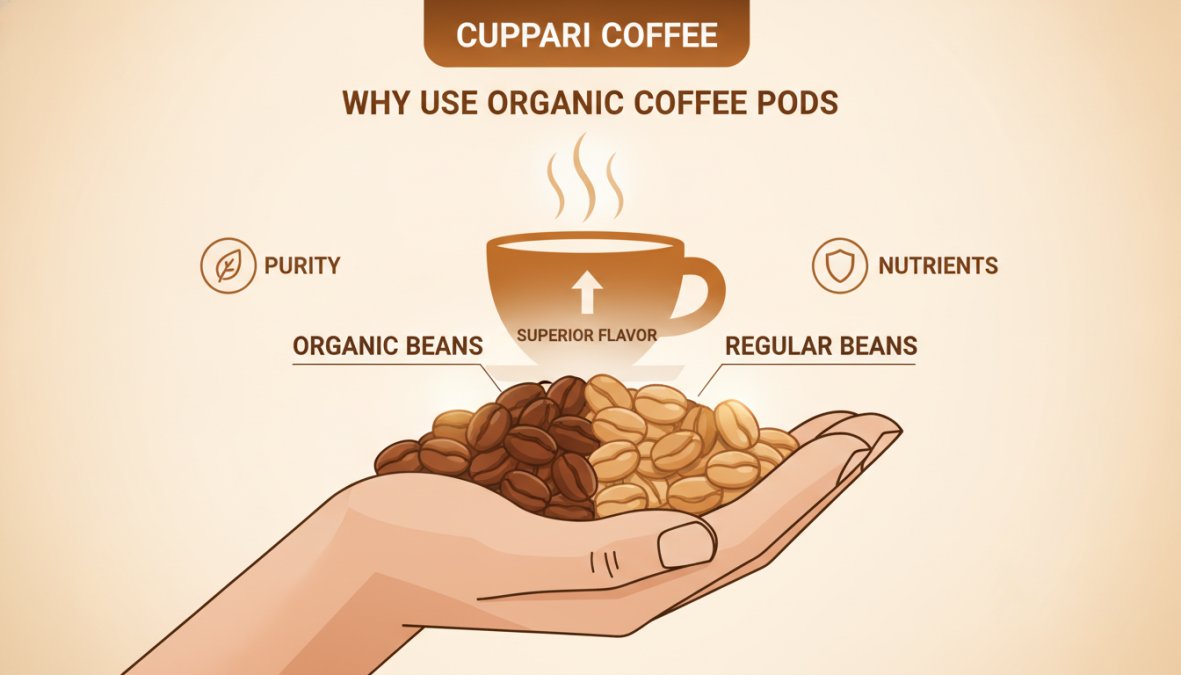
The flavor difference between organic and conventional coffee is real. Organic coffee doesn't automatically taste better, it tastes different. Conventional coffee farming prioritizes yield over flavor, planting in full sun and harvesting everything at once, including underripe beans. Organic farming uses shade-grown methods and selective harvesting, allowing more beans to reach optimal ripeness.
Flavor Clarity and Roasting Process
Organic coffee typically has clearer, more distinct flavor notes because the beans are cleaner. Without pesticide residues, the natural flavors of the bean, terroir, processing method, and altitude come through more distinctly. Roasters can roast organic beans more precisely because they're not managing chemical byproducts. When beans are roasted fresh and shipped the same day, you're getting maximum flavor clarity and the full antioxidant profile.
Freshness and Brewing Temperature Impact
Freshness is the single biggest factor in coffee flavor. Loose beans lose flavor compounds within 2-3 weeks of roasting. Pods, sealed with no oxygen inside, maintain freshness for months. The sealed design preserves volatile aromatic compounds that give coffee its complexity.
Organic coffee's cleaner chemistry means you can dial in the perfect brewing temperature without worrying about chemical compounds affecting taste. The improved filter design in coffee capsules creates more contact between water and coffee, extracting more flavor compounds.
Organic Compostable Coffee Pods: Material Choices and Impact
Single-serve pods created a convenience revolution but also a waste problem. Organic coffee pods address this by using materials that can break down or be recycled.
Aluminum vs. Plastic vs. Bio-Mesh Materials
Aluminum pods are recyclable and get recycled at high rates because aluminum has significant scrap value. Plastic pods are cheaper but create a waste problem, most end up in landfills and take 500+ years to decompose. Bio-mesh pods are made from plant-based materials like corn starch or cellulose and break down in 90-180 days in industrial composting facilities.
For most people, aluminum is the best choice because it actually gets recycled. For people with access to industrial composting, bio-mesh pods are ideal. Plastic pods should be avoided entirely.
Step-by-Step Guide to Composting Pods at Home
Step 1: Identify your composting option. Check whether your city or county offers industrial composting pickup by searching "[Your City] industrial composting" or checking your local waste management website.
Step 2: Prepare your pods. Remove any remaining coffee grounds and rinse aluminum pods. Bio-mesh pods don't need rinsing.
Step 3: Schedule pickup or drop-off. Include pods in your compostable waste bin on collection day, or locate a composting facility near you.
Step 4: Track your impact. Over a year, one person composting coffee pods prevents about 50 pounds of waste from entering landfills.
Step 5: Switch pod materials if needed. If composting isn't available, switch to aluminum pods, which are recyclable.
Cost-Benefit Analysis: Organic Pods vs. Conventional Options
Organic pods typically cost more per pod than conventional options, but the total cost depends on consumption. A person brewing one cup daily at home with organic pods spends roughly $200-250 per year on coffee. The same person using conventional pods spends $120-150 per year, a difference of $50-100 annually, less than the cost of one month of café coffee.
When you factor in health and environmental value, the premium becomes reasonable. For most daily coffee drinkers, the modest annual difference justifies the benefits.
Machine Compatibility: Keurig, Nespresso, and Beyond
Switching to organic coffee pods doesn't require buying new equipment if you use a Keurig. Most organic coffee roasters, including Cuppari Coffee, offer K-Cup compatible pods.
Nespresso machines are more restrictive. Nespresso capsules are proprietary, and Nespresso doesn't offer organic options through their official line. Third-party manufacturers make compatible capsules, and some are organic, though they sometimes don't perform as well as official capsules.
For people buying a new machine, Keurig compatibility is the safest choice because the organic pod market for Keurig is mature and competitive.
Making the Switch to Organic Coffee Pods
First, try a small order. Buy a week's worth of organic pods from a roaster you trust. This lets you taste the difference without committing to a large purchase.
Second, compare side-by-side. Brew your current coffee and the new organic option back-to-back. Pay attention to clarity and aftertaste.
Third, evaluate the cost difference. Track your current spending and calculate what organic pods would cost.
Fourth, check your pod material. Verify whether your pods are aluminum, plastic, or compostable and make a choice that aligns with your local waste infrastructure.
Fifth, commit to a brand. Once you find organic pods you like, subscribe or set up regular orders for consistency.
The transition typically takes 1-2 weeks as your palate adjusts.
Making the switch to organic coffee pods is one of the simplest ways to improve your daily coffee experience while supporting sustainable farming. The health benefits are real, the environmental impact is measurable, and the cost difference is modest. Cuppari Coffee delivers premium organic pods roasted the day you order, ensuring maximum freshness and flavor clarity. Each pod is sealed with no oxygen inside, preserving antioxidants and volatile compounds. Start with a small order and experience the difference that freshness and organic certification make in your cup.
| Comparison Factor | Organic Coffee Pods | Conventional Coffee Pods | Key Difference |
|---|---|---|---|
| Pesticide Exposure | None | Trace residues | Organic eliminates daily chemical intake |
| Soil Health | Regenerative | Degrading | Organic maintains long-term farmability |
| Flavor Clarity | High | Lower | Organic tastes more distinct |
| Freshness Advantage | Sealed pods | Sealed pods | Organic roasted fresher |
| Pod Material Options | Aluminum, compostable | Mostly plastic | Organic offers better recycling/composting |
| Annual Cost Difference | Baseline | $50-100 cheaper | Organic costs ~$50-100 more per year |
| Fair Trade Availability | Common | Rare | Organic more often pairs with fair wages |
External Sources Cited:
Research from the USDA National Organic Program standards establishes the baseline for what "organic coffee" actually means in the United States, requiring certification that prohibits synthetic pesticides and synthetic fertilizers in coffee cultivation.
According to the International Coffee Organization's sustainability report, conventional coffee farming causes soil degradation at rates that make long-term cultivation unsustainable without significant environmental intervention.
The World Wildlife Fund's coffee farming impact study documents how shade-grown organic coffee preserves forest canopy and biodiversity compared to sun-exposed conventional plantations, with measurable differences in bird and insect populations.
Frequently Asked Questions
What are the main health benefits of organic coffee pods?
Organic coffee pods eliminate synthetic pesticides and chemical residues found in conventional coffee, reducing your exposure to harmful compounds. They're tested for mold and mycotoxins, ensuring a cleaner cup. The antioxidants in organic coffee remain intact through careful cultivation and roasting, supporting immune system function. Since organic beans are grown without synthetic fertilizers, they retain more natural minerals that enhance both flavor and nutritional value.
Are organic coffee pods really better for the environment?
Yes. Organic farming avoids synthetic pesticides and fertilizers that pollute soil and water, protecting farming communities and ecosystems. Many organic coffee pods use compostable or recyclable materials, reducing environmental pollution from landfill waste. Sustainable farming practices preserve volcanic soil and natural compost cycles, supporting long-term agricultural viability. Fair trade practices ensure farming communities receive fair compensation, encouraging continued commitment to environmental stewardship.
How does organic coffee vs regular coffee taste different?
Organic single-serve coffee pods typically offer greater flavor clarity because beans are grown without synthetic chemicals that can mask natural notes. The roasting process for premium organic pods preserves complex flavor profiles, while conventional coffee often prioritizes consistency over character. Freshly roasted organic pods, roasted after your order, deliver superior taste compared to mass-produced alternatives sitting on shelves. Water quality and brewing temperature work together to unlock the full flavor potential organic beans offer.
Can I compost organic coffee pods at home?
Yes, if your pods are labeled compostable or bio-based. Remove the used grounds and rinse the pod thoroughly. Add compostable pods to your home compost bin or municipal green waste program. Aluminum and plastic pods require industrial recycling. Check your pod's material composition, bio-mesh and plant-based options break down in 90-180 days in proper compost conditions. Always verify local composting guidelines before adding pods to your compost system.
This article was written using GrandRanker