

Table of Contents
- How Roasting Transforms Green Coffee Into Flavor
- Coffee Roast Levels: Light, Medium, and Dark Explained
- Coffee Roast Flavor Chart: Match Your Taste Preferences
- Light vs Dark Roast Caffeine Content: The Truth Behind the Myth
- Best Coffee Roast for Espresso: What Baristas Recommend
- How Origin and Bean Density Shape Roast Flavor
- First Crack and Second Crack: The Science of Roast Development
- Frequently Asked Questions
Last Updated: September 12, 2026
How Roasting Transforms Green Coffee Into Flavor
Green coffee smells like hay and tastes vegetal, nothing like the drink in your cup. Understanding coffee roast levels flavor profiles starts with one fact: heat triggers hundreds of chemical reactions inside the bean, and where you stop them decides everything you taste.
Two reactions matter most. The Maillard reaction builds brown color and savory complexity as sugars and amino acids combine. Caramelization follows, sweetening the bean and deepening its body. Push further and fats migrate to the surface, bringing smokiness; stop early and you preserve acidity, aroma, and fruity notes.
At Cuppari Coffee, we roast beans only after an order is placed, because those volatile compounds fade fast once the bean cools. The roast level is the recipe. Freshness is what keeps the recipe intact.
Coffee Roast Levels: Light, Medium, and Dark Explained
Coffee roast levels fall into three broad categories. Light roasts stop shortly after first crack, keeping bright acidity and origin character. Medium roasts land between first and second crack, balancing sweetness with body. Dark roasts push past second crack into smoky, low-acid territory with visible oils.
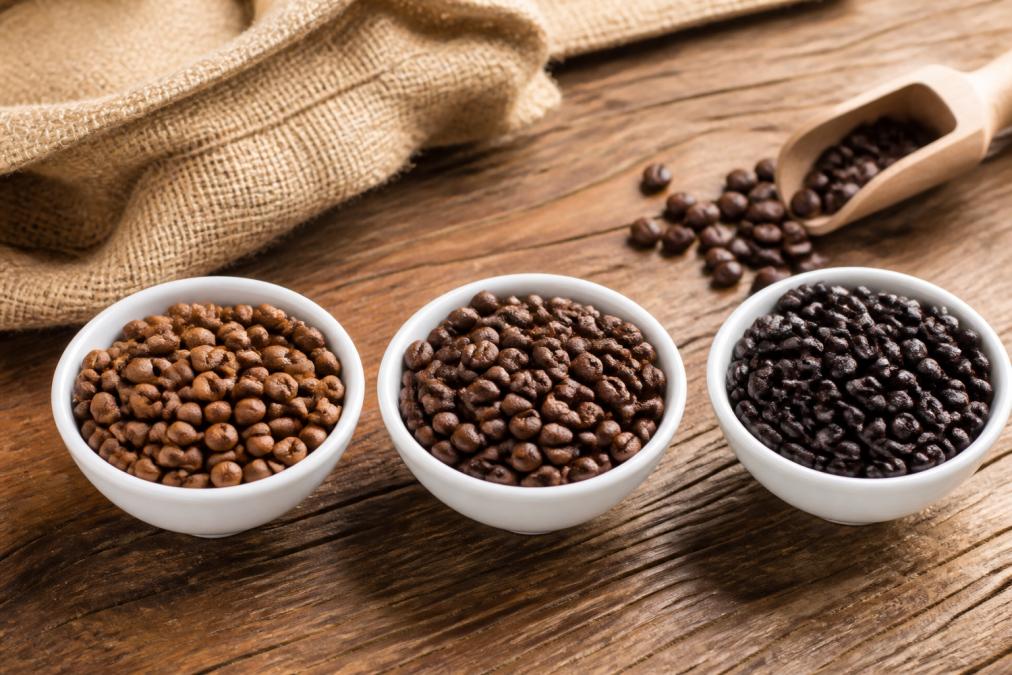
Light Roasts: Bright Acidity and Fruity Notes
Light roasts are the most transparent expression of where a bean grew: high clean acidity, light body, dominant fruity notes. A washed Ethiopian bean tastes like citrus and stone fruit. The tradeoff: underdeveloped light roasts taste grassy and sour, so timing matters.
Medium Roasts: Balanced Body and Caramelized Sweetness
Medium roasts are where most American drinkers live. Caramelization rounds off sharp edges, chocolatey notes emerge, and body thickens without losing origin character. The Cuppari Brazil Santos lands here with smooth cocoa notes, while the medium-light Ethiopia Natural keeps milk chocolate and caramel alongside its fruit.
Dark Roasts: Bold, Smoky, and Low in Acidity
Dark roasts trade nuance for force: acidity drops, bitterness rises, and the profile shifts toward smoke, dark chocolate, and molasses. Our Bali Blue sits at medium-dark, pulling dark chocolate and brown sugar without char. True French roast goes further, glossy with oil and built for people who want the roast, not the origin, to lead.
Coffee Roast Flavor Chart: Match Your Taste Preferences
Use this chart to match a roast degree to what you want in the cup. Roast names vary between roasters, but color and flavor markers stay consistent. Below it, we explain why each roast works with each brewing method.
| Roast Level | Bean Color | Flavor Profile | Acidity | Body | Best For |
|---|---|---|---|---|---|
| Cinnamon / Light | Light brown, dry | Fruity, floral, tea-like | High | Light | Pour-over, cold brew |
| City / Medium | Medium brown, dry | Caramel, cocoa, balanced | Medium | Medium | Drip, AeroPress |
| Full City / Medium-Dark | Rich brown, faint oil | Dark chocolate, brown sugar | Low-medium | Full | Espresso, moka pot |
| French / Dark | Dark, oily surface | Smoky, bittersweet, bold | Low | Heavy | Espresso, French press |
| Italian / Very Dark | Near-black, very oily | Charred, intense, bitter | Very low | Heavy | Espresso blends |
Why Roast Level and Brewing Method Need to Match
Brewing method determines contact time, turbulence, and heat; roast level determines how easily the bean gives up flavor. Pair them wrong and you either under-extract a delicate roast or over-extract a dark one.
Pour-over and light roasts. Pour-over gives you control over temperature and pour speed, exactly what a light roast needs. Its dense cell structure resists extraction, so a slower pour and slightly finer grind pull out fruity and floral notes without bitterness. Brew at 200 to 205°F; if the cup tastes sour or thin, grind finer before blaming the roast (peer-reviewed research).
French press and dark roasts. French press uses a coarse grind and full immersion, extracting heavily and leaving oils in the cup. That plays to a dark roast's strengths: smoke, molasses, and heavy body come through. Use water around 195 to 200°F and a four-minute steep. A light roast often tastes hollow here because the coarse grind cannot pull enough from the dense bean.
Espresso and medium to medium-dark roasts. Espresso forces water through fine grounds at pressure, amplifying sweetness and bitterness. Medium roasts give you caramelized sugar and enough body to stand up to milk; medium-dark adds chocolate depth and heavier mouthfeel. Light roasts demand precision, under-extract and you get sour, thin shots. Very dark roasts pull easily but turn ashy fast.
Cold brew and medium roasts. Cold water extracts slowly over 12 to 18 hours, favoring caramel and chocolate notes, so medium and medium-dark roasts shine. Light roasts taste thin and overly acidic, while very dark roasts turn bitter as the long steep pulls out every charred compound.
AeroPress and medium-light to medium roasts. The AeroPress sits between pour-over and French press in extraction strength, making it the most forgiving brewer for medium and medium-light roasts. Shorten the steep for a brighter cup or lengthen it for more body.
Light vs Dark Roast Caffeine Content: The Truth Behind the Myth
Dark roast does not contain more caffeine than light roast. By weight, the opposite is true: light roast beans are denser because they lose less mass during roasting, so a scoop delivers slightly more caffeine. The difference is small and mostly disappears when you measure by weight instead of volume.
What actually changes is bitterness. Dark roasts taste stronger because smoke and char dominate the palate, and people read that intensity as caffeine. For a bigger jolt, grind finer, use more coffee, or switch to a lighter roast, changing roast level alone will not do much.
Best Coffee Roast for Espresso: What Baristas Recommend
The best coffee roast for espresso is medium to medium-dark. Espresso forces water through fine grounds at pressure, amplifying sweetness and bitterness. A medium roast gives you caramelized sugar and enough body to stand up to milk; medium-dark adds chocolate depth and heavier mouthfeel.
Light roasts can work in espresso but demand precision, under-extract and you get sour, thin shots. Dark and very dark roasts pull easily but turn ashy fast, especially in milk drinks. Our Bali Blue, at medium-dark, is the sweet spot most home baristas land on.
The most common espresso mistake is buying a French roast because it looks "professional." Those oily beans clog grinder burrs and stale within days of opening. If your shots taste burnt no matter how you adjust the grind, the roast is the problem, not your technique.
How Origin and Bean Density Shape Roast Flavor
Origin and bean density decide how a bean responds to heat before the roaster touches anything. High-altitude beans grow slowly, pack tighter cell structure, and hold up to a longer roast curve without turning flat. Low-grown beans are softer, roast faster, and often land in darker profiles where origin matters less.
This is why the same roast level tastes different across origins. A dense Ethiopian heirloom roasted to medium keeps floral and fruity notes; a softer Brazilian bean at the same degree reads as smooth cocoa. Moisture content matters too: wetter beans need more heat early to push through drying, so the roaster adjusts the time-temperature curve.
First Crack and Second Crack: The Science of Roast Development
First crack and second crack are the two audible checkpoints that define every roast curve, the difference between roasting by recipe and roasting by feel. Both are sounds of structural failure inside the bean, but they mark very different points in flavor development.
What Happens During First Crack
As the bean heats, water inside the cell walls turns to steam. Pressure builds until the cellulose structure fractures with an audible pop. First crack typically begins around 385 to 400°F, depending on density, moisture content, and charge weight (sca.coffee). It sounds like popcorn in a covered pot: irregular pops that start slow, accelerate, and taper off over one to three minutes.
What matters is what the sound signals. First crack marks the moment the bean becomes drinkable and sugars begin caramelizing in earnest. Stop 30 to 60 seconds after it starts and you get a light roast with high acidity and pronounced origin character. Let it finish and continue another minute or two and you enter medium territory, where sweetness and body build.
A common home-roasting mistake is pulling the batch at the first pop, which produces a grassy, sour cup because the bean has not finished developing. Let first crack run its course, then decide based on time and color, not the first sound.
What Happens During Second Crack
Second crack is a different event. By this point the bean's moisture is largely gone and the cell walls are brittle; the crack you hear is the structure fracturing as oils and gases push outward. It sounds sharper and quieter than first crack, more like rice cereal snapping in milk. Bean temperature generally lands around 435 to 445°F.
Second crack is where roast flavor starts to override origin flavor. The longer you stay past its onset, the more you trade distinctive character for smoke, char, and bitterness. Oils migrate to the surface, the bean darkens toward black, and the cup loses the acidity that made the origin interesting. Roasters wanting a French or Italian profile cross into second crack deliberately but stop quickly, the window between "bold" and "ashy" is narrow.
How the Roast Curve Controls the Cracks
The roast curve, the path of bean temperature over time, determines how fast you travel between first and second crack. A slower curve through the Maillard phase builds sweetness and complexity; a rushed one produces baked, flat coffee even if the final color looks correct. The gap between the cracks, usually two to four minutes, is where most flavor decisions happen.
First crack marks the earliest point a roast is drinkable. Second crack marks the point where origin flavor starts disappearing. Every roast level you buy sits somewhere on that line, and the best roasters stop deliberately rather than by habit.
Specialty Coffee Association roasting resources
Frequently Asked Questions
What is the difference between light, medium, and dark roast coffee?
Light roasts stop after first crack, preserving fruity and floral notes with high acidity. Medium roasts reach a balance of acidity and body, often with caramel or chocolate flavors. Dark roasts go past second crack, developing smoky, bitter notes and low acidity. Each roast level changes how origin characteristics come through in the cup.
Does roast level affect the caffeine content in coffee?
Roast level does not significantly change caffeine content. Caffeine is stable during roasting. However, because dark roast beans lose more mass, a scoop of dark roast may contain slightly less caffeine by volume than a scoop of light roast. Measuring by weight gives a more consistent comparison.
Which coffee roast has the most flavor?
Flavor intensity depends on what you seek. Light roasts highlight fruity, floral, and acidic notes. Dark roasts emphasize smoky, chocolatey, and bitter flavors. Medium roasts offer a balance. There is no single 'most flavorful' roast; it depends on your taste preferences and brewing method.
How do roast profiles change the acidity of coffee?
Acidity decreases as roast level increases. Light roasts retain more of the bean's natural acids, giving a bright, tangy cup. Dark roasts have lower acidity because heat destroys some acids, resulting in a smoother, less tart flavor. If you have acid sensitivity, a dark roast may be easier on your stomach.