
Last Updated: October 25, 2026
Quick Summary
High quality flavored coffee starts with specialty grade beans roasted to medium roast, then flavored with natural oils applied to warm beans shortly after roasting. Look for a printed roast date within the last week, a one-way degassing valve on the bag, and ingredient disclosure stating whether flavoring is natural or artificial.
- Medium roast is the sweet spot for flavored coffee, developing body and sweetness while keeping origin character in the background.
- Flavoring oils must be applied to warm beans right after roasting to bond with the bean; cheap flavored coffee uses artificial flavoring sprayed on cold beans.
- Buy coffee roasted within the last week and use opened bags within 10 days, as flavored coffee loses quality faster than plain coffee.
- Check the ingredient panel for flavoring type, added sugar, dairy-derived ingredients, and other carriers before purchasing.
- Start with a sample pack to discover which flavors you prefer without committing to full bags you may not finish.
Table of Contents
- Understanding What Makes High Quality Flavored Coffee
- How Is Flavored Coffee Made and Why It Matters
- Checking the Roast Level and Bean Selection
- Natural vs Artificial Coffee Flavoring: What to Look For
- Best Flavored Coffee Beans Start With Freshness
- How to Store Flavored Coffee Beans for Maximum Freshness
- Start Your Flavored Coffee Journey With a Sample Pack
- Frequently Asked Questions
Understanding What Makes High Quality Flavored Coffee
High quality flavored coffee rests on three foundations: bean, roast, and flavoring. Learn how to identify high quality coffee beans to understand what sets specialty grade coffee apart.
Roast level matters enormously.
High quality flavored coffee uses flavoring oils applied to warm beans right after roasting, creating a bond between oil and bean.
At Cuppari Coffee, every flavored coffee starts with specialty grade single origin coffee roasted in small batches to a smooth medium.
The result tastes clean and intentional, with flavor enhancing the bean's natural character instead of masking it.
How Is Flavored Coffee Made and Why It Matters
After roasting, heat opens the bean's pores so flavoring oils penetrate deeply and create stable flavor that lasts through brewing.
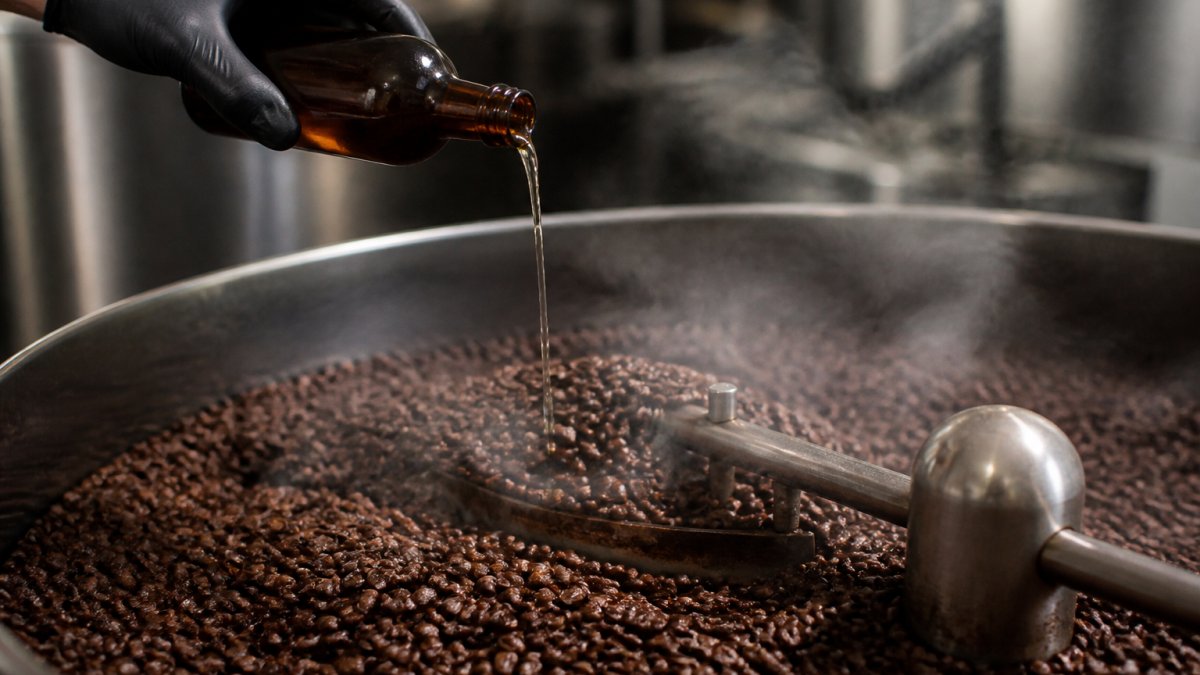
Timing is critical: too soon loses volatile compounds, too late leaves oil on the surface.
Natural flavoring oils come from real sources like vanilla beans, hazelnut, and cinnamon.
Fresh roasted flavored coffee tastes noticeably better than coffee roasted weeks ago.
Favor a company that roasts and flavors the same day, then ships immediately.
Checking the Roast Level and Bean Selection
Roast level and bean selection set the floor for quality, but the package in your hand is where you verify them.
What roast level actually does to flavored coffee
Light roasts preserve origin character, but delicate notes are easily buried by added flavoring, so light roast is rarely the right base unless the flavor is intentionally subtle.
Medium roast develops body and sweetness while keeping origin character in the background.
Dark roast brings smoky, roast-forward notes that can overwhelm added flavoring, so it works only when the roast should be the star.
Bean selection: what the label should tell you
Arabica beans are the standard for quality flavored coffee: more complex and naturally sweeter than robusta, and they accept flavoring oils more evenly. For high quality flavored coffee, look for 100% Arabica and, where stated, a named origin or blend.
The point-of-purchase quality checklist
Run this checklist before you buy, in a store or on a product page:
- Roast date, not just a best-by date. A printed roast date tells you exactly when the coffee was roasted. A best-by date alone doesn't. Buy within the last week when possible.
- Packaging with a one-way degassing valve. The valve lets carbon dioxide out and keeps oxygen out. A sealed bag with a valve is a strong freshness signal; an open-top bag or a bag with no valve is a weak one.
- Ingredient disclosure. The label should state the flavoring type (natural or artificial) and list any added sugar, dairy-derived ingredients, or other carriers. If it doesn't, contact the seller before buying.
- Bean appearance. Whole beans should look evenly roasted, without a heavy oily sheen that suggests over-roasting or surface-applied flavoring sitting on top of the bean.
- Seller information. A roaster that publishes roast schedules, roast-to-order practices, and a contact method is easier to verify than an anonymous listing. Look for a physical business address and a responsive contact channel.
- Package size versus your realistic use window. Flavored coffee is best within roughly 2-3 weeks of opening. A 2-pound bag you won't finish in that window is a freshness liability, not a value.
How to compare value without equating price with quality
Price per ounce is the only fair comparison across package sizes, but weigh it alongside roast date, package size, and expected use-by period. A cheaper per-ounce bag roasted two months ago is often worse value than a fresher, slightly pricier one, and buying smaller, more often usually beats buying bulk.
Where flavoring fits in the processing chain
Flavoring is typically applied to warm beans shortly after roasting, when the bean's pores are open and the flavoring can bond with the bean rather than sit on the surface. Ask the seller whether flavoring is added before or after roasting and how soon after the roast it's applied. A roaster who can answer that question specifically is a better bet than one who can't.
A quick note on equipment
Flavored beans leave residue in grinders and brewers. Clean the grinder more often, or keep a separate grinder for flavored coffee, and run a cleaning cycle between flavored and unflavored brews. Some drinkers instead buy unflavored beans and add flavor in the cup.
Each roast level affects how flavored coffee tastes and which flavors it can support.
| Roast Level | Effect on Flavored Coffee | Best Use |
|---|---|---|
| Light | Delicate notes easily buried by added flavoring | Rarely the right base unless flavor is intentionally subtle |
| Medium | Develops body and sweetness while keeping origin character | Most quality flavored coffees; supports vanilla, hazelnut, caramel, chocolate |
| Dark | Smoky, roast-forward notes can overwhelm added flavoring | Only when the roast should be the star |
Natural vs Artificial Coffee Flavoring: What to Look For
Most guides stop at "natural tastes better than artificial." The real questions are what's in the flavoring, how it's applied, what else comes with it, and how to verify claims with the producer.
Natural versus artificial: the short version
Natural flavoring comes from real sources, vanilla beans, actual hazelnuts, cinnamon bark. Artificial flavoring is synthetic, cheaper, and consistent batch to batch, but tastes flatter and fades faster.
That's the baseline. The buying decision depends on the details below.
Flavored Coffees Sample Pack →
Read the ingredient panel, not just the front of the bag
The front label is marketing. The ingredient panel is where transparency lives. Look for:
- Flavoring type stated explicitly. The panel should say "natural flavor" or "artificial flavor" (or both, if it's a blend). If it doesn't specify, contact the seller and ask.
- Added sugar. Some flavored coffees include sugar or sweeteners in the flavoring carrier. If you're watching sugar intake, check the panel rather than assuming coffee is sugar-free.
- Dairy-derived ingredients. Some flavoring systems use dairy-derived carriers or creamers. If you avoid dairy, verify with the producer rather than relying on the flavor name.
Allergens and cross-contact: what to ask
Flavored coffee is often produced in facilities that also handle nuts, dairy, or other allergens, and cross-contact labeling rules vary. Ask the producer three questions before buying:
- Does the flavoring contain or derive from a known allergen (tree nuts, dairy, soy, etc.)?
- Is the coffee produced on shared equipment or in a shared facility with those allergens?
- What is the company's allergen control or cleaning protocol between runs?
A producer who answers these specifically is easier to trust than one who answers vaguely. If you have a serious allergy, treat an unanswered question as a reason not to buy.
How flavoring is applied, and why it matters
Flavoring applied to warm beans shortly after roasting integrates more fully; flavoring sprayed onto cold beans sits on the surface and fades faster. Ask the seller when flavoring is applied.
A repeatable side-by-side tasting method
You can't separate bean quality, roast character, and added flavor by drinking one cup. Compare two flavored coffees side by side:
- Brew both the same way. Same grind, water temperature, ratio, and brew time.
- Taste warm, then as it cools. Natural flavoring tends to hold complexity; artificial flavoring can turn flat or chemical.
- Note the aftertaste. A clean finish suggests quality; a lingering harsh note suggests low-quality flavoring or a stale base.
- Try each with and without milk or cream. Dairy can mask or amplify flaws.
- Score base bean, roast character, and added flavor separately so you don't blame the bean for a flavoring problem.
- Repeat on a second day. A flavor you liked once and disliked twice is probably not your flavor.
Verify claims with the producer
Labels are a starting point, not a guarantee. If a package claims "natural flavoring" but the panel is vague, or if you need allergen or dietary confirmation, contact the producer. Ask specifically: What is the flavoring source? Is it natural, artificial, or a blend? Does it contain or derive from allergens? Is there added sugar or dairy?
Best Flavored Coffee Beans Start With Freshness
Freshness is the single biggest factor in whether your flavored coffee tastes excellent or stale.
Coffee is perishable.
Flavored coffee is more sensitive to staleness than plain coffee.
The roast date is your guide, not a "best by" date. Buy coffee roasted within the last week.
How to identify freshness at purchase:
- Check the roast date on the bag
- Look for a one-way valve on the bag (lets CO2 out, keeps oxygen out)
- Smell the coffee if possible (fresh coffee smells vibrant and aromatic)
Pre-ground coffee loses freshness even faster than whole beans because more surface area accelerates oxidation.
How to Store Flavored Coffee Beans for Maximum Freshness
The enemies of fresh coffee are oxygen, light, heat, and moisture, minimize all four.
How to Store Coffee Beans Fresh: The Complete Guide provides comprehensive storage guidance to keep your beans tasting great.
Buy only what you'll use within 2-3 weeks. Buying in bulk and storing long-term doesn't work well with flavored coffee. Better to buy fresh coffee more often.
Write the roast date on your container. Track when you opened the bag. Use opened bags within 10 days.
Start Your Flavored Coffee Journey With a Sample Pack
The best way to discover which flavors you love is to try multiple options.
The Flavored Coffees Sample Pack from Cuppari Coffee includes six 2-ounce samples of our top flavored coffees.
Samples solve the common problem of buying a full bag you're not sure about and not finishing it, letting you try new flavors.
Here's what to do with your samples:
- Brew each flavor separately
- Note which ones you enjoy
- Pay attention to the aftertaste
- Notice if the flavor stays consistent through your cup
- Try each with and without cream or milk
- Decide which ones warrant a full bag purchase
Most people find 2-3 flavors they love from a sample pack, which become their go-to flavors, buying with confidence.
Frequently Asked Questions
How can you tell if flavored coffee is high quality?
High quality flavored coffee shows several clear indicators: a recent roast date (within 7-14 days of purchase), whole beans with a consistent appearance, and a strong, pleasant aroma when you open the bag. Check the label for specialty-grade Arabica beans and natural flavoring oils rather than artificial additives. The coffee should smell like the flavor profile promised, not chemical or stale.
Do flavored coffee beans contain added sugar?
Most quality flavored coffee beans contain zero added sugar. Premium brands like Cuppari Coffee use high-quality flavoring oils applied to freshly roasted beans while they're still warm, which infuses the flavor without sugar or calories. Always check the nutrition label on the package to confirm there are no added sugars. Some brands may add sweeteners, so reading the ingredient list is essential to knowing exactly what you're purchasing.
Which coffee roast works best with added flavors?
Medium roast is the ideal choice for flavored coffee because it balances the coffee bean's natural characteristics with the added flavor profile. Medium roast beans retain enough origin flavor to complement the added oils while being smooth enough not to compete. Light roasts can taste too acidic with flavoring, while dark roasts may overpower the flavoring with their bold, smoky notes. Most quality flavored coffees, including specialty options, are roasted to medium for this reason.
What should I look for when buying flavored coffee?
Check four key factors: the roast date (must be recent, ideally within two weeks), the bean origin and grade (specialty-grade Arabica is best), whether flavoring is natural or artificial, and the packaging (sealed bags that protect from oxygen and light). Look for a detailed flavor description and brewing recommendations. Whole beans are preferable to pre-ground. If available, try a sample pack first to test quality and flavor consistency before committing to a full-size purchase.
