

Last Updated: October 22, 2026
Quick Summary
High quality coffee beans have a visible roast date between 3 and 14 days old, uniform size and appearance with no defects, and come from a traceable origin. Check the roast date first, inspect beans for damage, and verify the bag lists specific farm or region information.
- The peak brewing window is 5 to 14 days after roasting, when beans have released CO2 but retain aromatic compounds
- Specialty coffee is almost always 100% Arabica, which grows at higher altitudes and has more complexity than Robusta
- Defective beans like broken pieces, discolored beans, or insect damage indicate poor quality control and ruin the cup
- Look for traceability details including country, region, farm name, altitude, variety, and processing method on the label
- Store beans in an airtight container at room temperature and grind right before brewing to maintain freshness
Table of Contents
- Check the Roast Date and Freshness
- Characteristics of High-Quality Coffee Beans
- Understand Roast Levels and Flavor Impact
- Arabica vs. Robusta Coffee: Know the Difference
- Single-Origin vs. Blend Coffee: Which to Choose
- Evaluate Bean Quality Through Aroma and Visual Inspection
- Check Origin, Grower Information, and Traceability
- Store and Maintain Freshness After Purchase
- Frequently Asked Questions
Check the Roast Date and Freshness
The roast date is the single most important number on any bag of high quality coffee beans. It tells you exactly when the beans were roasted, not when they were packaged, not when they expire, but when they actually came out of the roaster.
Most people look at the "best by" date instead. That's a mistake. A best by date is a guess. The roast date is a fact.
Why roast date matters more than best-by date
Coffee beans start to lose their best flavors within days of roasting. The peak window for brewing is between 3 and 14 days after roasting. Buy beans roasted more than 3 weeks ago, and you're drinking stale coffee.
A best by date printed on the bag might say "6 months from now." That doesn't mean the coffee is still fresh in 6 months. It means the roaster is covering itself legally. What matters is the roast date.
Look for it on the bag. It should say "Roasted on" followed by a date. If you can't find a roast date, that's a red flag. The roaster is hiding something.
The optimal window for brewing freshly roasted beans
The sweet spot is 5 to 14 days after roasting. This is when the beans have released most of their CO2 but haven't yet lost their volatile aromatic compounds.
If you're ordering online, factor in shipping time. Beans roasted today won't reach you for 2 to 4 days. At Cuppari Coffee, we roast your order the day it ships, so the beans arrive at peak freshness.
After 3 weeks, the beans are still drinkable, but the flavor complexity flattens. After 2 months, they taste dull.
Characteristics of High-Quality Coffee Beans
High quality coffee beans look and feel different from commodity coffee. You can spot the difference with your eyes and hands.
Bean size, uniformity, and appearance
Good beans are dense and heavy. They're roughly the same size within a bag. They have a smooth surface with a visible crack down the middle, the chaff line that forms during roasting.
Uniformity matters because it signals consistent processing and careful sorting. If some beans are huge and others are tiny, the roaster didn't care about quality.
The color depends on the roast level. Light roasts are brown with a matte finish. Medium roasts are darker brown with a slight shine. Dark roasts are nearly black with an oily surface. Within each roast level, the color should be even across the batch.
Spotting defective beans and damage
Defective beans ruin the cup.
Look for these problems:
- Broken or chipped beans, fragments that fell out during processing or shipping
- Discolored beans, pale, gray, or spotted beans that indicate mold or fermentation problems
- Insect damage, small holes or tunnels through the bean
- Flat or misshapen beans, beans that didn't develop properly on the tree
- Floaters, beans so light they float in water, meaning they're hollow or under-developed
Most specialty roasters sort their beans by hand or machine to remove defects. Commodity coffee roasters often don't bother. That's one reason specialty coffee costs more, you're paying for quality control.
If you open a bag and find lots of broken pieces or discolored beans, that's a sign the roaster didn't invest in sorting.
Understand Roast Levels and Flavor Impact
The roast level changes everything about how the beans taste. It's not about better or worse, it's about what flavors you want to experience.
Light, medium, and dark roasts explained
Light roasts are roasted to the earliest stage.
Light roasts taste bright and acidic.
Medium roasts are roasted longer, past the first crack but before the second crack.
Medium roasts balance origin flavors with roast flavors.
Dark roasts are roasted the longest, past the second crack. The beans are almost black and oily.
Dark roasts taste bold and heavy. The origin flavors almost disappear, replaced by roast flavors, chocolate, caramel, molasses, and sometimes smoke.
The roast level doesn't determine quality. A light roast from a bad roaster tastes thin and sour.
Arabica vs. Robusta Coffee: Know the Difference
Two species of coffee dominate the market: Arabica and Robusta. They're fundamentally different plants.
Arabica makes up about 60% of the world's coffee supply. It grows at higher altitudes, between 2,000 and 6,000 feet.
Arabica is harder to grow. It's more vulnerable to pests and disease. It needs specific conditions.
Robusta makes up the other 40%. It grows at lower altitudes and is more hardy.
Robusta is used in instant coffee and budget blends. It's cheaper to grow and produces higher yields.
If you're buying high quality coffee beans, they're almost certainly Arabica. Robusta is rarely used in specialty coffee.
Single-Origin vs. Blend Coffee: Which to Choose
Single-origin coffee comes from one specific farm, region, or country. The bag tells you exactly where the beans grew.
Single-origin beans let you taste the place. A single-origin from Ethiopia tastes different from a single-origin from Colombia because the altitude, soil, climate, and processing methods are different.
Single-origin beans cost more because they require more care in sourcing and roasting.
Blend coffee mixes beans from different origins. A roaster might blend a bright Ethiopian with a heavy Brazilian to balance acidity and body.
Blends are designed for consistency.
For learning, start with single-origin. For everyday drinking, blends are fine. For best value, look for single-origin options that match your budget.
At Cuppari Coffee, we offer both. Our single-origin coffees like Brazil Santos showcase the specific characteristics of each region.
Evaluate Bean Quality Through Aroma and Visual Inspection
You can assess quality before you brew. Use your senses.
What fresh coffee should smell like
Open a bag of fresh beans and smell them immediately. Good coffee smells complex, you should notice multiple layers. You might smell chocolate, caramel, citrus, flowers, or nuts depending on the origin and roast.
Stale coffee smells flat and one-dimensional.
Fresh coffee has a strong aroma. If you have to put your nose right on the beans to smell anything, they're past their peak.
Bad coffee smells sour, musty, or fermented.
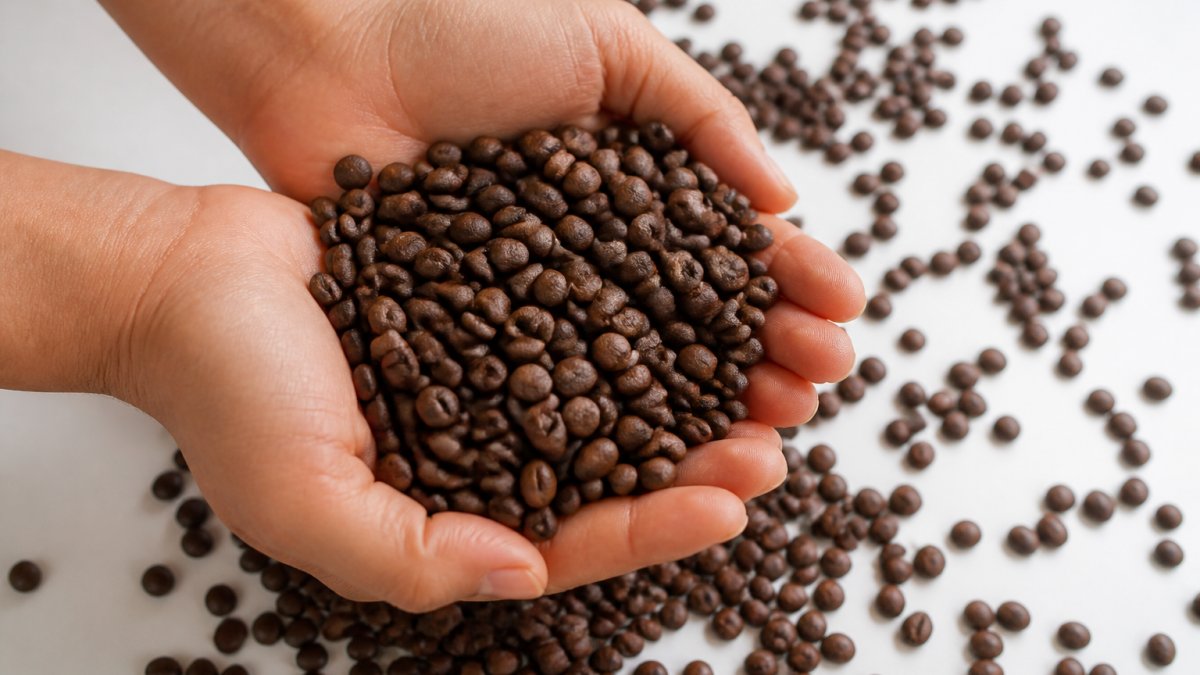
A simple at-home tasting method
You don't need expensive equipment to taste coffee properly. You need consistency.
Use the same cup, the same water temperature, and the same brewing method each time you test.
Look at the color. Is it clear or murky? Clear is better.
Smell the cup after it cools slightly. Notice the aromas.
Taste a small sip. Let it sit on your tongue for a second. Notice the flavors, the acidity, the body, and the aftertaste.
Ask yourself these questions:
- Does it taste clean or muddy?
- Can you identify specific flavors (chocolate, citrus, nuts) or is it generic?
- Is the acidity bright or flat?
- Does the aftertaste linger or disappear?
- Would you drink this every day?
Write down your answers. Over time, you'll develop a sense of what quality tastes like to you.
Check Origin, Grower Information, and Traceability
The best bags tell you exactly where the beans came from and who grew them.
Look for these details on the label:
- Country and region, "Colombia, Medellin" is better than just "Colombia"
- Farm or cooperative name, "Smallholder farmers from Sidama zone" shows the roaster knows the source
- Altitude, Higher altitude usually means better quality
- Variety, "Bourbon," "Typica," or "Caturra" tells you the plant genetics
- Processing method, "Washed," "natural," or "honey-processed" affects flavor
- Harvest date, Shows how old the beans are
Traceability matters because it means the roaster has a relationship with the grower. They know the conditions. They can tell you why the beans taste a certain way.
Commodity coffee has no traceability. The bag might just say "Arabica blend." That tells you nothing.
When you buy from Cuppari Coffee, you get full traceability. Our Ethiopia Natural comes from smallholder farmers in the Sidama zone, grown at 1,700 to 1,900 feet, processed as full natural, and dried on raised beds.
Traceability also supports the farmers. When roasters pay premium prices for traceable beans, farmers invest in better practices. That improves quality for everyone.
Store and Maintain Freshness After Purchase
Once you have high quality coffee beans, keep them fresh.
Store beans in an airtight container away from light, heat, and moisture.
Keep beans at room temperature. Don't refrigerate or freeze them.
Grind right before you brew. Ground coffee loses freshness much faster than whole beans.
Buy only what you'll drink in 2 to 4 weeks. Even perfect storage can't stop the clock. After a month, the beans have lost noticeable flavor.
If you're ordering online, choose a roaster that ships quickly.
Identifying high quality coffee beans comes down to a few simple checks: roast date, bean appearance, origin information, and freshness.
At Cuppari Coffee, we guarantee freshness by roasting your order the day it ships. Our single-origin coffees like Colombia and Bali Blue come with full traceability so you know exactly where your beans came from. Free shipping on all U.S. orders means you get fresh coffee delivered straight to your door, right in that optimal 5 to 14 day window. Add to cart and taste the difference freshness makes.
Frequently Asked Questions
How can you tell if coffee beans are fresh?
Check the roast date on the bag. Look for a date printed clearly, not just a vague "best by" label. Fresh beans should have a strong, vibrant aroma when you open the bag. Avoid beans that smell flat, stale, or musty. Packaging matters too: beans shipped in sealed, airtight bags with a one-way valve preserve freshness better than open containers.
What are the characteristics of high-quality coffee beans?
High-quality beans are uniform in size and color, with few or no defects like cracks, chips, or discoloration. They should have a smooth, oily or matte finish depending on roast level. The origin and processing method should be clearly labeled. Look for single-origin coffees from reputable growers at specific altitudes and regions, this traceability signals quality. The aroma should be complex and inviting, not flat or off-putting.
What is the difference between Arabica and Robusta coffee?
Arabica beans are considered higher quality, with more complex flavor notes, higher acidity, and lower caffeine content. They grow at higher altitudes and are more delicate. Robusta beans are hardier, contain more caffeine, and produce a stronger, more bitter taste with less flavor complexity. Most specialty coffees are Arabica. Check the bag label to confirm which variety you're buying, as Arabica typically costs more but offers better flavor depth.
Should I buy single-origin or blend coffee?
Single-origin coffees showcase the unique flavor profile of a specific region and processing method, ideal if you want to taste the terroir and experiment with different regions. Blends combine beans from multiple origins to create a balanced, consistent flavor profile that works well for daily brewing. For learning about quality, single-origin coffees make it easier to identify what you like. Cuppari Coffee offers both options, including single-origins like Ethiopia Natural and Brazil Santos, so you can explore and find your preference.