

Table of Contents
- What You'll Need: Essential Equipment for a Coffee Tasting Party
- Selecting Coffee Varieties and Origins for Your Tasting Flight
- How to Host a Coffee Cupping: Step-by-Step Instructions
- Using a Coffee Flavor Wheel Guide to Describe What You Taste
- Coffee Tasting Score Sheet: How to Track and Compare Flavors
- Coffee Pairing Ideas: Snacks and Bites That Complement Your Brew
- Troubleshooting Common Coffee Tasting Mistakes
- Conclusion
- Frequently Asked Questions
Last Updated: September 23, 2026
What You'll Need: Essential Equipment for a Coffee Tasting Party
A coffee tasting party needs less gear than most people expect. You can host a great one with items already in your kitchen. At Cuppari Coffee, we've found that simple setups often produce the clearest tasting notes.
The core list is short:
- Small cups (4 to 6 ounces each), one per coffee per guest
- A burr grinder, or coffee ground fresh before the party
- A kettle with a thermometer
- A scale that reads in grams
- Spoons, one per cup
- Water and a rinse bowl
- A notebook and pen for each guest
Selecting Coffee Varieties and Origins for Your Tasting Flight
The best tasting flights compare coffees that differ in origin or roast level, not both at once. Pick three to five coffees. Fewer keeps palates fresh.
A strong lineup for a first party:
| Coffee Type | Roast Level | What Guests Will Notice |
|---|---|---|
| Ethiopia | Medium-light | Fruity, floral, caramel |
| Colombia | Medium | Orange, berry, chocolate |
| Honduras | Medium-dark | Caramel, spice, brown sugar |
| Bali | Medium-dark | Dark chocolate, molasses |
How to Host a Coffee Cupping: Step-by-Step Instructions
A coffee cupping is a simple, repeatable way to taste several coffees side by side. The steps below take about 45 minutes total and follow the same structure professional cuppers use, scaled down for a home table.
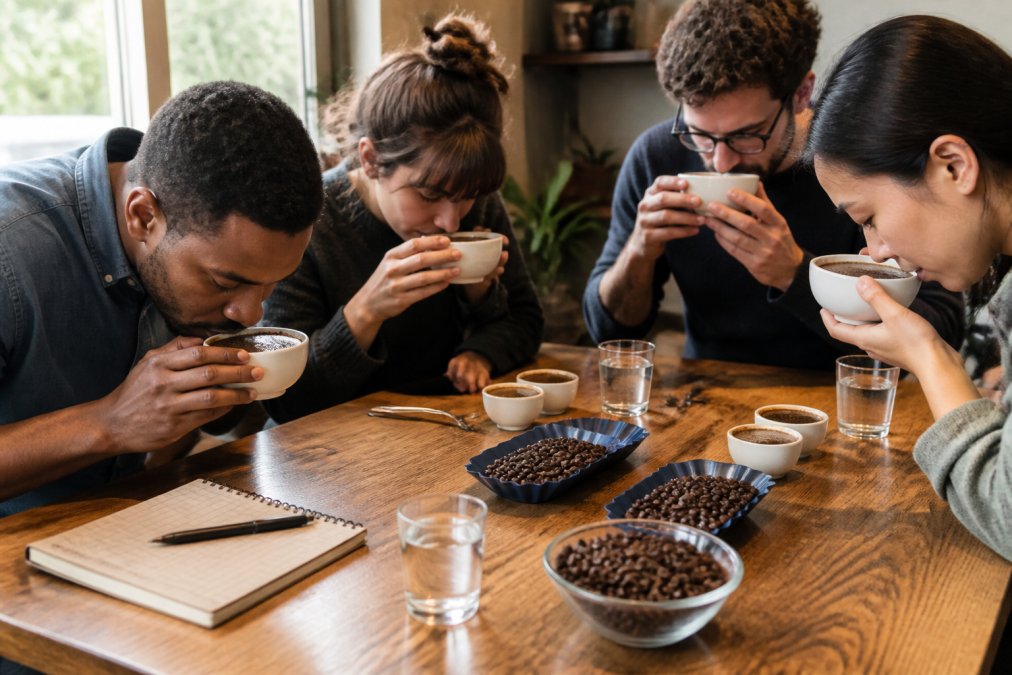
Step 1: Set Up the Tasting Table
Arrange cups in rows, one row per coffee. Put a label or index card behind each row. Set out spoons, water, and a rinse bowl within reach.
Step 2: Weigh and Grind Each Coffee
The ratio that keeps things consistent is 1 gram of coffee to 16 grams of water. For a 4- to 6-ounce cup, that works out to roughly 8 grams of coffee and 130 to 140 grams of water. Weigh every cup, eyeballing with a scoop is the single biggest source of inconsistency in home cuppings.
Step 3: Pour and Let the Crust Form
- Pour water at 200°F over the grounds. If your kettle doesn't hold temperature, boil and let it rest about 30 seconds.
- Start a timer the moment you finish pouring the last cup.
- Wait 4 minutes. A crust of grounds forms on top and traps most of the aroma.
Step 4: Break the Crust and Smell
This is the step most home hosts rush. Lean in close, push the crust aside with the back of your spoon, and inhale. The burst of aroma you get in the first two seconds is the most concentrated smell you'll get from that coffee all night. Have guests do this one at a time so nobody's breath blows the aromatics away.
Step 5: Slurp, Don't Sip
Slurping is not bad manners here, it's the point. Pulling coffee across your tongue with air mixes it with oxygen and spreads it across the whole palate, including the back of the tongue where bitterness registers. A quiet sip only hits the front.
Step 6: Pace the Flight
Wait one full minute between coffees. This isn't arbitrary, palate fatigue is real, and after about four or five cups in quick succession, most people stop registering differences between similar coffees. If you're tasting six or more, build in a longer break at the halfway point with plain sparkling water and a bite of bread.
Step 7: Go Back and Re-Taste
Once the coffees have cooled to room temperature, taste them again. Cooler coffee reveals sweetness and body that hot coffee hides. Many experienced cuppers find the second pass more informative than the first, the flavors have settled and the differences between origins are sharper.
Using a Coffee Flavor Wheel Guide to Describe What You Taste
A coffee flavor wheel guide turns vague impressions into words. Instead of "it tastes good," you get "dried orange and chocolate."
A few tips from our own tastings:
- Smell before you sip. Most of what you taste starts in your nose.
- Name the first thing that comes to mind. It's usually right.
- Compare two cups back to back. Contrast makes flavors pop.
Coffee Tasting Score Sheet: How to Track and Compare Flavors
A coffee tasting score sheet keeps the party organized and gives guests something to take home. Most guides hand you a blank grid and stop there. This one gives you the actual attributes to score, a defined scale, and a printable version you can hand out.
The Attributes That Matter
Score each coffee from 1 to 5 on these six categories. They mirror the attributes used in professional cupping, simplified for a home table:
- Fragrance / Aroma, what you smell dry, then wet, before you sip
- Acidity, the bright, lively quality (think citrus or green apple), not sourness
- Body, the weight and texture on your tongue, from tea-like to syrupy
- Sweetness, the natural sugars, from faint to honeyed
- Aftertaste, how long the flavor lingers and whether it stays pleasant
- Overall, your gut reaction, weighted for how much you'd want a second cup
How to Score Without Overthinking It
A 1-to-5 scale works because it's coarse enough that guests don't agonize over the difference between a 3.5 and a 3.7. Anchor the scale for your group before you start:
- 1, I don't want more of this
- 2, Fine, but I wouldn't seek it out
- 3, Solid, I'd drink it again
- 4, I'd buy this
- 5, I'd buy this and tell a friend
Tallying and Crowning a Favorite
At the end, add the six scores for each coffee. Highest total wins. Don't overthink ties, if two coffees land within a point of each other, that's a genuine tie, and it's worth noting in the group's notes which one people reached for second.
Why a Shared Score Sheet Changes the Party
Without a score sheet, the conversation drifts toward "I like this one" and "this one's my favorite", pleasant, but forgettable. With one, guests start using the same vocabulary, comparing the same attributes, and noticing things they'd otherwise miss. By the end of the flight, most groups have a shared list of what they tasted and why, which is the whole point of hosting a tasting instead of just serving coffee.
Coffee Pairing Ideas: Snacks and Bites That Complement Your Brew
Coffee pairing ideas work best when the food matches the coffee's weight, not just its flavor. Light coffees pair with light foods. Dark coffees handle richer bites.
Try these combinations:
- Ethiopia (fruity, floral): lemon shortbread, fresh berries
- Colombia (orange, chocolate): dark chocolate squares, almond biscotti
- Honduras (caramel, spice): cinnamon rolls, oatmeal cookies
- Bali (dark chocolate, molasses): brownies, salted nuts
Troubleshooting Common Coffee Tasting Mistakes
Most coffee tasting mistakes come down to temperature, grind, or pacing. Fix these and the whole party runs smoother.
- Coffee tastes bitter: Water was too hot. Let it cool to 200°F before pouring.
- Coffee tastes weak or sour: Grind was too coarse, or you used too little coffee. Aim for 8 grams per cup.
- Flavors all blur together: Too many coffees, or no palate cleanser. Cap the flight at five and rinse between cups.
- Guests feel rushed: Slow down. Give each coffee two full minutes of quiet tasting.
Conclusion
Hosting a coffee tasting party comes down to a few good beans, warm cups, and a room full of curious people. The gear is simple, and the payoff is a shared language for what you love about coffee.
Frequently Asked Questions
What is the 15-15-15 rule for coffee?
The 15-15-15 rule is a simple guideline for coffee tasting: wait 15 minutes after brewing to let the coffee cool slightly, take 15 seconds to smell the aroma before sipping, and spend 15 seconds noticing the flavors as you taste. This practice helps you slow down and catch subtle notes like sweetness, acidity, and aftertaste. It works well at a coffee tasting party because it gives everyone a shared rhythm and keeps the focus on the sensory experience.
What snacks pair best with a coffee tasting party?
For coffee pairing ideas, stick to mild snacks that won't overpower the coffee. Good options include plain shortbread cookies, dark chocolate squares, roasted almonds, and slices of apple or pear. Avoid strongly flavored foods like garlic or spicy chips. A plain palate cleanser like sparkling water or a small piece of bread between cups helps reset your taste buds so each coffee's flavor profile comes through clearly.
How many different coffee varieties should you serve at a tasting?
Serve three to five different coffees. Fewer than three makes it hard to compare, and more than five can overwhelm your guests' palates. A good mix includes a light roast, a medium roast, and a dark roast, or a few single origin coffees from different regions. A sample pack with small 2-ounce bags is an easy way to offer variety without committing to full-size bags.
What equipment do you need for a home coffee tasting?
You need a few basics: a burr grinder or pre-ground coffee, a kettle for hot water, a scale, small cups or bowls (6 to 8 ounces each), spoons for slurping, and a notebook or printed coffee tasting score sheet. A coffee flavor wheel guide is also helpful for describing what you taste. If you don't have a scale, use a consistent scoop measure. A sample pack of single origin coffees makes it easy to offer variety without buying full bags.
The hardest part of a coffee tasting party is getting beans that still taste like something. Cuppari Coffee roasts only after you order and ships the same day, so every bag lands in its prime. Free shipping on all U.S. orders makes it easy to stock a full flight, and sample packs keep the cost low while you explore. Get started with Cuppari Coffee and give your guests a tasting they'll actually remember.