

Table of Contents
- How to Choose the Best Coffee Grinders for Home Use
- Burr vs Blade Coffee Grinder: What Actually Matters
- Grind Size for Different Brewing Methods
- Top Coffee Grinders for Home Use in 2026
- Coffee Grinder Maintenance Tips for Long-Term Performance
- What Most Grinder Reviews Miss: Retention, Noise, and Durability
- Conclusion: Matching Your Grinder to Your Daily Brew
- Frequently Asked Questions
Last Updated: September 19, 2026
How to Choose the Best Coffee Grinders for Home Use
Finding the best coffee grinders for home use comes down to three decisions: burr type, grind range, and counter space. This guide from Cuppari Coffee covers what actually matters.
Burr vs Blade Coffee Grinder: What Actually Matters
A burr grinder crushes beans between two abrasive surfaces set to a fixed gap, producing uniform particles. A blade grinder spins a metal propeller that chops beans randomly, leaving fine dust and coarse chunks.
Within burrs, two geometries dominate:
| Burr Type | Grind Profile | Best For | Trade-off |
|---|---|---|---|
| Conical burr | Slightly wider particle range, fewer fines | Espresso to French press | Gentler on beans, slower |
| Flat burr | Tighter uniformity, fewer boulders | Espresso, pour-over | Higher heat buildup, louder |
Grind Size for Different Brewing Methods
Grind size should match your brewer's contact time: longer contact needs coarser grounds, shorter needs finer. Getting this wrong is the most common reason a good bean tastes flat or harsh.
Here's the practical range, from fine to coarse:
- Espresso: fine grind, like powdered sugar. Short, pressurized contact.
- Moka pot: fine to medium-fine, slightly coarser than espresso.
- AeroPress: medium-fine to medium, adjustable by steep time.
- Pour-over and drip: medium, like table salt. This is the filter coffee sweet spot.
- French press: coarse grind, like sea salt. Long steep, metal mesh filter.
Top Coffee Grinders for Home Use in 2026
The best coffee grinders for home use in 2026 pair burr precision with a workflow that fits a real kitchen. Our top overall pick is the OutIn Fino Portable Electric Coffee Grinder at $179.99, earning that spot on adjustability and portability rather than name recognition.
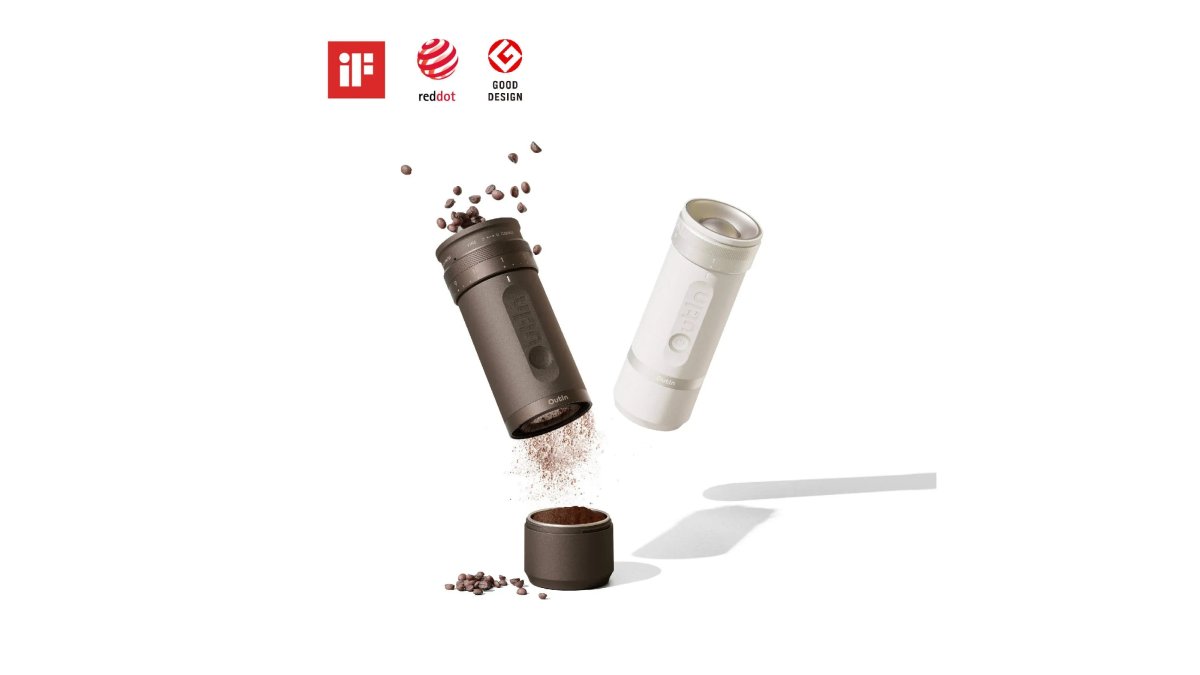
OutIn Fino Portable Electric Coffee Grinder
The OutIn Fino solves two common complaints: fiddly adjustment and slow grinding. Its external rotation dial combines 28 clear grind levels with stepless micro-adjustment, so you can move from espresso to French press without resetting the burrs. That stepless range matters for espresso, where a fraction of a setting changes extraction yield.
Workflow details set it apart:
- Rotating bean hopper: load, lock, and clean in seconds. Turn right to fill, left to open.
- Cordless design: 690g with a detachable grind catch, so it travels to a cabin or campsite.
- Fast charging: one hour of charge time on the lithium battery.
- One-touch control: patented consistency technology for even grounds without fuss.
How the Other Categories Stack Up
A single grinder can't win every category, because burr geometry, motor type, and hopper design trade off against each other. Here's how the main home-use categories compare.
Burr Material: What You're Actually Paying For
Burr material decides how long the grinder stays accurate.
- Hardened steel burrs hold an edge longer, cut through light roasts without stalling, and are the espresso standard. They can impart a faint metallic note until they season.
- Ceramic burrs resist heat and corrosion, never rust, and run quieter. They're more brittle, so a stray rock or over-tightened setting can chip them.
- Coated burrs (titanium or similar) extend edge life and reduce friction, but cost more and can wear unevenly if the grinder is misaligned.
Steel burrs often outlast the motor, so the practical question is whether replacement burrs are sold separately for the model you're considering.
Capacity and Footprint
Counter space is a real constraint, and grinder footprints vary more than spec sheets suggest.
- Single-dose grinders hold one dose (roughly 18-30g) and are the smallest, often under 4 inches wide. Best for espresso drinkers and anyone who switches beans daily.
- Compact hopper grinders hold 8-12 oz and fit under standard upper cabinets. Good for one or two daily brewers.
- Full hopper grinders hold a pound or more, often 6-8 inches wide and tall enough to clear a cabinet only when pulled forward. Best for households brewing multiple pots a day.
Coffee Grinder Maintenance Tips for Long-Term Performance
Coffee grinder maintenance comes down to three habits: clean the burrs, clear the chute, and protect the motor. Neglect them and you'll taste stale oils and see retention climb.
What Most Grinder Reviews Miss: Retention, Noise, and Durability
Most grinder reviews quote specs and stop there. The three factors that decide whether you still like your grinder in year three are retention, noise, and repairability.
OutIn Fino Portable Electric Coffee →
Retention: The Number Nobody Publishes
Retention is the weight of grounds left inside the grinder after each use, the best predictor of whether switching beans is a pleasure or a chore.
Typical retention by design:
- Single-dose grinders: often under 0.5g retained, because there's no hopper column of beans pushing grounds through and the chute is short.
- Hopper-fed home grinders: commonly 1-3g retained, and higher on models with long, angled chutes or anti-static coatings that have worn off.
- Blade grinders: effectively zero retention in the burr sense, but wildly inconsistent particle size, which is a worse problem.
How to reduce retention without buying a new grinder:
- Grind a small purge dose (2-3g) before your real dose when switching beans.
- Tap the grinder body gently while it runs to shake grounds loose.
- Brush the chute weekly; compacted fines are the main cause of rising retention over time.
- Let the grinder cool between sessions, warm grounds are stickier.
Noise: What Decibels Actually Mean at 6 A.M.
Noise rarely appears on spec sheets, but it's the complaint that gets grinders banished to the garage. The question isn't "is it loud" but "how loud, and for how long."
A useful frame, based on common sound-level references:
- Quiet conversation sits around 60 dB.
- A typical electric burr grinder runs in the 80-90 dB range at the counter, comparable to a garbage disposal or a blender on low.
- Flat burr grinders tend to run louder than conical, because the burrs spin faster and the flat geometry produces a higher-pitched cutting sound.
- Manual grinders are the quietest option by a wide margin, the sound is beans cracking, not a motor, so they're the practical choice for early-morning or shared-wall apartments.
Durability and Repairability: Buy Once, Rebuild Later
Durability separates a lifelong tool from a disposable one, and it comes down to which part fails first.
The common failure points, in rough order of frequency:
- The motor, usually the first thing to go on budget grinders, especially if run continuously. Heat is the killer; a motor rated for intermittent duty will fail faster under daily espresso loads.
- The burrs, steel burrs typically outlast the motor, but they dull gradually, so you may not notice until your shots start running fast and tasting sour.
- The adjustment mechanism, plastic detents and collars wear and slip, which is why stepless metal adjustment holds up better over years.
- The switch or control board, the cheapest part and often the hardest to replace on sealed designs.
What to check before buying:
- Are replacement burrs sold separately, and at what price?
- Does the manufacturer publish a service procedure or parts diagram?
- Is the burr carrier metal or plastic? Metal survives repeated disassembly; plastic threads strip.
- Is the motor rated for continuous or intermittent duty? Continuous-duty motors cost more but tolerate back-to-back doses.
Compatibility: The Fourth Blind Spot
Before buying, confirm the grinder's grind range covers your brewing method. An espresso-marketed grinder may not go coarse enough for French press, and a filter-focused model may not go fine enough for a real espresso shot. Favor a wide, numbered adjustment scale over a narrow one.
Conclusion: Matching Your Grinder to Your Daily Brew
The right grinder matches how you actually brew, not the longest feature list. If you drink espresso daily, prioritize stepless adjustment and low retention. If you brew drip or French press, a solid conical burr grinder, manual or electric, gets you there for less.
Frequently Asked Questions
What is the best rated coffee grinder for home use?
The best coffee grinder for home use depends on your brewing method and budget. Portable electric models like the OutIn Fino offer 28 grind levels and stepless micro-adjustment for espresso to French press, priced at $179.99. For drip coffee drinkers, a mid-range burr grinder provides consistent particle size without the premium cost. Look for conical burrs, low retention, and easy cleaning to get the most value.
What is the difference between a burr grinder and a blade grinder?
A burr grinder crushes beans between two abrasive surfaces for uniform particle size, while a blade grinder chops beans with spinning metal, creating inconsistent grounds with fines and boulders. Burr grinders give you control over grind size for different brewing methods, from fine espresso to coarse French press. Blade grinders are cheaper but produce uneven extraction, making them a poor choice for anyone serious about flavor.
How often should I clean my coffee grinder?
Clean your coffee grinder every one to two weeks with regular use. Oils from coffee beans build up on burrs, affecting grind consistency and flavor. For daily brewers, a quick brush-out after each session helps. A deeper clean with grinder tablets or rice (for blade models) monthly removes stubborn residue. Always unplug the grinder before cleaning and check the manufacturer's instructions for specific care steps.
Is it worth buying an expensive coffee grinder?
An expensive grinder is worth it if you brew espresso or pour-over daily and want consistent extraction. Better burrs, stepless adjustment, and lower retention directly improve cup quality. For casual drip drinkers, a mid-range burr grinder at $100-$200 delivers most of the benefit. The OutIn Fino at $179.99 balances portability, 28 grind settings, and fast charging, making it a strong option for home use without commercial pricing.