

Last Updated: November 6, 2026
Quick Summary
Brewing in a cold brew fridge means steeping coarse grounds in cold water at 40°F or below for 12 to 18 hours, which slows extraction for a smoother, cleaner cup with fewer bitter compounds and acids. The trade-off is time: expect roughly 16 to 18 hours for the strength you would get from 12 hours on the counter.
- Aim for 16 hours as your default steep time, then adjust up or down on your next batch.
- Use a 1:4 ratio for concentrate, so 1 cup of grounds to 4 cups of water.
- Grind coarse, like sea salt, because fine grounds slip through filters and turn the brew muddy.
- Store concentrate in a sealed container in the fridge for up to two weeks, though it is best within the first week.
- Dilute 1:1 with water for a standard cup, since cold brew concentrate is strong by design.
Table of Contents
- Why Brewing Cold Brew in the Fridge Beats the Counter
- Cold Brew in Fridge Time: How Long It Actually Takes
- A Fridge Cold Brew Recipe With Real Measurements
- Benefits of Cold Brew Coffee vs Hot, Side by Side
- Best Coffee Beans for Cold Brew and How to Grind Them
- Storing, Diluting and Serving Fridge-Brewed Concentrate
- Troubleshooting Fridge-Brewed Coffee That Tastes Off
- Start Your First Fridge Batch With Freshly Roasted Beans
- Frequently Asked Questions
Why Brewing Cold Brew in the Fridge Beats the Counter
Brewing in a cold brew fridge is the practice of steeping coarse coffee grounds in cold water inside your refrigerator for 12 to 18 hours, letting low, steady temperatures pull out smooth flavor with less bitterness. This guide covers exactly how that works, why it beats the counter, and how to do it right the first time.
Here is the short version: temperature is the whole story.
A countertop jar sits at room temperature, where water and coffee interact faster and less predictably. A fridge holds steady cold. That slower, cooler steep is the difference between a cup that tastes clean and one that tastes sharp or flat.
Below, we'll show you the exact ratio, timing, and grind so your first fridge batch comes out right. But first, here's what most guides get wrong: they treat fridge brewing as just "cold brew, but colder." It isn't.
What the Refrigerator Actually Changes
Cold slows extraction. That means fewer bitter compounds and acids make it into your cup, and the ones that do arrive gradually.
The trade-off is time. A counter batch might finish in 12 hours. A fridge batch needs closer to 16 to 18 for the same strength. You trade speed for control.
Three things change inside the fridge:
- Slower extraction: smoother, rounder flavor with less bite
- Steadier temperature: no warm kitchen swings to throw off the brew
- Steadier conditions: cold storage keeps the steep at a consistent temperature
Watch out: a fridge that runs warm, above 40°F, undercuts the whole point. Check your fridge temp before you commit a batch to it.
Fridge Versus Counter: How Temperature Changes the Cup
Most guides pose the fridge-versus-counter question and then leave it there. The useful answer is mechanical: temperature changes how fast water-soluble compounds leave the grounds, and that changes both flavor and timing.
At room temperature, water and coffee interact faster. Extraction of acids, sugars, and aromatic oils happens more quickly, so a counter batch can reach drinkable strength in roughly 12 hours.
In the fridge, the reaction slows. Fewer bitter compounds and acids arrive in the cup, and the ones that do arrive gradually.
The practical adjustment is simple.
A common pattern is to treat food safety as the reason to brew cold. The primary reason to use the fridge is flavor control.
Watch out: do not assume a counter batch is unsafe just because it sat out.
Cold Brew in Fridge Time: How Long It Actually Takes
A cold brew fridge batch takes 12 to 18 hours. Aim for 16 hours as your default, then adjust up or down on your next batch based on how the first one tastes.
Here's the range broken down:
- 12 hours: lighter body, brighter cup, good for a delicate bean
- 16 hours: balanced and smooth, the safe middle
- 18 hours: fuller body, deeper sweetness, best for a dark roast
Past 24 hours, the brew starts to taste woody and dull. Pull the grounds out on time.
If you want a deeper look at steeping windows, our guide on how long cold brew coffee takes walks through the variables that shift timing.
Cold brew steep times by desired cup profile
A Fridge Cold Brew Recipe With Real Measurements
Here is a fridge batch you can start tonight. It makes about 4 cups of concentrate.
What you'll need:
- 1 cup coarse coffee grounds, about 85 grams
- 4 cups cold filtered water
- A jar or cold brew maker with a filter
- A fridge set to 40°F or below
Steps:
- Add the coarse grounds to your filter or jar.
- Pour in the cold water and stir gently to saturate all the grounds.
- Cover and place on a fridge shelf, not the door.
- Steep 16 hours, then remove the grounds.
- Store the concentrate in a sealed container for up to two weeks.
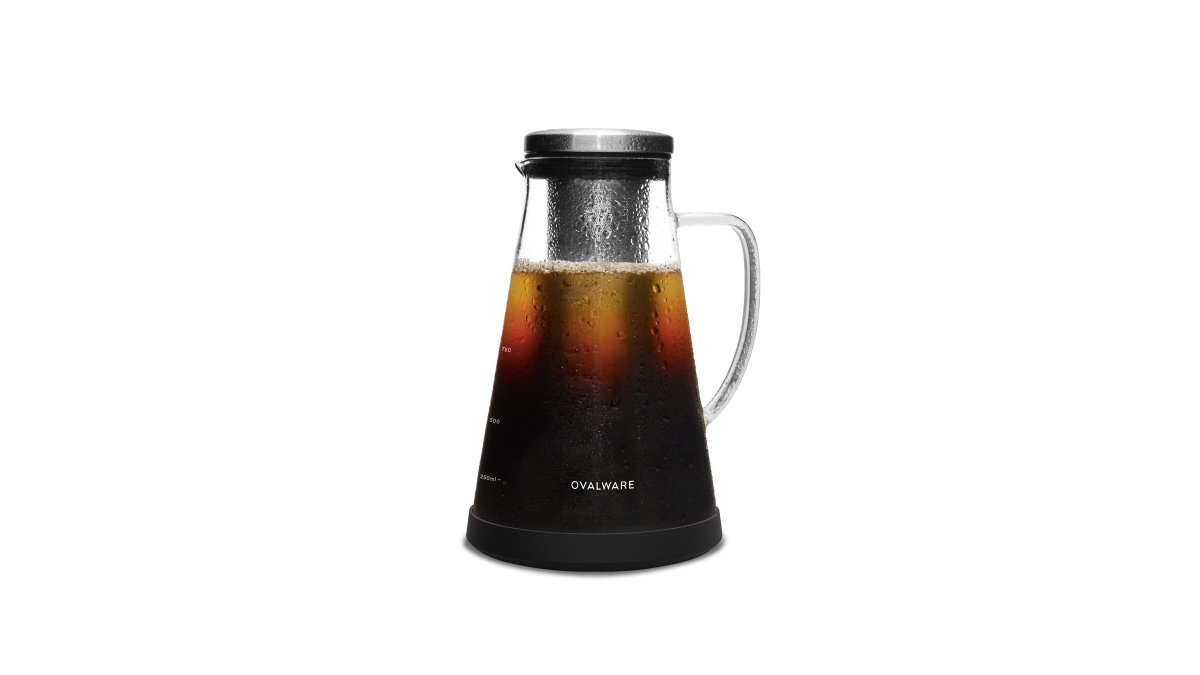
Our Cold Brew Maker is built for exactly this: fill, brew overnight, and serve. The airtight lid keeps a batch fresh for up to two weeks and protects it from fridge odors.
Coffee-to-Water Ratio and Grind Size
Use a 1:4 ratio for concentrate, so 1 cup of grounds to 4 cups of water. Dilute that concentrate with water or milk before drinking.
Grind coarse, like sea salt. Fine grounds slip through filters and turn the brew muddy. If you want to adapt ratios further, our cold brew recipes with freshly roasted coffee give you more starting points.
Benefits of Cold Brew Coffee vs Hot, Side by Side
The benefits of cold brew coffee vs hot come down to how each method treats the bean. Cold water extracts fewer acids and bitter oils, so the cup tends to land smoother.
| Factor | Fridge Cold Brew | Hot Brewed Coffee |
|---|---|---|
| Flavor | Smooth, low bitterness | Bright, more acidity |
| Acidity | Lower | Higher |
| Caffeine | Similar per ounce, but often diluted | Full strength |
| Brew time | 12 to 18 hours | 4 to 5 minutes |
| Best for | Sensitive stomachs, iced drinks | Quick hot cups |
The catch most people miss: cold brew concentrate is strong. Dilute it, or you'll get more caffeine than you expect. A typical serving is half concentrate, half water or milk.
Best Coffee Beans for Cold Brew and How to Grind Them
The best coffee beans for cold brew are medium to medium-dark roasts with balanced sweetness, ground coarse and consistently.
Why medium? A medium roast is a balanced starting point for cold extraction.
For grinding, consistency matters more than anything. Uneven grounds extract unevenly, so you get sour and bitter in the same sip. Our OutIn Fino grinder gives you 28 clear grind levels with stepless micro-adjustment, so you can dial in a coarse setting. If you want to go deeper on bean selection, our guide to the best beans for smooth cold brew breaks down roast and origin.
Storing, Diluting and Serving Fridge-Brewed Concentrate
Store cold brew concentrate in a sealed container in the fridge for up to two weeks. Keep it cold, keep it sealed, and keep it away from strong-smelling food.
Serving is simple:
- Dilute 1:1 with water for a standard cup
- Use milk for a smoother, richer drink
- Pour over ice and add a splash of cream
- Skip ice cubes made of water; use coffee ice to avoid dilution
Watch out: leaving concentrate on the counter for hours speeds up oxidation and flattens the flavor. Pour what you need and put the rest back.
Storage That Actually Protects Flavor and Safety
The two-week window is a ceiling, not a target. Fridge-brewed concentrate is generally best enjoyed within the first week.
Container choice matters more than most guides admit. Use a glass jar or a tightly sealing bottle with a small headspace, because oxygen is what dulls the flavor.
Placement in the fridge is a small but real variable. Put the container on a shelf, not in the door, where temperature swings each time the fridge opens. Keep it away from onions, garlic, and other strong-smelling foods, since coffee absorbs odors readily.
Freshness signals are worth knowing. A concentrate that has turned flat or stale usually smells dull rather than bright, and it may taste papery.
Cleanliness is the other half of food safety. Wash the jar, filter, and lid with hot soapy water before each batch, and make sure the filter is fully dry before you add grounds.
Diluting and Serving Without Overdoing Caffeine
Dilution is where fridge-brewed concentrate most often goes wrong, and it is also where caffeine expectations get distorted. Cold brew concentrate is strong by design, so a typical serving is half concentrate and half water or milk.
Caffeine depends on the beans, the ratio, the steep time, and the serving size, not on the word "cold brew." A concentrate made at 1:4 and diluted 1:1 lands in a normal range per cup, while a tighter ratio served straight can deliver considerably more. If you are sensitive to caffeine, start with a smaller serving and dilute more rather than assuming the drink is mild because it is cold.
Serving options that hold up well:
- Dilute 1:1 with water for a standard cup
- Use milk for a smoother, richer drink
- Pour over ice and add a splash of cream
- Freeze leftover concentrate into coffee ice cubes so the drink does not water down
Watch out: do not store concentrate in a metal container for long periods, because it can pick up a metallic taste. Glass or food-grade plastic is the safer choice.
Troubleshooting Fridge-Brewed Coffee That Tastes Off
Most fridge-brew problems trace back to grind, time, or ratio. Here is how to fix each one.
- Sour or sharp: under-extracted. Steep longer or grind slightly finer.
- Bitter or harsh: over-extracted. Cut steep time or use a coarser grind.
- Weak or watery: too little coffee. Tighten the ratio toward 1:3.
- Muddy or gritty: grounds too fine, or the filter let silt through.
- Flat or stale: stored too long or left uncovered.
A common mistake is changing three things at once. Change one variable per batch, and you'll learn your setup fast.
Start Your First Fridge Batch With Freshly Roasted Beans
Fridge brewing rewards fresh beans more than any other method. Stale grounds taste flat no matter how careful your ratio is, and a long cold steep has nowhere to hide flaws.
At Cuppari Coffee, we roast beans only after you order and ship the same day. Our medium-roast Cold Brew Coffee is built for the slow-steep method, with notes of dark chocolate and toffee that shine after 16 to 24 hours.
Our Brazil Santos brings smooth cocoa notes that hold up beautifully in a cold batch.
Ready to taste the difference fresh beans make in a fridge brew? Order today and start steeping tonight.
The gap between a good fridge batch and a great one is freshness. Cuppari Coffee roasts every order after it's placed and ships the same day, with free shipping on all U.S. orders.
Frequently Asked Questions
Should I put my cold brew in the fridge while brewing?
Yes, brewing in the refrigerator keeps the grounds and water cold the whole time, which slows extraction. Fill your maker, seal the lid, and leave it on a shelf where it will not be knocked. Because the container stays cold, you can also leave it longer without the brew turning sharp or stale.
Does brewing cold brew in the fridge take longer than at room temperature?
It does. Cold water extracts more slowly, so a fridge batch usually needs 16 to 24 hours, while a counter batch may be ready in 12 to 16. The trade-off is forgiveness: an extra few hours in the refrigerator rarely ruins a batch, whereas room-temperature steeping can tip into bitterness. Set it up before bed and strain the next evening, or leave it a full day if you want a stronger concentrate.
Is cold brew less acidic than hot coffee?
Cold extraction pulls fewer of the acids and bitter compounds that hot water releases quickly, so cold brew tends to taste smoother. If you are sensitive to coffee, start with a smaller serving and dilute the concentrate with water or milk before judging how it sits with you.
What are the best coffee beans for cold brew in the fridge?
Medium roasts with clear sweetness work best because long, cold extraction mutes delicate top notes. A medium roast single origin such as a Brazil Santos brings cocoa and smooth body that hold up over 16 to 24 hours. Ask for a coarse grind, roughly the texture of sea salt, so the grounds settle and filter cleanly. Whole beans ground just before brewing give the freshest cup.
