

Table of Contents
- Why Evaluating Coffee Sourcing Practices Matters
- Understanding Ethical Coffee Sourcing Standards
- Assessing Coffee Supply Chain Transparency
- Coffee Certifications Explained and How to Verify Them
- Evaluating Coffee Farmer Compensation and Livelihoods
- Assessing Environmental and Social Responsibility
- Your Practical Sourcing Evaluation Checklist
- Frequently Asked Questions
Last Updated: October 18, 2026
Why Evaluating Coffee Sourcing Practices Matters
When you buy coffee, you're buying more than a morning beverage. Learning how to evaluate coffee sourcing practices is the difference between funding exploitation and supporting genuine quality and responsibility.
Most coffee drinkers never ask where their beans come from.
At Cuppari Coffee, we've built our entire model around freshness because we believe you deserve to know exactly what you're buying.
Below, we'll walk you through the practical steps to evaluate coffee sourcing, from understanding what ethical sourcing actually means to assessing supply chain transparency, verifying certifications, and checking farmer compensation.
Understanding Ethical Coffee Sourcing Standards
Ethical coffee sourcing means buying beans grown and processed in ways that respect people, protect the environment, and ensure farmers earn fair compensation.
Ethical sourcing covers three main areas:
- Economic responsibility: Farmers receive prices that reflect the actual cost of production and allow them to invest in their land and families
- Social responsibility: Workers are treated fairly, paid minimum wage or better, and work in safe conditions without child labor
- Environmental responsibility: Farming practices protect soil health, biodiversity, and water quality
The challenge is that "ethical" means different things to different organizations. Some focus on fair wages. Others emphasize environmental impact. Some certify farms individually. Others verify entire cooperatives.
This is where many coffee buyers get confused. A bag might say "sustainable" or "responsibly sourced," but those words are marketing language without teeth. Real evaluation requires digging deeper into what standards the coffee actually meets and who verified it.
Assessing Coffee Supply Chain Transparency
The supply chain is where the truth lives. A transparent supply chain means you can trace the coffee from the farm to your cup. An opaque one means you're trusting marketing claims without evidence.
Start by asking roasters these questions:
What to Ask Roasters About Their Supply Chain
Where does the coffee come from? A good answer includes the specific country, region, and ideally the farm name or cooperative.
How do you source it? Do they buy directly from farmers? Through importers? Through brokers?
What certifications do your coffees hold? We'll cover this in detail below, but ask which third-party verifications the coffee has.
What's your relationship with your suppliers? Do they visit farms? Do they pay premiums above commodity prices?
Tracing Coffee Origin and Farm-Level Practices
Origin matters because it tells you about the farming conditions, altitude, soil, and climate that shaped the beans. It also tells you about the labor practices and environmental standards in that region.
When you trace coffee origin, look for:
- Altitude: Higher-altitude farms (typically 1,300 meters and above) produce denser beans with more complex flavors and tend to be smaller, more careful operations
- Soil type: Volcanic loam and clay mineral soils produce different flavor profiles and require different management practices
- Processing method: Washed coffees use more water but tend to be cleaner. Natural and pulped natural methods use less water but require more careful handling. Eco-pulped methods balance both concerns
- Farm size and structure: Smallholder farmers often have more sustainable practices but less capital. Larger estates can invest in infrastructure but may have more labor concerns
For example, Cuppari Coffee's Colombia comes from smallholder farmers in Medellin, grown at 1,300-1,500 meters in volcanic loam soil, processed fully washed in solar dryers. That specific information tells you about the farming conditions, water use, and quality standards.
Coffee Certifications Explained and How to Verify Them
Certifications are third-party stamps that verify sourcing claims. But not all certifications carry the same weight, and not all are equally rigorous.
The major coffee certifications include:
- Fair Trade: Verifies minimum prices and labor standards. Roasters pay a premium to Fair Trade organizations, which audit farms and cooperatives. Strength: clear labor protections. Weakness: doesn't always guarantee highest prices or environmental focus
- Rainforest Alliance: Focuses on environmental sustainability, worker welfare, and farm profitability. Uses on-site audits and requires ongoing compliance. Strength: comprehensive approach. Weakness: higher cost can limit smaller farms' access
- UTZ Certified: Emphasizes sustainable farming practices and supply chain transparency. Requires traceability and regular audits. Strength: detailed tracking. Weakness: less focused on farmer income
- Organic: Certifies that beans are grown without synthetic pesticides or fertilizers. Strength: clear environmental standards. Weakness: doesn't address labor or fair pricing
- Direct Trade: Not a formal certification, but a commitment by roasters to buy directly from farms at transparent prices. Strength: often highest farmer payment. Weakness: no independent verification
Third-Party Verification and Chain of Custody
Certification only matters if it's actually verified. Look for:
- Audit frequency: Legitimate certifications audit farms annually or more often. If a farm claims certification but hasn't been audited in years, that's a problem
- Chain of custody: Beans should be tracked from farm to roastery with documentation at each step. This prevents mixing certified and non-certified beans
- Traceability: You should be able to look up the farm or cooperative on the certification organization's website and see their audit results
- Third-party independence: The certification body should be independent from the roaster and the farm. If a roaster certifies itself, that's not verification
When you evaluate coffee sourcing practices, don't just look for the certification label. Verify it. Most certification organizations have searchable databases where you can confirm that a specific farm is actually certified and when it was last audited.
Evaluating Coffee Farmer Compensation and Livelihoods
Fair compensation is the foundation of ethical sourcing. If farmers don't earn enough to cover their costs and support their families, the system is broken, no matter what else it claims.
Single Origin Favorites Sample Pack →
Ask roasters these questions:
- What price do you pay farmers? Commodity coffee prices fluctuate wildly. Responsible roasters pay premiums above commodity prices. They should be willing to tell you the range
- How is payment structured? Do farmers get paid upfront or after harvest? Do they have long-term contracts? Upfront payment and multi-year contracts give farmers the stability to invest
- Do you pay cooperatives or individual farmers? Cooperatives can negotiate better prices and share resources, but individual farmers sometimes earn more from direct sales
- What's included in the price? Does it cover labor, fertilizer, processing, and profit? Or just harvesting costs?
The reality is that coffee farming is capital-intensive and risky. Farmers need enough income to replace aging equipment, invest in soil health, handle crop failures, and live with dignity. If a roaster can't explain how their pricing supports that, they're likely not paying fairly.
Assessing Environmental and Social Responsibility
Environmental and social responsibility aren't separate from sourcing, they're core to it. Farms that destroy soil, pollute water, or exploit workers are unsustainable, even if they produce good beans today.
Environmental Impact and Farming Practices
Look for farms that:
- Protect biodiversity: Shade-grown coffee, where beans grow under native tree canopy, supports bird habitat and soil health. Sun-grown coffee produces higher yields but degrades soil faster
- Manage water responsibly: Washed coffees use significant water. Eco-pulped methods reduce water use. Farms should have systems to treat wastewater before it enters rivers
- Build soil health: Practices like composting, cover cropping, and reduced tillage protect soil and reduce erosion
- Minimize chemical inputs: Organic farming avoids synthetic pesticides. Even non-organic farms can reduce chemical use through integrated pest management
Ask roasters whether their coffees come from farms using these practices. Certifications like Rainforest Alliance and Organic verify many of these practices, but direct relationships with roasters sometimes reveal even more detail.
Labor Conditions and Worker Protections
Coffee harvesting is labor-intensive work, often done by migrant workers in difficult conditions. Ethical sourcing means:
- No child labor: Farms should employ only adults. Children should be in school
- Fair wages: Workers should earn at least minimum wage for their country, ideally more
- Safe conditions: Proper equipment, training, and medical care for injuries
- Freedom of association: Workers should have the right to organize and advocate for themselves
- Stable employment: Seasonal work is normal, but workers should know their hours and pay in advance
Certifications verify some of these protections, but direct relationships between roasters and farms often reveal more. Roasters who visit farms regularly and know workers by name tend to maintain higher standards.
Your Practical Sourcing Evaluation Checklist
Use this checklist every time you evaluate a coffee. It combines the principles above into actionable steps.
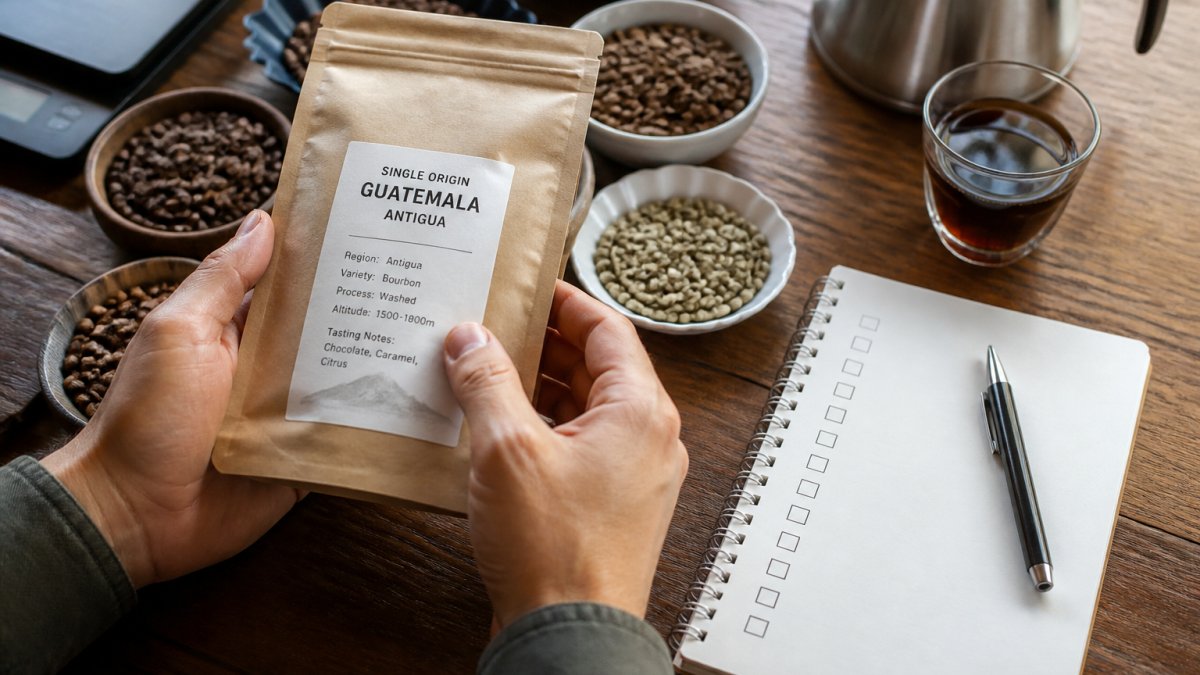
Supply Chain Transparency:
- Can the roaster name the specific farm or cooperative?
- Can they describe the region, altitude, and soil type?
- Do they explain their sourcing relationship (direct, importer, broker)?
- Can they tell you the processing method and harvest date?
Certification and Verification:
- Does the coffee carry a recognized certification (Fair Trade, Rainforest Alliance, Organic)?
- Can you verify the certification on the organization's website?
- When was the farm last audited?
- Does the roaster explain what the certification actually covers?
Farmer Compensation:
- Does the roaster disclose the price paid to farmers?
- Is it above commodity prices?
- Do they explain how payment is structured (upfront, contract, cooperative)?
- Do they describe what the price covers?
Environmental Practices:
- Does the farm use shade-grown, organic, or other sustainable methods?
- Does the roaster describe water management and soil health practices?
- Are environmental certifications in place?
Labor Standards:
- Does the roaster address labor conditions?
- Are certifications like Fair Trade in place?
- Do they describe worker safety, wages, and rights?
Flavor and Quality:
- Can the roaster describe the tasting profile (acidity, body, mouthfeel, aroma, aftertaste)?
- Do they explain how sourcing connects to quality?
- Is the coffee fresh? (Roasted recently, not months ago)
If a roaster can answer most of these questions, you're looking at genuine sourcing practices. If they dodge questions or offer vague marketing language, that's a signal to look elsewhere.
When you choose coffee like Cuppari Coffee's Single Origin Favorites Sample Pack, you get six different origins, Brazil Santos, Colombia, Costa Rica, Ethiopia, Honduras, and Tanzania, each with full sourcing details, altitude, soil type, processing method, and tasting notes.
Evaluating coffee sourcing practices takes time, but it's worth it. At Cuppari Coffee, we roast beans only after your order arrives and ship the same day, ensuring freshness while maintaining full traceability to the farms that grew them. Add to cart and taste the difference sourcing practices make.
Frequently Asked Questions
How can you tell if coffee is ethically sourced?
Start by checking for third-party certifications like Fair Trade, Rainforest Alliance, or Smithsonian Bird Friendly, which verify labor standards and environmental practices. Ask the roaster directly about their sourcing relationships: ethical producers can name specific farms, regions, and growers. Look for transparency about farmer compensation and processing methods. Roasters committed to ethical sourcing provide detailed origin information, traceability documentation, and clear answers about supply chain practices. Single-origin coffees with named farms and cooperatives offer better verification than blends.
What does sustainable coffee sourcing mean?
Sustainable sourcing combines environmental responsibility, economic viability for farmers, and social accountability. It means coffee is grown using farming practices that protect biodiversity, conserve water, minimize chemical inputs, and prevent soil degradation. Economically, it ensures farmers receive fair compensation for their labor. Socially, it guarantees safe working conditions and respects community rights. Shade-grown and organic farming methods are common sustainable practices. Transparency about these practices and third-party verification distinguish genuinely sustainable coffee from marketing claims.
Do coffee certifications guarantee ethical sourcing?
Certifications provide valuable verification but have limitations. Fair Trade, Rainforest Alliance, and organic certifications set measurable standards and conduct third-party audits, making them more reliable than unverified claims. However, certification costs can exclude small farmers, and standards vary by program. Some certifications focus on environmental practices while others prioritize labor conditions. The strongest approach combines certification verification with direct communication: ask roasters about their relationships with farms, farmer compensation levels, and supply chain documentation. Multiple certifications or direct trade relationships typically indicate stronger sourcing practices than a single label alone.
How can you assess whether coffee farmers are paid fairly?
Request specific information from roasters about farmer compensation: the price paid per pound of green coffee, whether it exceeds commodity market rates, and if farmers receive premiums for quality or certifications. Fair Trade certification guarantees minimum prices and community development funds. Direct trade relationships often provide the highest transparency, with roasters publishing exact prices paid to farmers. Ask whether compensation covers production costs and provides living wages. Cooperatives and smallholder networks typically offer better price visibility than large commodity suppliers. Compare compensation claims across roasters and verify through certifications when available.