

Table of Contents
- Why Coffee Bean Storage Matters for Flavor
- The Best Way to Store Coffee Beans
- Choosing an Airtight Coffee Bean Storage Container
- How Long Do Coffee Beans Stay Fresh
- Coffee Beans in Fridge or Freezer: A Practical Guide
- Buying and Storing the Right Quantity
- Grinding Fresh for Maximum Flavor
- Frequently Asked Questions
Last Updated: October 13, 2026
Why Coffee Bean Storage Matters for Flavor
The moment you open a bag of coffee beans, they start losing freshness. Oxygen, light, heat, and moisture are the four enemies of flavor.
Proper coffee bean storage is the difference between a vibrant, aromatic cup and a flat, stale one. Beans begin to fade within days of roasting, so storing them right extends their peak flavor window significantly.
Storing coffee beans correctly is simple: a few key principles and the right container.
The Best Way to Store Coffee Beans
The ideal storage method protects beans from four threats, each degrading flavor differently.
The four enemies of freshness
Oxygen causes oxidation, breaking down the oils and compounds that give coffee its complexity. It's why ground coffee goes stale faster than whole beans: more surface area means faster degradation.
Light accelerates oxidation. UV rays and even regular daylight speed up flavor loss, which is why opaque containers outperform clear glass jars.
Heat speeds up the chemical reactions that flatten flavor. Room-temperature storage beats warm kitchens, and cool storage beats room temperature.
Moisture and humidity cause beans to absorb water, interfering with roasting compounds and, in extreme cases, introducing mold.
Room temperature storage
Room temperature (around 65-75°F) is the sweet spot for coffee bean storage. For daily consumption, a cool, dark cupboard or pantry works perfectly.
Avoid storing beans above the stove, near windows, or in direct sunlight, which expose them to heat and light simultaneously. A kitchen cupboard away from appliances is ideal; a pantry is even better.
Consistency matters: beans stored at steady room temperature in a dark place stay fresh longer than beans moved between warm and cold environments.
Choosing an Airtight Coffee Bean Storage Container
An airtight container is the single most important factor in preserving freshness after roasting.
The best containers are opaque, airtight, and designed specifically for coffee. Skip clear glass jars, however attractive; opaque containers preserve freshness far better.
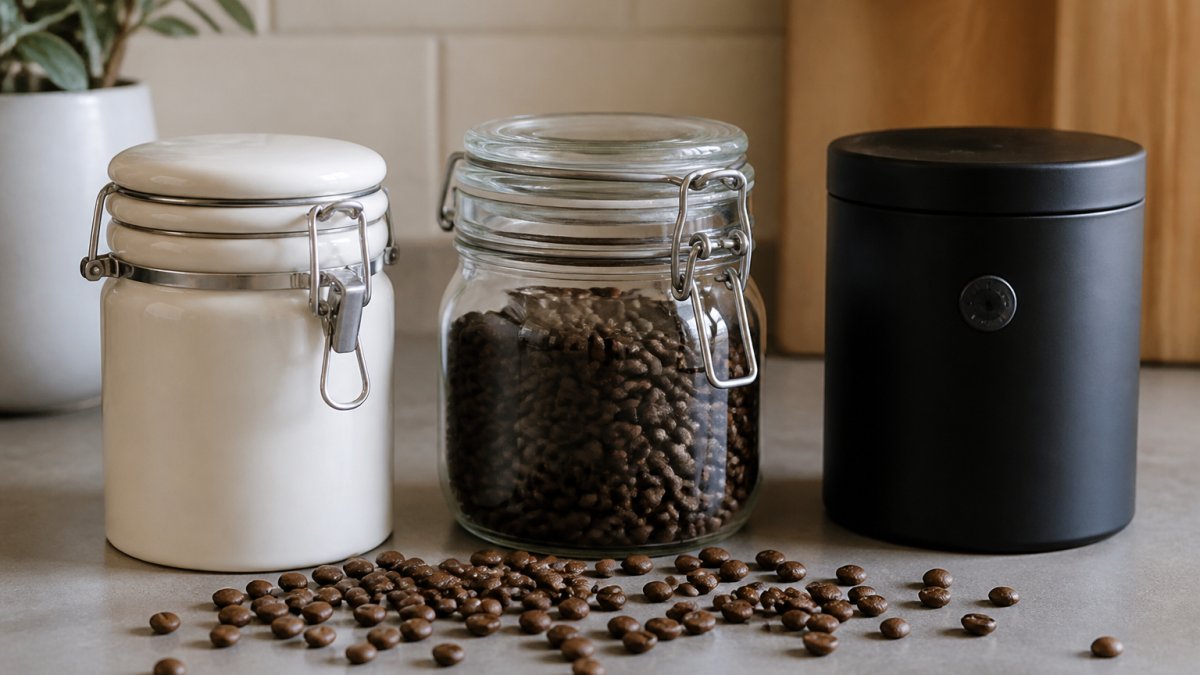
Container materials and trade-offs
Opaque ceramic or stainless steel canisters block light completely and maintain an airtight seal.
Glass jars with airtight lids work only if opaque or kept in a dark cupboard. Dark glass beats clear, but opaque is best.
Original coffee bags with one-way valves are underrated. Many specialty roasters, including Cuppari Coffee, ship beans in bags designed to release gases while blocking oxygen.
Vacuum-sealed containers remove air entirely, slowing oxidation dramatically. Worth the investment if you buy beans in bulk.
Avoid plastic unless it's food-grade with an airtight seal; cheap plastic absorbs coffee oils and odors.
One-way valves and original bags
One-way valves let CO2 (a byproduct of roasting) escape without letting oxygen in, which is why many premium roasters ship in bags with valves.
If your coffee arrives in a bag with a one-way valve, you're already ahead. After opening, reseal it by rolling the top down or using a clip and store it in a cool, dark place. This rivals dedicated canisters for freshness.
Roasters optimize these bags for coffee storage: they're opaque, minimize air exposure, and the valve does the heavy lifting. No need to transfer unless you prefer a canister's convenience.
How Long Do Coffee Beans Stay Fresh
Freshness is a spectrum, not a cliff: beans gradually lose flavor and aroma over time. The most useful habit is to read the roast date, not the best-by date, and count forward from there. Most specialty roasters print it because it's the only reliable anchor for freshness.
Freshness timelines tied to roast date and opening
These ranges assume whole beans stored in an opaque, airtight container in a cool, dark place at room temperature. Treat them as practical guidance and adjust based on taste.
| Stage | Typical window from roast date | What to expect |
|---|---|---|
| Unopened bag, stored properly | Good quality up to 4-6 weeks; peak flavor within the first 2 weeks | Beans are still degassing; the one-way valve handles CO2 release |
| Opened bag, whole beans | Peak flavor 3-7 days after opening; noticeably flatter by 2 weeks; clear decline by 3 weeks | Oxygen exposure accelerates once the seal is broken |
| Opened bag, ground coffee | Peak flavor within hours to 1-2 days | Surface area multiplies oxidation roughly tenfold versus whole beans |
| Frozen whole beans, properly portioned | Quality largely held for 1-2 months; usable beyond that with gradual decline | Freezing slows oxidation but does not stop it entirely |
Roast level shifts these windows. Light roasts have delicate, volatile aromatics and fade faster once opened. Dark roasts have bolder, more stable compounds and hold up longer, though surface oils can turn rancid over extended storage.
The most common mistake is buying beans roasted two weeks ago, storing them two more weeks, then opening the bag. By that point the peak window has already passed. Buy from roasters who print a roast date and ship close to it, so your storage clock starts from a fresh baseline.
Measuring freshness and recognizing stale beans
You don't need instruments to judge freshness; your senses will tell you through aroma, flavor, and brewing behavior.
Aroma. Fresh beans smell vibrant and complex when you open the container. Stale beans smell dull, muted, or faintly cardboard-like.
Flavor. Stale coffee tastes flat, papery, or unpleasantly sour, distinct from the bright acidity of a well-roasted light coffee.
Appearance. Older beans look duller and less glossy, but this is the least reliable signal, so weigh aroma and taste more heavily.
Loss of flavor quality is not the same as a food-safety problem. Coffee beans are a dry, low-moisture product and do not spoil the way fresh food does. The real risk is moisture: if beans are stored in a humid spot or moved in and out of the refrigerator, they can absorb water and, in extreme cases, develop mold. If you see visible mold or smell mustiness, discard the beans. Otherwise, stale coffee is a quality issue, not a safety one.
When to grind coffee beans
The clock above assumes whole beans. Ground coffee has vastly more surface area exposed to oxygen, so it loses peak flavor within days, sometimes hours. If you must grind ahead, store grounds in an airtight container and use within 24 hours. For the best cup, grind immediately before brewing, which is why a burr grinder is worth the investment.
Coffee Beans in Fridge or Freezer: A Practical Guide
Whether to refrigerate depends on how quickly you consume your beans.
When freezing makes sense
Don't refrigerate. The fridge creates condensation problems: beans absorb moisture from the humid environment, and condensation forms when you remove them from cold storage, introducing water at the worst moment.
Freezing works if done correctly. The freezer stops oxidation almost entirely, significantly extending the usable window for bulk beans you won't use for months.
OutIn Fino Portable Electric Coffee Grinder →
Freezing suits people who buy large quantities and consume slowly, want to stock multiple origins without opening all bags, or live in warm climates where room-temperature storage is difficult.
If you consume beans within 1-2 weeks, freezing isn't worth the effort.
Step-by-step freezing and thawing method
Freezing:
-
Divide beans into smaller portions in airtight containers or freezer bags, so you thaw only what you need.
-
Remove as much air as possible by flattening freezer bags or using vacuum-seal bags; air in the freezer still causes slow oxidation.
-
Label each portion with the roast date.
-
Freeze immediately after sealing.
Thawing:
-
Remove only the portion you'll use in the next 1-2 weeks.
-
Thaw at room temperature in its sealed container for 30-60 minutes; do not open it during thawing.
-
Once thawed, transfer to an airtight container and store in a cool, dark place.
-
Use within 1-2 weeks of thawing.
The key is avoiding condensation: sealed containers prevent moisture from forming during the temperature change, while opening a cold container introduces water vapor that condenses on the beans.
Frozen beans thawed this way taste nearly as fresh as room-temperature beans; the freezer essentially pauses aging.
Buying and Storing the Right Quantity
The best storage strategy starts before you open the bag: match purchase size to how fast you drink. Here's a practical decision guide.
A storage decision guide based on how quickly you consume
Estimate your weekly consumption.
One cup a day (about 7 cups per week): A 12-ounce bag lasts two to three weeks.
Two to three cups a day (about 14-21 cups per week): A 12-ounce bag lasts about a week; a 2-pound bag lasts two to three weeks.
Four or more cups a day, or brewing for a household: A 2-pound bag may last only a week or two, fine for room-temperature storage.
Buying in bulk for variety or cost: Freeze the surplus.
Match the container to the portion, not the other way around. A large canister that is mostly empty holds mostly air, which speeds oxidation. Smaller containers that are nearly full preserve freshness better.
Connecting purchase size, roast date, and consumption rate
The goal is to avoid keeping beans beyond their best flavor window. Work backward from the roast date:
- Note the roast date when the bag arrives.
- Estimate how many days it will take to finish at your current pace.
- If that's more than about three weeks, split the bag and freeze the portion you won't reach in time.
- If it's under three weeks, store the whole bag at room temperature and skip the freezer.
Buying smaller quantities more often usually beats stockpiling: the slight per-ounce savings from bulk buying rarely outweigh the flavor loss from beans sitting past their peak. If you love variety, buy smaller bags of several origins rather than large bags of one.
A subscription delivering freshly roasted beans on a schedule matched to your consumption solves the quantity problem at the source: beans arrive close to their roast date, in amounts you can finish while at their best.
Grinding Fresh for Maximum Flavor
Storage preserves freshness, but grinding releases it. Grind immediately before brewing.
If you must grind ahead, use an airtight container and consume within 24 hours.
A quality grinder makes a difference: burr grinders produce consistent particle size for better extraction, while blade grinders create uneven grounds and inconsistent flavor.
The OutIn Fino Portable Electric Coffee Grinder offers precision grinding with 28 grind levels and stepless micro-adjustment.
Storing coffee beans properly is the difference between good coffee and great coffee. Keep them in an opaque, airtight container in a cool, dark place.
At Cuppari Coffee, we've eliminated the first variable, freshness at purchase. From there, proper storage keeps that freshness intact. Browse our single-origin selections, Bali Blue, Brazil Santos, and Colombia, and experience the difference truly fresh coffee makes.
Frequently Asked Questions
Should coffee beans be stored in an airtight container?
Yes. Airtight containers prevent oxygen exposure, which causes coffee beans to lose flavor and aroma over time. Glass jars with tight seals, ceramic canisters, or opaque containers with one-way valves all work well. The key is minimizing air contact while keeping beans away from light, heat, and moisture. An airtight seal extends freshness from days to weeks.
Is it better to store coffee beans in the fridge or freezer?
Room temperature in a cool, dark pantry is ideal for beans you'll use within 2-4 weeks. Freezing works for longer storage if you use an airtight, moisture-proof container and thaw properly without opening the bag until beans reach room temperature. Refrigerators create condensation problems and aren't recommended. Freezing is best for bulk purchases or subscription orders you won't finish quickly.
How long do coffee beans stay fresh after opening?
Whole beans stay fresh for 2-3 weeks after opening when stored in an airtight container at room temperature. The peak flavor window is 7-14 days after roasting. Ground coffee loses freshness faster, within 1-2 weeks. Roast date matters more than purchase date, so buy from roasters like Cuppari Coffee that roast and ship the same day to ensure you receive beans at their freshest.
Should you grind all your coffee beans at once?
No. Grind beans just before brewing to preserve flavor and aroma. If you must grind ahead, use within 24 hours for best results. Ground coffee has far more surface area exposed to oxygen, causing rapid flavor loss. A burr grinder like the OutIn Fino Portable Electric Coffee Grinder lets you grind small amounts with precision, ensuring fresh grounds every time without waste.