

Last Updated: October 31, 2026
Quick Summary
Personalized coffee recommendations start with four questions: your taste, your gear, your budget, and your experience. Each answer narrows the field until one or two beans make obvious sense, so you match roast, grind, and dose to your own setup instead of a generic list.
- Sweet and rounded tastes point to medium roast Brazil or Colombia with caramel and cocoa notes.
- Fine grinds suit espresso and AeroPress, medium grinds suit drip and pour-over, coarse grinds suit French press.
- A 12 oz bag suits a single daily brewer; buy 2 lb only if you finish it within three to four weeks.
- Beginners should default to medium roast, medium grind, drip brewer, and a 1:16 ratio.
- Change one variable at a time and log each brew, because changing three at once hides what worked.
Table of Contents
- Why Generic Coffee Advice Fails Home Brewers
- A Guided Recommendation Flow: Taste, Gear, Budget, Experience
- The Best Coffee Beans for Home Brewing
- Coffee Recommendations by Taste
- Coffee Beans for Pour Over
- Coffee Beans for French Press
- Freshness, Storage, and Buying Quantities That Protect Flavor
- A Repeatable Tasting and Adjustment Process
- Frequently Asked Questions
Why Generic Coffee Advice Fails Home Brewers
Most coffee advice online is written for everyone, which means it fits almost no one. A recommendation built for a café espresso machine rarely helps someone brewing drip at 6 a.m.
Coffee is a chain of choices: roast level, grind size, water, and brew method. Change one link and the cup changes.
Freshness changes how these choices play out. Stale beans hide flaws and mute flavor, making every recommendation unreliable.
A Guided Recommendation Flow: Taste, Gear, Budget, Experience
The fastest path to a great cup is a short decision flow. Answer four questions about taste, equipment, budget, and experience. Each answer narrows the field until one or two beans make obvious sense.
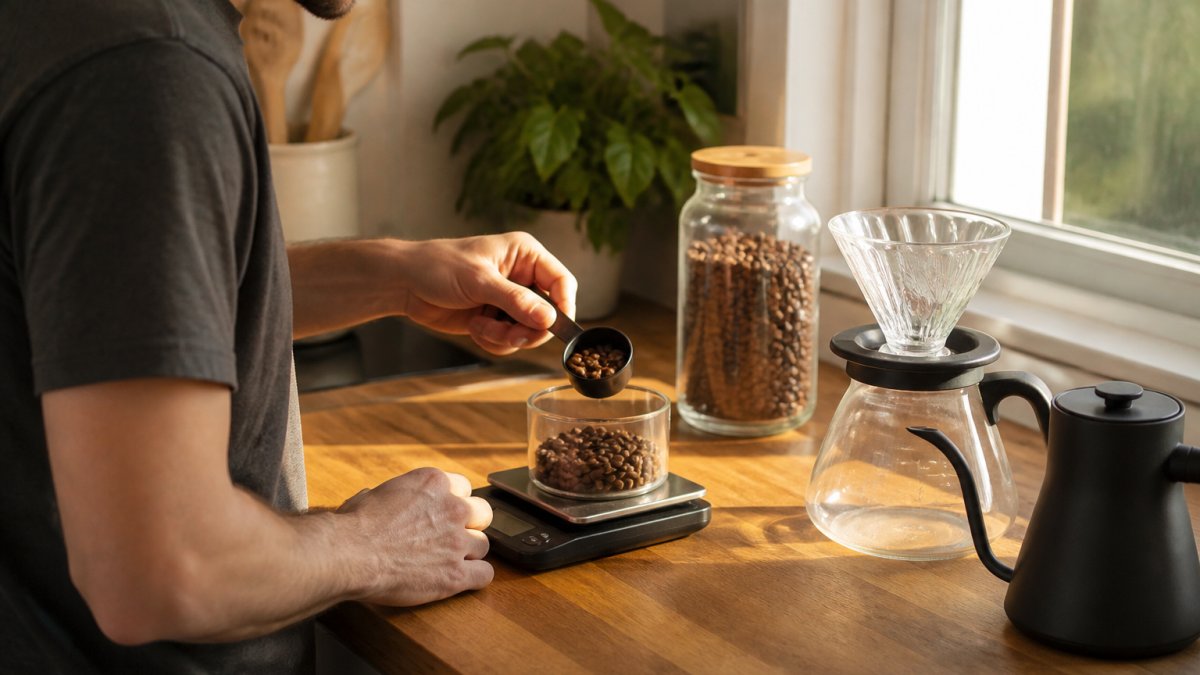
Use this order every time, because each step removes options:
- Taste: sweet, bright, or bold?
- Gear: what brewer sits on your counter?
- Budget: everyday price or a treat?
- Experience: first month or fifth year?
Step 1: Name Your Flavor Preferences
Start with the flavors you already enjoy. If you like caramel and cocoa, lean toward medium and dark roasts. If you like citrus and berry, lean light.
A common mistake is chasing "smooth" as a single goal. Smooth means different things at different roast levels. Ask instead: do I want sweetness, brightness, or depth? That answer does more work than any review.
Use this quick mapping to turn a flavor word into a bean direction:
- Sweet and rounded: medium roast, Brazil or Colombia origin, notes of caramel, nut, cocoa.
- Bright and fruity: light roast, Ethiopia or Kenya origin, notes of citrus, berry, floral.
- Deep and bold: dark roast, Sumatra or Bali origin, notes of dark chocolate, molasses, brown sugar.
Step 2: Match Beans to Your Brew Method
Your brewer sets the rules. Fine grinds suit espresso and AeroPress, medium grinds suit drip and pour-over, and coarse grinds suit the French press.
Use this matrix to move from brewer to bean and starting recipe: a direct line from equipment to a specific roast, grind, and dose.
| Brewer | Grind | Roast to try | Starting dose | Water | Target brew time |
|---|---|---|---|---|---|
| Drip machine | Medium | Medium | 1 tbsp (about 5 g) per 5 oz cup | Filtered | 4-6 min |
| Pour-over | Medium-fine | Light to medium | 15-18 g per 10 oz | 200-205°F | 2:30-3:30 |
| French press | Coarse | Medium-dark | 30 g per 16 oz | 200°F | 4 min steep |
| AeroPress | Fine to medium | Medium | 15-17 g per 8 oz | 185-205°F | 1:30-2:30 |
| Espresso | Fine | Dark | 18 g in, 36 g out | 200°F | 25-30 sec |
If you want a grind reference before you choose, our coffee grind reference tips walk through the standard medium grind and where it fits.
Step 3: Set a Budget Tier and Experience Level
Be honest about both. A beginner benefits from a forgiving medium roast that hides small mistakes. An experienced brewer can chase a bright light roast and dial it in.
On budget, freshness beats price. A modest bag roasted this week will out-cup an expensive bag roasted months ago. Buy a 12 oz bag for a single daily brewer; buy a 2 lb bag only if you brew for two or more people and will finish it within three to four weeks of the roast date.
Experience changes the recommendation more than budget does:
- First month: medium roast, drip or AeroPress, pre-ground if you lack a grinder, and a 1:16 coffee-to-water ratio as a starting point.
- First year: add a burr grinder, move to whole bean, and try one light roast to learn what brightness tastes like.
- Experienced: single origins, light roasts, and deliberate ratio changes; keep a brew log so each change is measurable.
Step 4: Turn Your Answers into One Recommendation
Read your four answers in order and let each one cut the list:
- Taste picks the roast family (light, medium, dark).
- Gear picks the grind and starting recipe from the matrix above.
- Budget picks the bag size and whether you buy a sample pack first.
- Experience picks pre-ground versus whole bean and how aggressively you change variables.
A worked example: you like sweetness, brew pour-over, want an everyday price, and are in your first year. That points to a medium roast from Colombia or Guatemala, medium-fine grind, 16 g per 10 oz at 200°F, and a 12 oz bag you finish within a month.
The Best Coffee Beans for Home Brewing
The best coffee beans for home brewing are whole beans with a visible roast date, matched to your brewer and your taste. Freshness, roast level, and grind size decide the cup more than brand or price.
For a low-risk way to explore, a sample pack lets you taste several origins before committing to a full bag. Our Single Origin Favorites Sample Pack includes six 2 oz packs of single origin coffee.
| Brewer | Best Grind | Roast to Try | Why It Works |
|---|---|---|---|
| Drip machine | Medium | Medium | Forgiving, balanced |
| Pour-over | Medium-fine | Light to medium | Highlights clarity |
| French press | Coarse | Medium-dark | Full body, rich |
| AeroPress | Fine to medium | Medium | Flexible, quick |
| Espresso | Fine | Dark | Strong, syrupy |
Coffee Recommendations by Taste
Coffee recommendations by taste start with one question: do you want brightness, balance, or depth? Bright beans taste of fruit and citrus. Balanced beans taste sweet and smooth. Deep beans taste of cocoa and caramel.
Light, Medium, and Dark Roast Flavor Profiles
Each roast level carries its own profile. Pick the one that matches your morning mood.
- Light roast: citrus, berry, floral; bright and lively
- Medium roast: caramel, nuts, cocoa; smooth and balanced
- Dark roast: dark chocolate, molasses; rich and bold
If you drink coffee with milk, a medium or dark roast holds up better. If you drink it black, a light roast shows more detail.
Coffee Beans for Pour Over
The best coffee beans for pour over are medium-light to medium roasts that reward a steady pour. Look for citrus, floral, or stone-fruit notes. A medium-fine grind and a slow, even pour bring out clarity.
Our Colombia single origin, with dried orange, berry, and chocolate notes, is one option to try. For the full technique, from bloom to pour, see our guide on how to brew perfect pour over coffee.
Coffee Beans for French Press
The best coffee beans for French press are medium-dark roasts with body to spare. The full immersion method pulls out richness, so cocoa and caramel notes shine. Use a coarse grind to keep the cup clean.
Our Bali single origin, a medium-dark with dark chocolate and brown sugar notes, is one option to try. For deeper picks and comparisons, our guide to the best coffee beans for French press brewing breaks down roasts, origins, and freshness.
Freshness, Storage, and Buying Quantities That Protect Flavor
Freshness is the variable many brewers overlook. Buy in quantities you'll finish within a few weeks.
Store beans in an airtight container, away from light and heat. Our guide to storing coffee beans fresh covers containers, freezing, and roast-level storage.
Watch out: buying a large bag to save per ounce often backfires. Half a bag goes stale before you reach it, and the savings vanish.
A Repeatable Tasting and Adjustment Process
A repeatable process turns guesswork into progress: change one variable at a time, taste, and note the result. The details make it work, a written log, fixed starting numbers, and a troubleshooting table that tells you which dial to turn.
Start with a Fixed Baseline
Before you change anything, lock in a baseline recipe so each adjustment has something to compare against. A common starting point for drip and pour-over is a 1:16 coffee-to-water ratio by weight, 18 g of coffee to about 10 oz (300 g) of water.
Write the baseline down. Without a recorded starting point, you cannot tell whether a change helped or whether you just got lucky.
Keep a Simple Brew Log
A brew log is the single highest-return habit in home brewing. It takes under a minute per cup and turns vague impressions into a pattern. Record these fields:
- Date and bean name, including roast date
- Brewer and grind setting (write the number on your grinder, not "medium")
- Dose in grams and water in grams or ounces
A notebook works; a spreadsheet works better because you can sort by bean and see which grind setting repeatedly produced the best cup. After two weeks you will have a personal record no generic guide can give you.
The Troubleshooting Matrix
Taste tells you which variable to change. Use this table to move from a flavor problem to a specific adjustment, then change only one row at a time.
| Taste problem | Likely cause | First adjustment | Second adjustment |
|---|---|---|---|
| Sour, sharp, thin | Under-extraction | Grind finer | Raise water temp 5°F |
| Bitter, dry, ashy | Over-extraction | Grind coarser | Lower water temp 5°F |
| Weak but not sour | Too little coffee | Increase dose by 1-2 g | Tighten ratio toward 1:15 |
| Strong but not bitter | Too much coffee | Decrease dose by 1-2 g | Loosen ratio toward 1:17 |
| Muddy or silty | Too many fines | Coarser grind | Rinse filter or use a better one |
| Flat, lifeless | Stale beans or hard water | Check roast date | Switch to filtered water |
Change one variable, brew again, and log the result. If the cup improves, keep the change and move to the next problem. If it gets worse, revert and try the second adjustment.
Water Quality and Temperature
Water is the variable most home brewers ignore, and it can outweigh a bean upgrade. Filtered water gives a cleaner cup than hard tap water, and water that is too soft can make coffee taste flat.
Temperature matters too. Water that is too cool under-extracts and tastes sour; aggressively boiling water can scorch a light roast and add bitterness. For most brewers, 200-205°F is the working range, and an inexpensive instant-read thermometer removes the guesswork.
When to Change the Bean Instead of the Recipe
If three rounds of adjustment still leave the cup sour or bitter at every grind setting, the problem is likely the bean, not your technique. A bean roasted months ago will taste flat no matter how you brew it, and a roast too dark for your taste will stay bitter. Change the bean, keep the log, and start again with a fresh baseline.
Frequently Asked Questions
How do I choose the right coffee beans for home brewing?
Start with your taste, then your gear. If you like bright, fruity cups, look for light or medium-light roasts with flavor notes like citrus, berry, or floral. If you prefer smooth, rich cups, go medium to dark with cocoa, caramel, or molasses notes. Then match the bean to your brew method: medium-fine grinds suit pour-over, coarser grinds suit French press. Buy whole beans with a visible roast date, and order small quantities so you finish the bag while it is still fresh.
Which coffee roast is best for my taste?
Roast level changes what you taste more than any other single factor. Light roasts keep the bean's origin character, so you get citrus, floral, and fruit notes with more acidity. Medium roasts balance sweetness and body, with chocolate and caramel tones that suit everyday coffee. Dark roasts push toward cocoa, molasses, and smoke with lower acidity and a heavier body. If you drink drip coffee daily and want something smooth, start medium. If you brew espresso or add milk, dark roasts hold up better.
Should I buy whole-bean or pre-ground coffee for home brewing?
Whole beans, whenever you can. Ground coffee loses aroma and carbon dioxide quickly, often within days of opening, while whole beans hold their flavor longer. Whole beans also let you adjust grind size for each brew method, which matters because pour-over needs a medium-fine grind and French press needs a coarse one. If you do not own a grinder yet, buy small bags of pre-ground coffee matched to your method and use them within two weeks.
How fresh should coffee beans be for home brewing?
Look for a roast date, not a best-by date. Coffee peaks roughly 3 to 14 days after roasting, then slowly fades. Store beans in an airtight container away from light, heat, and moisture, and skip the fridge. Buy amounts you will finish in two to three weeks, which keeps every cup close to peak freshness.
Great coffee at home comes down to matching beans to your taste and gear, then adjusting with purpose. That's where Cuppari Coffee helps: we roast only after you order and ship the same day, so every bag arrives fresh. You get free shipping on all U.S. orders, whole beans ready for your grinder, and sample packs that make trying new origins easy. Get started with Cuppari Coffee and brew a cup that finally tastes like yours.
