
Last Updated: November 2, 2026
Quick Summary
Coffee origin labels show where beans were grown, and the more specific the label, the more you can learn. Read them from broad to narrow: country, then region, then producer or farm, then lot number and roast date. A label that names a country alone gives you little to verify.
- A country name is the broadest origin claim a bag can make.
- Named regions, farms, or cooperatives give you a more specific, traceable origin.
- Lot numbers and harvest years show how closely the roaster tracks the beans.
- The roast date matters, so check it for freshness before you buy.
- A detailed label shows traceability but does not by itself prove quality.
Table of Contents
- Why Coffee Origin Labels Matter Before You Buy
- Single-Origin Coffee Meaning: What the Term Actually Promises
- Coffee Origin by Country and Region: Reading the Geography
- Coffee Farm and Producer Information: Who Grew the Beans
- Coffee Lot Number and Traceability: Following the Beans Back
- A Step-by-Step Method for Checking Any Origin Label
- Using Your Origin Check to Choose Your Next Bag
- Frequently Asked Questions
Why Coffee Origin Labels Matter Before You Buy
Coffee origin labels tell you where your beans were grown, and often much more.
Many coffee bags list a country and nothing else. Others name a region, a farm, or even a single lot.
A bag that says "Colombia" is a starting point. A bag that names a region, a producer, and a harvest year gives you far more to work with.
Here is what the label usually tells you:
- Country: The nation where the coffee was grown
- Region or district: A smaller area inside that country
- Producer or farm: The grower or cooperative behind the beans
- Roast date: How fresh the beans are right now
Single-Origin Coffee Meaning: What the Term Actually Promises
Single origin means the coffee comes from one place rather than a blend of beans from several places.
A useful way to read origin claims is as a hierarchy. Each level establishes more, and you can judge how much a label actually supports by where it sits:
- Country only (for example, "Colombia"): establishes a national origin and nothing more. It is the broadest claim a bag can make.
- Region or district (for example, "Antioquia" or "Kintamani"): establishes a growing area with its own climate and typical cup profile. This is a meaningful step up from a country name.
- Cooperative or washing station: establishes the group or site that pooled and processed the cherry. It tells you who handled the coffee even when individual farms are not named.
- Single farm or estate: establishes one named property. This is the level most shoppers mean when they say a label is "specific."
A label only supports the level it actually names.
Several related terms get used loosely, so it helps to know what each usually means and where usage varies:
- Single origin: one place, at any level from country to lot. Verify by checking whether a region, farm, or lot is also named.
- Estate: usually a single named property, often with its own processing. Usage varies, so confirm the estate name appears with a location.
- Microlot: a very small lot from one farm or plot, typically separated for quality. It should come with lot or harvest details; without them, treat it as marketing.
- Regional blend: coffee from several farms within one region, blended together. It is not single origin in the strict sense, even though the region is named.
Watch out: "Single origin" is not a regulated grade in the way a certification is.
The term also says nothing about quality, farming practices, or price paid to the producer. A single-origin coffee can be excellent or ordinary.
Coffee Origin by Country and Region: Reading the Geography
Coffee is grown in many countries, mostly in tropical areas between the Tropics of Cancer and Capricorn. Each country has its own growing conditions, which shape the flavor of its coffee.
Here is how to read the levels of geography from broad to specific:
- Country: Ethiopia, Colombia, Brazil, Costa Rica, Indonesia
- Region: Kintamani in Bali, Antioquia in Colombia, Alajuela in Costa Rica
- District or zone: A smaller growing area inside the region
- Farm or station: A single property or processing site
Our own catalog shows how this works in practice.
Altitude is one detail worth noticing. Many labels list meters above sea level.
The article shows how origin detail narrows from country to farm; this table summarises the levels as stated.
| Level | Example from the article | What it establishes |
|---|---|---|
| Country | Colombia | National origin only |
| Region or district | Antioquia, Kintamani | A growing area with its own climate and profile |
| Cooperative or washing station | Konga washing station | The group or site that processed the cherry |
| Single farm or estate | Fazenda Santa Barbara | One named property |
| Lot or microlot | Lot 14, Harvest 2025 | One harvest or processing run, traceable |
Coffee Farm and Producer Information: Who Grew the Beans
A label that names a farm, producer, or cooperative tells you who grew the coffee. This matters because it shows the beans have a traceable history.
Look for these details:
- Farm or estate name: A named property with a known location
- Cooperative: A group of smallholder farmers who pool their harvests
- Producer name: The person or family who grew the coffee
- Processing site: Where the beans were washed, dried, or pulped
Our Brazil Santos coffee names Fazenda Santa Barbara, while our Bali Blue names smallholder farmers from Kintamani.
Keep in mind that a named producer does not guarantee a fair price or good working conditions. Those points usually need separate evidence.
Coffee Lot Number and Traceability: Following the Beans Back
A lot is a batch of coffee from a single harvest, farm, or processing run. A lot number lets you trace a bag back to its source.
Some bags list a lot number or a harvest date. These details suggest the roaster tracks its beans closely. A microlot, which is a very small lot from one farm or plot, is the most specific form of this.
Traceability helps in two ways. It lets you check the claims a roaster makes, and it lets you compare coffees from the same origin across different harvests. Many labels do not list a lot number at all, which is common and does not automatically mean the coffee is poor.
A Step-by-Step Method for Checking Any Origin Label
Use this method on any bag you pick up. It takes about two minutes and helps you spot vague claims fast.
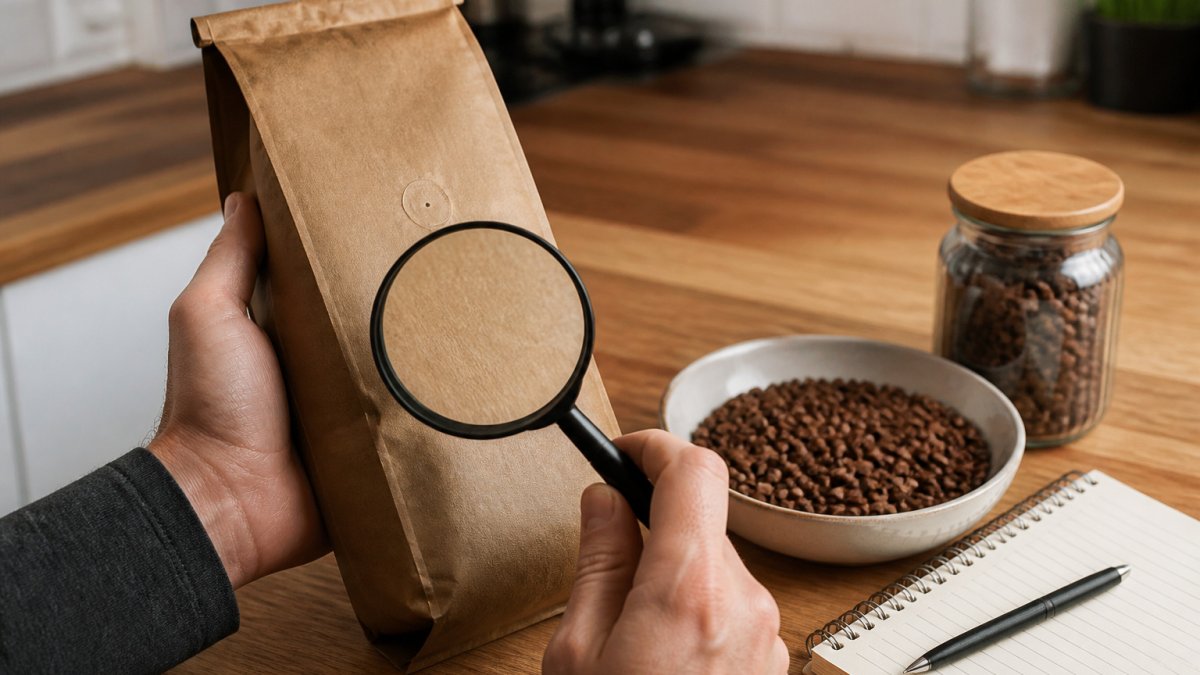
- Find the country. If there is no country, stop. The label gives you no origin information.
- Look for a region. A region is a sign of a more specific label. Note the name.
- Check for a producer, farm, or cooperative. A named farm or cooperative is stronger than a generic phrase like "farmers of" a country.
- Note the processing method. Terms like washed, natural, or honey describe how the cherry was handled.
- Look for a lot number or harvest year. These show how closely the roaster tracks the beans.
- Find the roast date. Freshness matters, so a recent roast date is a good sign.
- Rate the label. A label with a country only is basic. A label with a country, region, farm, and roast date is detailed.
Here is how that method works on a realistic label. Imagine a bag printed with these lines:
Ethiopia, Guji Zone, Hambela Wamena, Konga washing station, Heirloom varietals, 1,950-2,100 m, Washed, Lot 14, Harvest 2025, Roasted 10/28/2026
Read it in order:
- Ethiopia is the country. That alone would be a country-level claim.
- Guji Zone is the region, and Hambela Wamena is the district inside it. Together they narrow the growing area well beyond the country name.
- Konga washing station is the processing site where smallholder cherry was pooled and washed. It tells you who handled the coffee even though no single farm is named.
- Heirloom varietals signals the coffee comes from traditional Ethiopian varieties rather than one named cultivar. That is common for the region and not a red flag.
- 1,950-2,100 m is the elevation range. Higher ranges are often associated with denser beans and more complex cups, though the link depends on many other factors.
On the hierarchy from the previous section, this label reaches the cooperative or washing-station level and adds lot and harvest detail.
Specificity is not proof of quality, though.
Common mistakes to avoid:
- Assuming "single origin" means the coffee is high quality
- Trusting a region name without a producer, farm, or station to back it up
- Reading "regional blend" as if it were a single farm
- Skipping the roast date, which affects flavor more than most people expect
A common mistake is buying on the front of the bag alone.
Using Your Origin Check to Choose Your Next Bag
Once you can read the label, you can choose beans with more confidence. Start by matching the origin to the flavor you like.
Here is a simple way to use what you have learned:
- Want fruity and bright? Look for a light roast with a named region.
- Want chocolate and sweet? Look for a medium or medium dark roast.
- Want consistent everyday coffee? Look for a clear country and roast date.
If you want to try a few origins, our Costa Rica coffee has tasting notes of sweet apple, raisin, and honey, and our Colombia has dried orange, berry, and chocolate. You can also read more about single origin coffee and how terroir and processing shape flavor to understand why these origins taste different.
Once you know what to look for, browse our single origin light roast coffees to compare regions and roasts side by side. For help picking beans by roast date and brewing style, this guide to choosing coffee beans covers the details.
If you are ready to buy, our online buyer's guide to single origin coffee walks you through roasts, origins, and subscriptions in one place.
For the ethics behind a label, check how the producer is named and whether the sourcing is clear. Learning to identify ethical coffee sourcing labels can help you judge those claims. You can also look for the official Specialty Coffee Association guidance on coffee grading, though the link above is a placeholder you should replace with a verified source: Specialty Coffee Association coffee quality resources.
Reading origin labels does not take special training. With a few checks, you can tell a detailed label from a vague one and buy with more confidence.
Frequently Asked Questions
What does single-origin mean on a coffee label?
Single-origin means the coffee comes from one identifiable place rather than a blend of beans from several places. That place can be a country, a region, a district, a farm, or a cooperative. The more specific the named place, the more the label is actually telling you. A label that says only single-origin without naming where it grew gives you the claim but not the evidence. Look for a country and at least a region, and check whether a farm or producer is named. Cuppari Coffee's Bali Blue, for example, lists its region as Kintamani, Bali, Indonesia, with altitude and processing details, which is the kind of specificity to look for.
How can I tell whether a coffee origin claim is specific or vague?
Start with the level of detail. A specific claim names a country, a region within it, and ideally a farm, producer, or cooperative, plus elevation or lot information. A vague claim uses phrases like 'Central American blend' or 'premium imported beans' without naming a place you could look up. Next, check whether the details agree with each other: the region should sit inside the stated country, and the altitude should fit the growing area. Finally, notice whether the seller explains the process and variety. Consistent, checkable details are a stronger sign than adjectives.
What do lot, producer, and harvest details mean on a coffee bag?
A lot is a batch of beans traced to a specific harvest, often from one producer or a small group of farms. A lot number lets a roaster link a bag back to its source. Producer details name the farmer, estate, or cooperative that grew the coffee. Harvest details tell you the year or season the beans were picked. Together these show traceability: how far the coffee can be followed back toward the farm. A bag that lists a lot number and producer gives you more to verify than one listing only a country.
What should I look for on a coffee bag besides its origin?
Check the roast date, since freshness affects flavor more than most people expect. Look for a roast date rather than only a best-before date. Note the roast level, such as light, medium, or dark, and the processing method, such as washed, natural, or honey. Variety and elevation, given in meters above sea level, add useful context. Tasting notes help you match a coffee to your preferences. Read these details together with the origin information so you can judge the whole bag, not just where it grew.
